
Role of RC to Mobile API in Strengthening Vehicle Compliance Checks
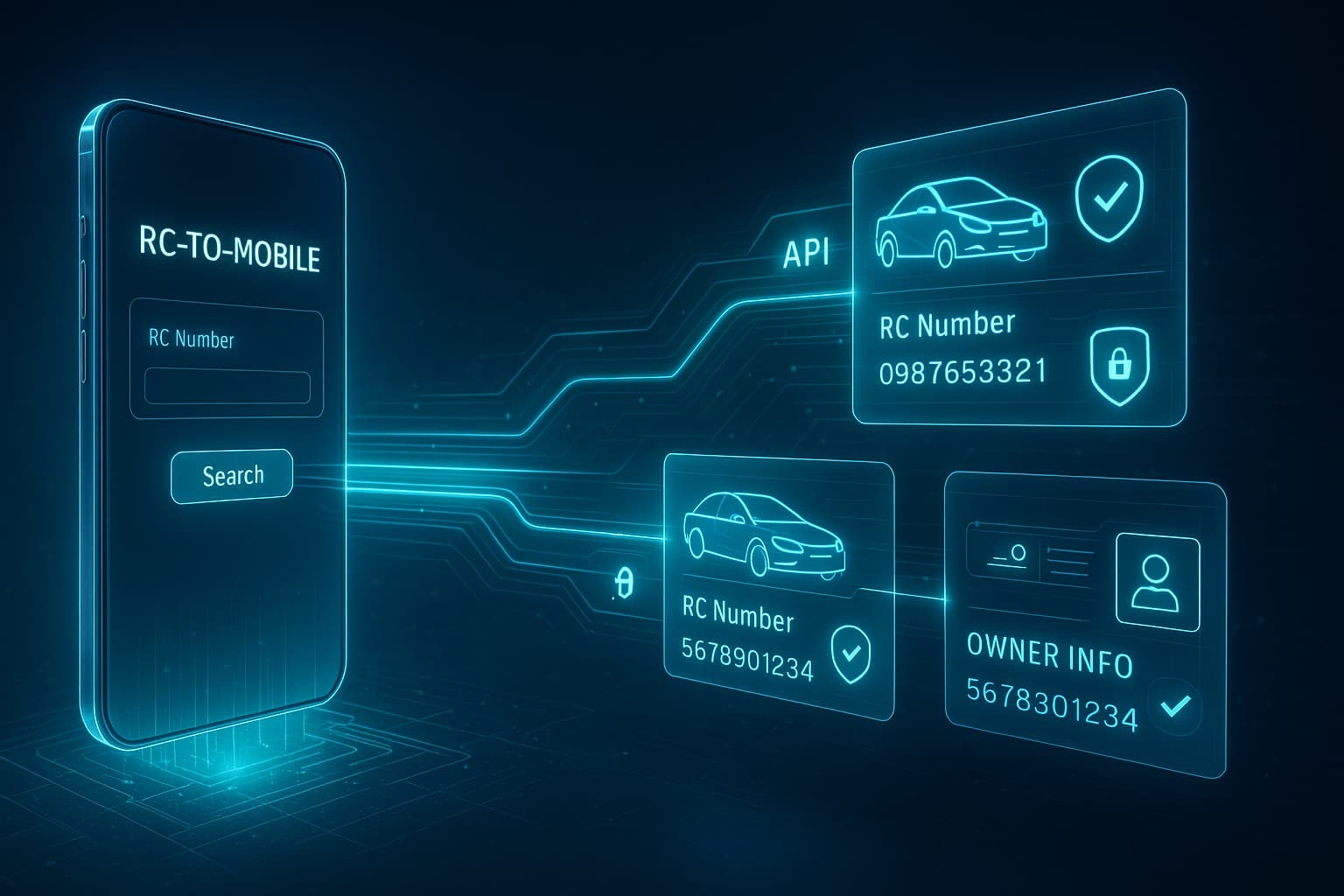
Vehicle compliance is a critical requirement for industries such as insurance, NBFC lending, fleet management, logistics, mobility platforms, and used vehicle marketplaces. Non-compliant vehicles expose businesses to regulatory penalties, financial risk, operational disruptions, and reputational damage. As vehicle ecosystems become more digital and high-volume, traditional compliance checks are no longer enough.
This is where the RC to Mobile API plays a vital role. By validating the relationship between a vehicle’s Registration Certificate (RC) and a mobile number, organizations can strengthen compliance checks, improve data accuracy, and reduce reliance on manual verification.
Why Vehicle Compliance Checks Are Becoming More Complex
Vehicle compliance involves more than just checking whether an RC exists. Businesses must ensure that vehicles are legally registered, correctly classified, linked to the right owner or operator, and suitable for the intended use.
Manual compliance checks often rely on document uploads, self-declared details, or periodic audits. These methods are slow, inconsistent, and difficult to scale, especially when onboarding thousands of vehicles across regions.
What RC to Mobile Verification Means for Compliance
RC to Mobile verification confirms whether a mobile number is associated with a specific vehicle registration record. Instead of validating compliance using only documents, the API verifies the link between vehicle data and a trusted contact identifier.
This linkage adds an extra compliance layer by ensuring that vehicles are not only registered but also traceable to a verified mobile number.
How RC to Mobile API Works
The RC to Mobile API takes a vehicle registration number and a mobile number as inputs. It checks verified records to confirm whether both are associated.
The response indicates whether the linkage exists and may include structured indicators that support compliance decisions. Because the process is automated and real time, it integrates easily into onboarding, KYC, underwriting, and compliance workflows.
Preventing Non-Compliant Vehicle Onboarding
One of the biggest compliance risks is onboarding vehicles that are not properly registered or not linked to the declared owner or operator.
RC to Mobile API helps detect mismatches early. If a vehicle is not associated with the provided mobile number, the onboarding process can be paused or flagged for review. This prevents non-compliant vehicles from entering live operations.
Strengthening Compliance in Fleet and Logistics Operations
Fleet and logistics platforms operate under strict transport and contractual regulations. Vehicles with incorrect ownership details or unverifiable records can lead to penalties and service interruptions.
RC to Mobile verification helps fleet operators ensure that every vehicle is linked to a verified owner or driver contact. This improves accountability and simplifies compliance audits.
Supporting Insurance and Lending Compliance
Insurance companies and NBFCs must comply with regulatory guidelines around vehicle verification and documentation. Incorrect ownership mapping can result in policy disputes, claim rejections, or recovery challenges.
RC to Mobile API helps insurers and lenders validate the association between the applicant’s mobile number and the vehicle. This strengthens compliance during policy issuance, renewals, and loan approvals.
Reducing Fraud-Related Compliance Failures
Fraud often leads to compliance violations. Fake RC documents, impersonation, or duplicate vehicle records can bypass manual checks and create regulatory exposure.
RC to Mobile verification reduces fraud risk by validating ownership linkage directly from verified records. Inconsistent or suspicious entries can be flagged automatically for deeper review.
Improving Data Traceability and Audit Readiness
Regulators expect businesses to maintain accurate, traceable records. Manual processes often result in fragmented or unverifiable data.
RC to Mobile API improves traceability by linking vehicle records to verified mobile numbers. This creates a clear audit trail and improves readiness for regulatory inspections.
Enabling Continuous Compliance Monitoring
Compliance is not a one-time activity. Ownership details, usage patterns, or contact information may change over time.
RC to Mobile verification supports ongoing compliance by enabling periodic re-validation of vehicle-to-mobile associations. Platforms can identify vehicles that require follow-up or re-verification.
Reducing Manual Effort in Compliance Teams
Manual compliance checks require document review, follow-up calls, and repeated verification. These tasks increase operational costs and slow down processes.
RC to Mobile API automates a significant part of compliance verification. Compliance teams can focus on high-risk cases instead of routine checks.
Improving Consistency Across Compliance Decisions
Manual compliance decisions often vary by reviewer, workload, or region. This inconsistency weakens compliance standards at scale.
RC to Mobile verification ensures uniform checks across all vehicles and users. Automated validation improves consistency and fairness in compliance enforcement.
Use Cases Across Digital Vehicle Platforms
Mobility platforms use RC to Mobile API to ensure vehicles are properly linked to drivers. Used vehicle marketplaces use it to validate seller authenticity.
Insurance and lending platforms rely on it to meet regulatory requirements for ownership verification. In each case, the API strengthens compliance without adding friction.
Handling Edge Cases Responsibly
Recent ownership transfers or mobile number updates may not reflect immediately. These edge cases should be handled through exception workflows.
RC to Mobile API works best as the default compliance layer, with manual review reserved only for exceptions rather than routine checks.
Future of Vehicle Compliance Checks
As regulations tighten and digital vehicle ecosystems expand, compliance standards will continue to rise. Automated verification tools like RC to Mobile API will become essential rather than optional.
Organizations that adopt strong verification early will face fewer compliance risks and operate with greater confidence.
Conclusion
RC to Mobile API plays a crucial role in strengthening vehicle compliance checks. By validating the relationship between vehicle registrations and mobile numbers, it improves traceability, reduces fraud, and ensures consistent compliance at scale.
For businesses handling vehicle data across insurance, lending, fleet, logistics, or mobility platforms, RC to Mobile verification is not just a verification tool. It is a foundational component of modern, reliable, and regulation-ready vehicle compliance systems.
 English
 Arabic
 French
 Spanish
 Portuguese
 Deutsch
 Turkish
 Dutch
Dutch
 Italiano
 Russian
 Romaian
 Portuguese (Brazil)
 Greek
Greek
