
Project Management Software: Streamline Planning, Collaboration, and Project Delivery
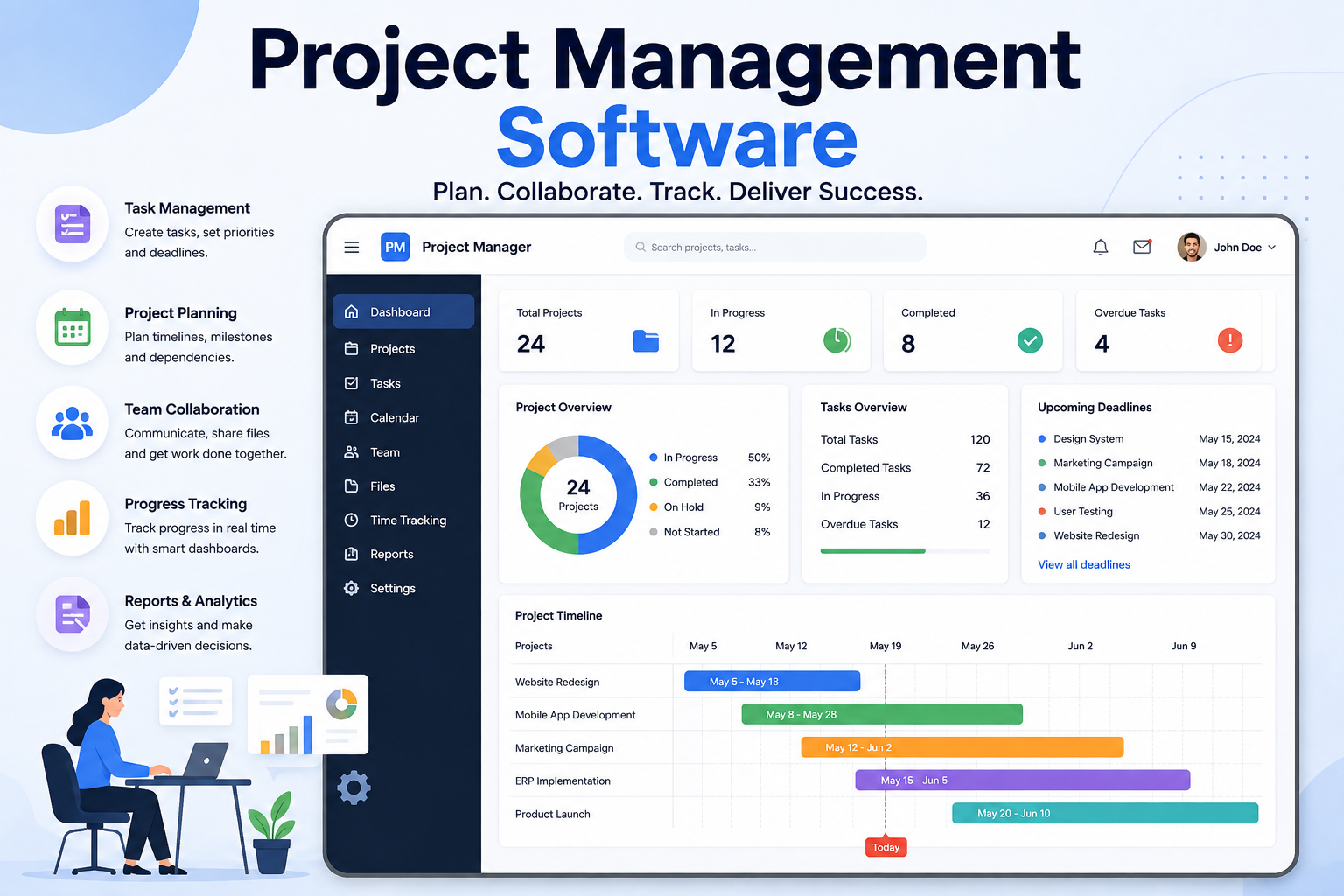
Project Management Software is a digital solution designed to help businesses plan, organize, execute, and monitor projects from beginning to completion. As teams manage multiple tasks, deadlines, resources, and stakeholders, having a centralized platform can make project coordination easier and more efficient. Instead of depending on spreadsheets, emails, and disconnected applications, organizations can use project management software to keep important project information in one accessible location.
Modern project management software provides tools for task management, scheduling, collaboration, resource planning, document sharing, reporting, and progress tracking. Project managers can create projects, divide them into individual tasks, assign responsibilities, establish deadlines, and monitor progress. Team members can easily see their assignments and priorities, helping everyone stay aligned with project objectives.
Key Features of Project Management Software
One of the most important features is task management. Teams can create tasks, assign them to specific employees, add deadlines, and monitor completion status. Scheduling tools help managers organize activities and identify potential delays before they affect the overall project.
Collaboration features allow team members to communicate, share files, provide updates, and discuss project requirements within a centralized workspace. Many platforms also offer dashboards and reports that provide valuable insights into project performance.
Resource management is another important capability. Managers can review employee workloads, allocate resources, and identify overbooked or underutilized team members. Time tracking can help organizations understand how much effort is being spent on different activities and projects.
Benefits for Businesses
Project management software can improve organization, transparency, and productivity. With centralized project information, employees can spend less time searching for updates and more time completing important work. Managers gain better visibility into project progress, workloads, deadlines, and potential bottlenecks.
The software can also improve collaboration among remote and distributed teams. Everyone can access relevant project information, communicate through shared tools, and stay updated on changing priorities.
Better reporting can support data-driven decision-making. Managers can use project data to evaluate performance, identify recurring problems, and improve future planning.
Choosing the Right Software
When selecting project management software, businesses should consider team size, project complexity, budget, and required features. Important considerations include ease of use, task management, scheduling, reporting, collaboration, integrations, security, customization, and scalability.
A suitable platform should be simple enough for employees to adopt while offering the functionality managers need to control complex projects. Businesses may also evaluate mobile accessibility, customer support, automation capabilities, and pricing before making a final decision.
Conclusion
Project Management Software provides businesses with a structured way to organize tasks, coordinate teams, manage resources, and track project performance. By bringing planning, communication, scheduling, and reporting together, it can help organizations improve efficiency and maintain better control over project delivery. Choosing a solution that matches business requirements can create a more organized workflow and support successful project outcomes.
For more, visit: https://zingmatrix.com/

 English
 Arabic
 French
 Spanish
 Portuguese
 Deutsch
 Turkish
 Dutch
Dutch
 Italiano
 Romaian
 Portuguese (Brazil)
 Greek
Greek
