
RWA Tokenization Platform Development: Must-Have Admin and Compliance Features
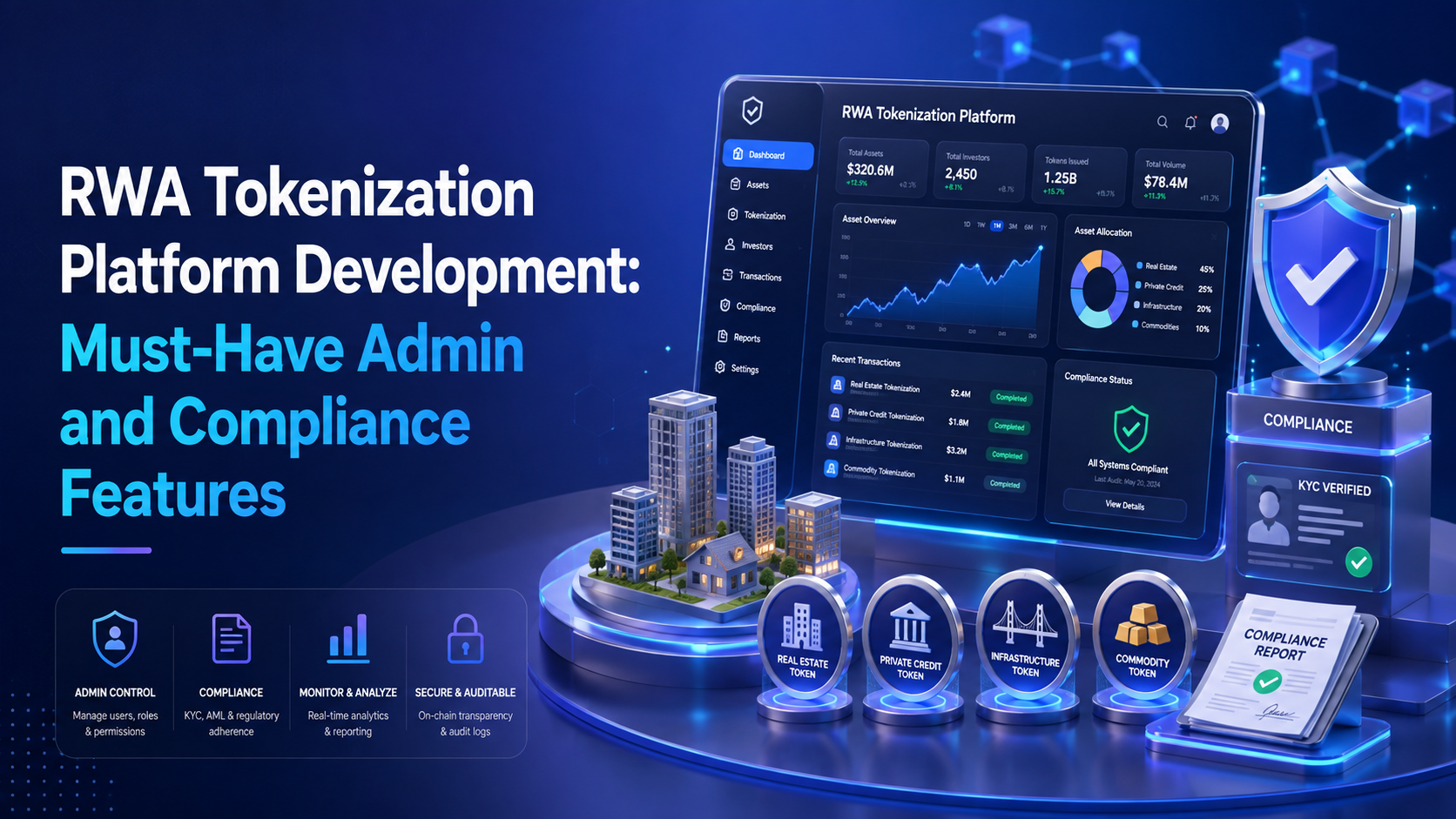
RWA Tokenization is changing how businesses represent real-world assets such as real estate, private credit, commodities, funds, artwork, and other investment products on blockchain networks. A tokenization platform is not limited to token creation and investor trading. It also needs administrative controls, investor verification, transaction monitoring, reporting tools, permission management, and compliance workflows.
For businesses entering this market, the administrative side of the platform can determine how effectively the system handles users, assets, tokens, transactions, and regulatory requirements. A well-planned admin panel gives platform operators a central place to manage daily activities while compliance features help maintain appropriate records and controls.
This is where an experienced RWA Tokenization Company can provide value during platform planning. The development process needs to consider both blockchain functions and operational requirements from the beginning. The following sections cover the main admin and compliance features that businesses should consider when planning RWA tokenization platform development.
1. Admin Dashboard for Platform Management
The admin dashboard acts as the main control area for platform operators. It can provide an overview of registered investors, tokenized assets, token supplies, transactions, pending applications, verification statuses, and platform activity.
Administrators can use dashboard widgets to monitor recent transactions, new investor registrations, asset submissions, token issuance requests, and compliance alerts. Role-based access can also restrict certain activities to authorized employees.
For example, a compliance officer may access investor verification and transaction records, while an asset manager may handle asset information and token issuance requests. This division reduces unnecessary access to sensitive platform functions.
2. Role-Based Admin Access
Different employees may have different responsibilities within a tokenization platform. Giving every administrator access to every function can create operational and security risks.
A role-based access system allows the platform owner to create permissions for administrators, compliance officers, asset managers, finance teams, support staff, and other internal users. Each role can receive specific permissions for viewing, approving, editing, or managing platform data.
For example, one administrator may approve asset listings while another handles investor verification. Sensitive actions can also require approval from another authorized employee before completion.
3. Investor KYC and Identity Verification
Know Your Customer procedures are an important part of many tokenized investment platforms. Before investors receive access to certain products, the platform may need to collect identity information and verify submitted documents.
The admin panel should provide a method for reviewing identity documents, checking verification status, requesting additional information, and approving or rejecting applications. Integration with external identity verification providers can reduce manual work.
The system can store details such as verification status, submission date, review history, and rejection reasons. These records help administrators understand the status of every investor account.
Businesses offering Real World Asset Tokenization Services should consider investor verification during the early planning stage rather than adding it after the platform is already operating.
4. AML Screening and Transaction Monitoring
Anti-Money Laundering procedures can be connected with investor onboarding and transaction monitoring. Depending on the market and asset type, the platform may need to screen investors against sanctions lists, politically exposed person databases, and other risk databases.
The admin system can display screening results and flag accounts that require additional review. Transaction monitoring can also identify unusual activity based on predefined rules.
For instance, a large number of transfers within a short period or activity involving restricted jurisdictions may generate an alert for the compliance team. Administrators can review the alert, record their decision, and maintain the associated history.
5. Asset Listing and Approval Management
Before an asset becomes available for tokenization, administrators need a structured process for reviewing its information. This may include ownership records, valuation reports, legal documents, asset descriptions, financial information, and supporting evidence.
An asset management module can allow issuers to submit asset details through a controlled workflow. Administrators can then review the submission and approve, reject, or request changes.
This approach gives the platform a defined process for moving assets from submission to token issuance. It can also help maintain a record of who reviewed an asset and when each approval occurred.
6. Token Issuance Controls
RWA Token Development requires controls around token creation, supply, allocation, and distribution. The admin panel should allow authorized personnel to configure token parameters based on the structure of the asset and offering.
Administrators may need to define the total token supply, token price, investor allocation rules, transfer restrictions, and issuance schedules. Smart contract functions can then execute approved actions on the blockchain.
Sensitive token operations should be protected through permission controls and, where appropriate, multi-level approval. This reduces the chance of unauthorized issuance or modification.
7. Wallet and Custody Management
Tokenized assets involve blockchain wallets, which means the platform needs tools for monitoring wallet activity and managing investor wallet information.
An admin module can display wallet addresses associated with verified users, token balances, deposits, withdrawals, and transaction history. If the platform uses custodial wallets, additional controls may be required for wallet creation, transaction approval, and asset movement.
For non-custodial systems, the platform can still maintain wallet associations and transaction records without controlling investor private keys. The chosen model depends on the business structure and applicable regulations.
8. Transfer Restriction Management
Not every tokenized asset can be transferred freely between all wallet addresses. Some offerings may have investor eligibility rules, geographical restrictions, holding periods, or other conditions.
A compliance module can check these conditions before allowing a transfer. The platform can verify whether the sender and receiver meet the relevant requirements before a blockchain transaction is processed.
Administrators should also have tools to manage restricted wallet lists and transfer rules. These controls can be connected with smart contracts to reduce the chance of unauthorized transfers.
9. Compliance Rule Configuration
Regulatory requirements can differ according to jurisdiction, investor category, asset class, and offering structure. Therefore, the platform should provide configurable compliance rules rather than relying on fixed settings.
Administrators can define investor eligibility criteria, transaction limits, holding periods, geographic restrictions, and other platform-specific conditions. When a user or transaction does not satisfy a rule, the platform can pause the activity and send it for manual review.
For an RWA tokenization development company, this feature can make the platform easier to adapt when business requirements or regulatory conditions change.
10. Audit Trails and Activity Logs
Every significant administrative action should be recorded. Audit logs can capture activities such as investor approvals, asset approvals, token issuance, wallet changes, compliance decisions, and permission updates.
Each event can include information such as the administrator involved, action performed, date, time, and relevant transaction or account reference.
An audit trail gives compliance teams a historical record of platform activity. It can also help investigate disputes, operational mistakes, or suspicious actions.
For RWA Tokenization Services, maintaining organized activity records can be particularly useful when businesses need to demonstrate how specific platform decisions were made.
11. Document and Record Management
Tokenized assets can involve a large collection of legal, financial, ownership, and compliance documents. The admin system should provide structured document management for these records.
Administrators can upload, review, categorize, approve, and update documents associated with an asset or investor. Version history can help identify previous documents and changes.
Access permissions should also be applied to sensitive records. For example, compliance documents may only be available to authorized compliance personnel while asset information may be accessible to selected administrators.
12. Investor Eligibility and Whitelisting
A tokenization platform may need to restrict participation to approved investors. A whitelist system can maintain wallet addresses and account profiles that are eligible to participate in specific token offerings.
The platform can connect investor verification results with wallet approval. When a wallet is approved, it may be added to the permitted list through an administrative workflow.
This system can also support different eligibility categories. For example, one asset offering may be available to verified investors from selected jurisdictions, while another may have additional investor requirements.
13. Transaction Approval and Settlement Monitoring
Administrators need visibility into token purchases, transfers, redemptions, and settlements. A transaction management module can display pending, completed, rejected, and failed transactions.
For transactions requiring manual approval, the system can send them to authorized administrators for review. After approval, the blockchain transaction can proceed according to the platform workflow.
Settlement monitoring can also help administrators compare blockchain records with internal platform records. This can be useful for identifying mismatches between token balances, payment records, and transaction status.
14. Reporting and Compliance Analytics
Reporting tools allow administrators to generate records related to investors, assets, token supplies, transactions, compliance checks, and financial activity.
Reports can be generated for internal teams as well as external reporting requirements, depending on the platform's business model and jurisdiction. Export options such as CSV or PDF can make records easier to share and review.
A reporting module may also provide filters based on asset, investor, date, transaction type, or compliance status. This reduces the time required to locate specific platform records.
15. Notifications and Compliance Alerts
Administrators should receive notifications when an action requires attention. Examples include failed KYC checks, AML alerts, unusual transactions, expired documents, restricted wallet activity, and pending asset approvals.
Notifications can appear inside the admin dashboard or be sent through approved communication channels. Different alerts can be assigned to different teams according to their responsibilities.
A priority system can help administrators distinguish routine notifications from issues that require immediate review.
16. Multi-Signature and Approval Workflows
Certain administrative actions can have significant financial or operational consequences. Token issuance, treasury transfers, contract updates, and other sensitive actions can therefore use multi-signature or multi-person approval processes.
Instead of allowing one administrator to complete the action, the system can require approval from two or more authorized users. This adds another control layer around sensitive operations.
The exact approval structure can be selected according to the organization's internal governance model.
17. Smart Contract Administration
Smart contracts handle many blockchain operations within an RWA platform. However, administrators may still need a controlled interface for monitoring contract status and managing permitted contract functions.
The admin panel can display contract addresses, supported functions, transaction history, and deployment information. If upgradeable contracts are used, contract upgrade procedures should involve strict authorization and audit logging.
Contract-related actions should not be exposed to ordinary administrative accounts without appropriate permissions.
18. Security and Access Monitoring
Security controls should cover both the admin panel and the underlying platform infrastructure. Multi-factor authentication, session management, login monitoring, IP restrictions, password policies, and suspicious login alerts can help protect administrative accounts.
The platform can also record unsuccessful login attempts and unusual administrator behavior. Access reviews can help organizations identify inactive accounts or permissions that are no longer required.
These controls are particularly important because administrative accounts may have access to investor records, asset information, and blockchain functions.
19. How These Features Fit Into RWA Platform Development
Admin and compliance functions should be considered during the architecture planning stage. A platform that only focuses on token creation may later face difficulties when investor onboarding, regulatory checks, reporting, and operational management are added.
A structured approach starts with business requirements and regulatory considerations. The next stage can cover user roles, asset workflows, KYC and AML procedures, token rules, wallet management, smart contract functions, reporting, and audit requirements.
Businesses working with an RWA tokenization development company should also define which functions are automated and which require human review. Automation can handle routine checks, while sensitive compliance decisions can remain under authorized personnel.
The same approach applies to RWA tokenization development services offered for different asset categories. Real estate, private credit, commodities, funds, and other assets may require different operational workflows. The platform architecture should therefore accommodate these differences without making administration unnecessarily complex.
Conclusion
RWA Tokenization platforms need more than token creation and investor trading features. Admin dashboards, role-based permissions, KYC and AML workflows, asset approval, wallet management, transfer restrictions, audit logs, reporting, notifications, and approval controls provide the operational foundation for managing tokenized assets. Businesses planning Real World Asset Tokenization should define these functions alongside smart contracts, investor interfaces, and blockchain infrastructure. A capable RWA Tokenization Company can help organize these requirements according to the platform's asset type, target users, and regulatory environment. Blockchain App Factory provides RWA tokenization development services for businesses planning platforms that combine token issuance, asset management, investor workflows, and compliance functions.
FAQs
1. What admin features should an RWA tokenization platform have?
An RWA platform should include investor management, asset approval, token issuance controls, wallet monitoring, transaction management, role-based access, reporting, audit logs, notifications, and compliance workflows.
2. Why are KYC and AML features important for RWA platforms?
KYC and AML features help platforms verify investors and monitor activities according to applicable compliance requirements. They can also support record-keeping and risk review.
3. Can RWA platforms restrict token transfers?
Yes. Transfer rules can be applied based on investor eligibility, wallet status, jurisdiction, holding periods, and other conditions. These rules can be connected with smart contracts.
4. What is the role of an admin dashboard in Real World Asset Tokenization?
The admin dashboard gives platform operators a central interface for managing investors, assets, tokens, transactions, documents, compliance checks, and platform activity.
5. What is RWA Tokenization development?
RWA Tokenization development refers to creating blockchain-based systems that represent real-world assets through digital tokens. It can include smart contracts, investor interfaces, wallets, compliance tools, and administrative systems.
6. Do RWA platforms need audit logs?
Audit logs are highly useful because they record administrative and compliance activities. They can help teams review past actions, investigate issues, and maintain organized operational records.
7. What services can an RWA tokenization development company provide?
An RWA tokenization development company may provide smart contract development, token creation, platform development, investor management, wallet integration, compliance features, admin dashboards, and ongoing technical support.
8. What are Real World Asset Tokenization Services?
Real World Asset Tokenization Services generally cover the technical development and implementation of systems that represent physical or financial assets as blockchain-based tokens.
9. How does RWA token development fit into the platform?
RWA token development creates the blockchain token representing an asset or investment interest. The token can then be connected with investor management, compliance rules, wallets, trading, and administrative functions.
10. Why should compliance be considered during RWA tokenization platform development?
Considering compliance during the initial development process allows investor verification, transaction monitoring, transfer restrictions, reporting, and approval workflows to be included within the platform architecture rather than added later.

 English
 French
 Spanish
 Portuguese
 Deutsch
 Turkish
 Dutch
Dutch
 Italiano
 Russian
 Romaian
 Portuguese (Brazil)
 Greek
Greek
