
How Long Do Tungsten Carbide Rings Usually Last
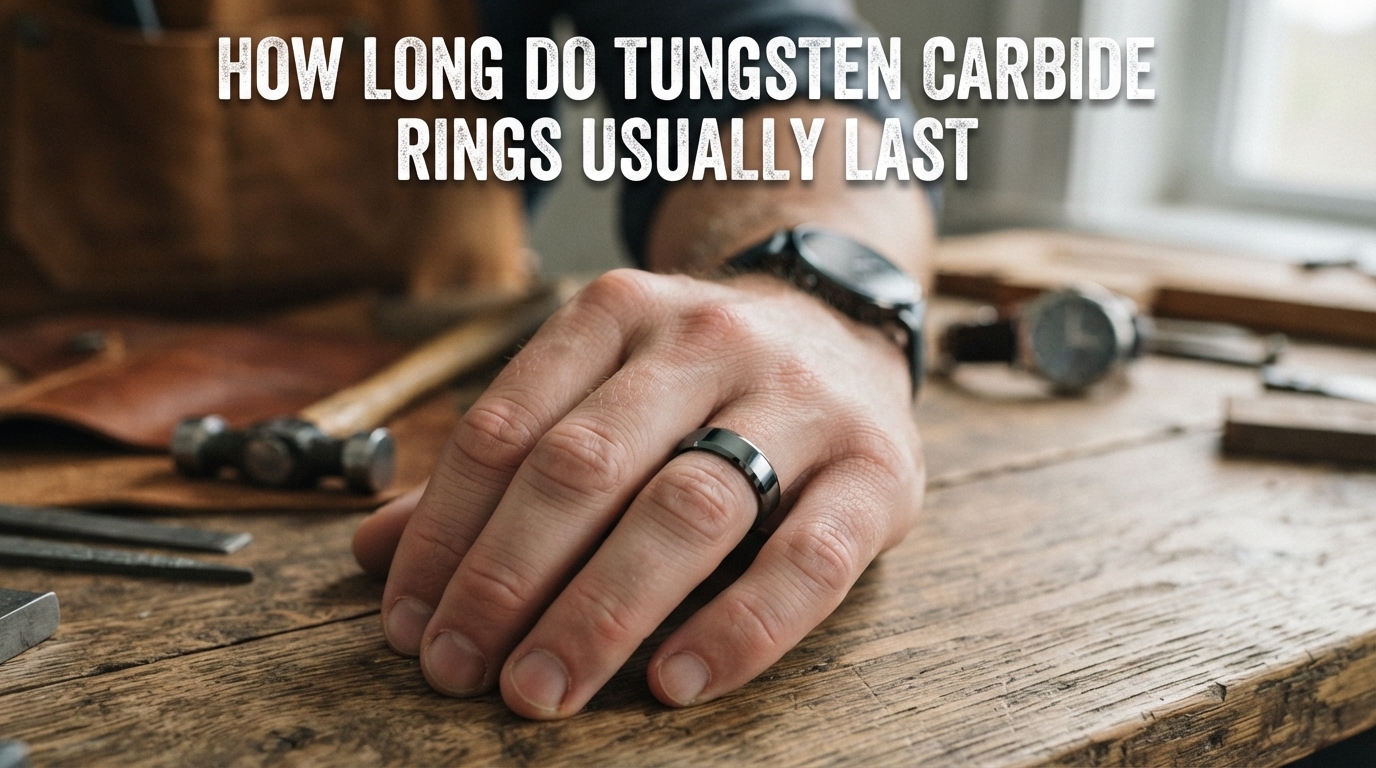
If you’re buying a ring that is supposed to mean something, the first question usually turns practical, like, how long does it actually last? There’s a ton of noise in the ring space, lots of metals that sound amazing until you’ve worn them for a while, and then, yeah, they start acting up. Tungsten carbide rings are kind of a separate story. People claim they’re tough, but the idea isn’t overhyped, and figuring out what really affects lifespan gives you more than any shiny description.
The Short Answer on Lifespan
A good tungsten ring can look basically the same after 10 years of daily use. The material itself usually doesn’t degrade, get that nasty scratchy look, or tarnish. A lot of buyers say they’re seeing the same look after 15, 20, or even 30 years, without doing much beyond basic care. It’s not how gold or silver usually behaves, which tends to show wear sooner. Most brands list something like 15 to 30 years under everyday conditions. Some jewelers even include lifetime polishing when you buy.
But here’s the catch: “tungsten ring” can cover different products. The tungsten carbide is only one piece of the puzzle. Coatings, inlays, and how the band was made in the first place—those are the rest of it.
What Makes Tungsten Carbide Rings So Durable
Tungsten carbide sits around 9 to 9.5 on the Mohs hardness scale, a little below diamond. That matters because it shrugs off the small everyday disasters that wreck softer metals. Stuff like keys in your pocket, countertops, tools, and gym equipment—you get the idea… and usually, nothing really leaves a mark.
It also doesn’t tarnish, corrode, or fade. A brushed or polished surface tends to keep its appearance for a long time. For comparison, a 14k white gold band often shows noticeable scratches in about 6 to 12 months, and then it needs professional polishing every year or two. With tungsten, you might get 5 to 15 years that look basically like day one. That “spread” is real, and it keeps compounding instead of falling apart.
The One Real Weakness
Tungsten carbide is hard, but it’s not flexible. That same property that keeps it scratch resistant makes it act brittle if it gets hit with a sharp, concentrated force. Drop it on concrete the wrong way, and it can crack or even shatter. This isn’t normal day-to-day wear. It’s not a “fragile” ring, but it’s also not the one you want testing against hard surfaces.
For most folks, that never becomes a problem. If you work in a high-impact environment, or you handle heavy machinery regularly, then it’s worth factoring in.
Solid Bands vs. Coated Rings
What you actually buy changes the lifespan story pretty much.
A solid tungsten band with a natural finish is the most straightforward. Because there’s no finish layer sitting on top of something else, the look stays consistent for years, including after 20 years of daily wear. Nothing peels, no coating to chip off. It’s tungsten throughout.
Coated rings are more complicated. Black, gold-toned, rose gold, and blue tungsten rings usually have a tungsten carbide base with a surface treatment on top. The base is tough, but the coating isn’t guaranteed in the same way. High-contact zones wear first: the outer edges, the palm side, places that rub against other rings, and anything that gets repeated friction. How well the color lasts depends on the coating method, thickness, what you do day to day, and what chemicals or abrasives it meets over time.
With jewelry-grade tungsten, good ion plating can beat standard electroplating by a noticeable margin. A well-done black or gold-plated ring can keep its finish for multiple years with little visible change. Cheaper coating jobs wear quicker and look more uneven. If you’re choosing a colored finish, the plating quality tends to matter more than the color name.
Inlays and Mixed-Material Rings
Rings mixing tungsten with wood, carbon fiber, antler, or stone often look really distinct. The tungsten core usually holds up fine. The inlay is where things get interesting. Wood can dry out or loosen. Resin can yellow if it gets enough UV exposure. Carbon fiber holds up better than most organic materials, but still it’s not the same as the tungsten base. So in an inlay ring, the inlay will likely demand attention long before the metal does.
Build Quality and What It Does to Lifespan
Most buying guides kind of skim over this, but it changes everything more than people expect. Cheaper tungsten rings might use weaker binding metals, inconsistent production, and rushed finishing. That can create microfractures, early discoloration, and chipping that comes from the making process, not from how carefully you wore it. Some rings marketed as “tungsten alloy” or “tungsten steel” contain very little actual tungsten carbide. In some cases, they can start breaking down within two or three years.
Real tungsten carbide feels different too. It’s noticeably heavier. A genuine band usually weighs roughly 2.5 times more than an identically sized titanium ring. That weight difference can be a pretty solid hint that you’re actually holding the real deal.
What to Expect Over Time
A solid natural-finish tungsten band asks almost nothing of you. Some owners re-polish every two to five years. Others go a decade without any visible wear at all. The ring doesn't need much.
Colored rings need occasional re-plating to keep the original finish. If you want to skip that step entirely, a natural silver or brushed finish avoids it. One thing you can't do with tungsten is resize it the conventional way. The hardness makes that impossible. Some retailers offer size exchanges instead, which is worth confirming before you buy.
The Bottom Line
A lifetime is the honest answer for tungsten carbide rings, assuming you buy a solid, well-made band and treat it with basic sense. Coated rings hold their finish for years before showing wear. Inlay rings follow the lifespan of whatever material sits inside them. But the metal itself? It outlasts most things you'll ever own.
 English
 Arabic
 French
 Spanish
 Portuguese
 Deutsch
 Turkish
 Dutch
Dutch
 Italiano
 Russian
 Romaian
 Portuguese (Brazil)
 Greek
Greek
