
How Nightstand Lamps Create Comfortable Reading Light Without Brightening the Entire Room
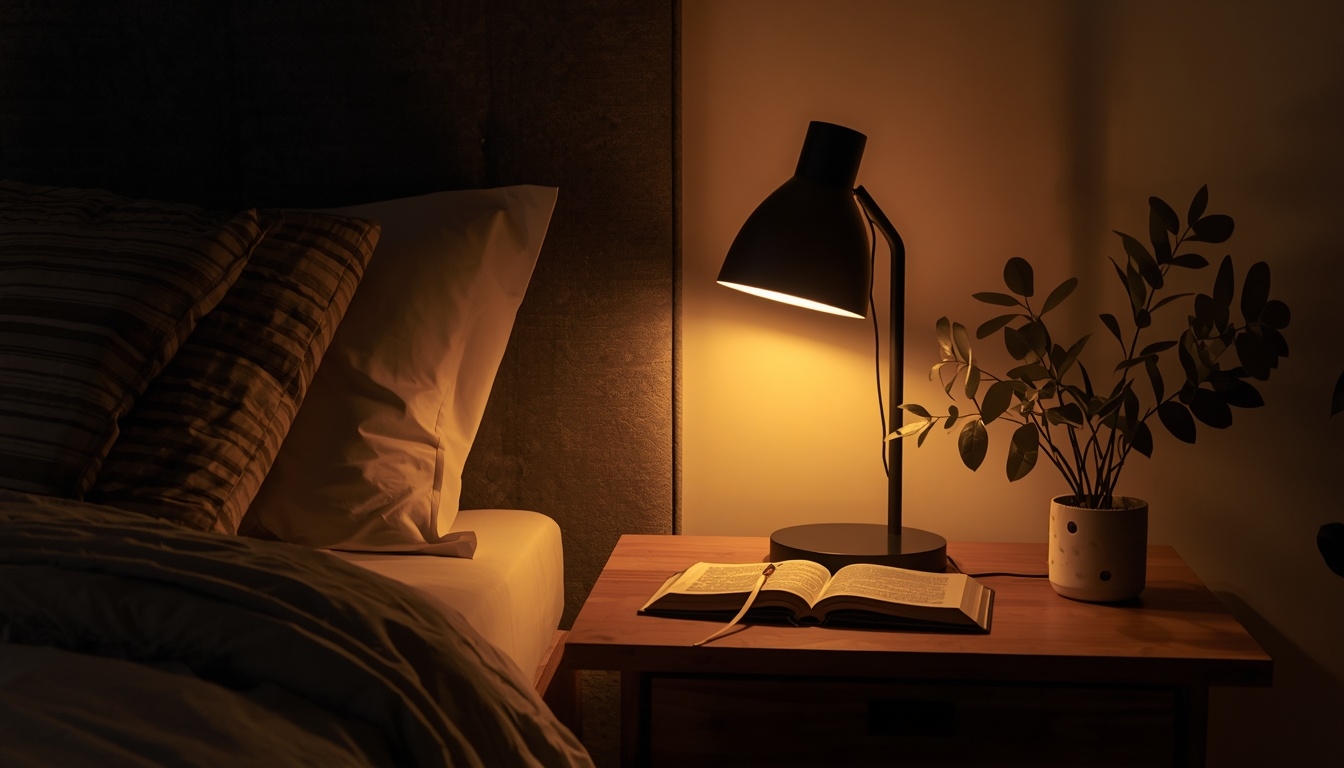
Reading from a book in bed should not create chaos in your bedroom. This requires smart use of nightstand lamps that solve the problem of having neither too much light nor too little.
The right bedroom lighting is about control, not wattage, and these lamps deliver exactly that.
People tend to over-illuminate their bedrooms by habit more often than anything else. An overhead lamp illuminates your ceiling, the walls, and your sleeping companion’s face all at the same time. These lamps prevent this problem from happening by being placed at eye level, near the book.
What Makes Nightstand Lamps More Suitable For Reading Than Ceiling Lights?
Such lamps provide light at a short distance from the book, requiring minimal power to do so. A lamp eighteen inches from the page does the job a ceiling fixture ten feet up simply cannot.
The height factor is also important. If the bottom side of the lamp is located close to eye level while sitting, then the book will be lit up instead of your eyes. Thus, there is a glare that makes it difficult to read.
How Many Lumens Does A Lamp At Bedside Actually Need For Reading?
It is not important to use a bright bulb to read. What matters is understanding illumination, as it is a measure of how much brightness a bulb produces
Here's a simple reference chart based on verified federal brightness data for an ideal reading light.
|
Old Incandescent Equivalent |
Approximate Lumens |
Best Use |
|
40 watts |
~450 lumens |
Soft ambient glow |
|
60 watts |
~800 lumens |
Standard everyday brightness |
|
100 watts |
~1,600 lumens |
Task-focused, brighter reading light |
Source: U.S. Department of Energy; Federal Trade Commission consumer lighting guidance
Does The Colour Of Light Affect Your Sleep Quality After Reading?
The answer is yes. A light source with a warmer colour allows the body to relax, while cooler blue light is more troublesome to the brain. Hence, it is probably one of the reasons why bedside lamps are chosen according to the light color more than the light power.
The table below will help you understand how light colour can affect sleep quality.
|
Color Temperature |
Feel |
Recommended Time |
|
2,500K–3,000K |
Warm, amber |
Evening reading light |
|
3,000K–3,500K |
Soft neutral |
General bedside use |
|
4,000K and above |
Cool, blue-toned |
Daytime tasks only |
Which Additional Features Truly Matter?
Some minor enhancements can transform a simple lamp into the one that you use every day without thinking. Such as:
-
Touch control system for modifying brightness in your sleep.
-
Integrated USB ports for charging your smartphone in proximity.
How Do Nightstand Lamps Fit Into Bedroom Design Today?
Nightstand lamps are now considered a design element, rather than a mere accessory. A lamp’s shape is of great importance when it comes to modern bedroom design, as it has become essential in minimalist bedrooms.
Circ lighting has also gained attention for blending sculptural shapes with soft, diffused output. Most homes, though, aren't reaching for anything exotic. About 90% of U.S. households now report using LED bulbs somewhere in their indoor lighting.
Conclusion
Comfortable light is not about having the brightest light bulb on the market. Nightstand lamps earn their place on the nightstand for the aptness of light they produce. The correct position, brightness and temperature of the light will keep your lamp happily working every night.

 English
 Arabic
 French
 Spanish
 Portuguese
 Deutsch
 Turkish
 Dutch
Dutch
 Russian
 Romaian
 Portuguese (Brazil)
 Greek
Greek
