
Getting the Ground Right: Why a Strong Foundation Matters for Any Outdoor Structure
Whether you're building a backyard shed, a detached garage, or a post-frame barn, the truth is simple: if the base isn't solid, the whole thing is at risk. You can buy the best materials, hire a skilled crew, and put real money into the structure—but none of that will matter if the foundation isn't done right.
As someone who’s been around construction and land development for years, I’ve seen the same mistake repeated too often. People get excited about the visible part of the project and overlook the ground it’s sitting on. But in the end, the foundation is what decides if your structure lasts 3 years or 30.
Let’s break down why your build should always start with the ground beneath it.
Why a Strong Base Isn’t Optional
Concrete might not be the most exciting part of your project, but it's the most critical. A strong base does three main things:
- Spreads the weight of the structure evenly, preventing sagging or warping.
- Stops movement caused by weather shifts, freeze/thaw cycles, or settling soil.
- Protects from moisture, keeping your building dry and safe from rot or corrosion.
Even a small shed can shift if it’s placed on poorly prepped soil. It may not happen overnight—but give it a few seasons of rain, wind, and heat, and you’ll start seeing doors that stick, cracks in walls, or floors that feel uneven under your boots.
Not All Concrete Work Is the Same
Different projects need different types of concrete prep. And that’s where many people get stuck—they assume a one-size-fits-all approach will work. It won’t. Here's a breakdown of the three main options:
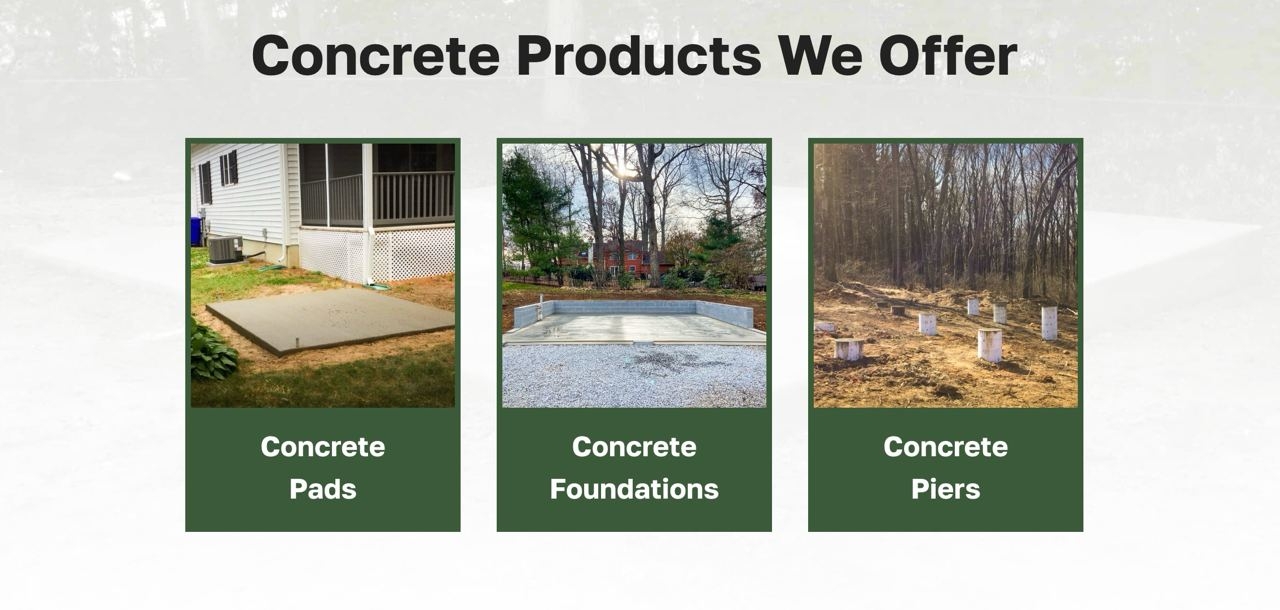
1. Concrete Pads
Great for: garages, workshops, or sheds with heavy contents.
Pads offer a smooth, level surface across the whole footprint of the building. They’re strong and support heavy weight evenly. They also give you a clean finish from day one.
2. Concrete Piers
Great for: post-frame buildings, barns, or structures on sloped land.
Piers go deep into the ground and support the structure at key load points. They require less concrete and are ideal when you need stability but want to reduce costs.
3. Concrete Foundations
Great for: permanent structures with long-term use.
A full foundation offers the most stability and the best protection against shifting and moisture. It takes more time and planning, but if you’re thinking long-term, this is the way to go.
Each of these serves a different purpose. What matters most is matching the right base with your structure and soil conditions. Cutting corners here often leads to expensive repairs later.
Common Foundation Mistakes (And Why They’re Expensive)
Here’s the reality most people learn the hard way: it’s more expensive to fix a bad foundation than to do it right the first time.
- Settling: If the ground wasn’t prepped or compacted well, your concrete may start to sink unevenly.
- Cracking: Without control joints or proper reinforcement, concrete can crack—especially in extreme weather.
- Water damage: Poor drainage or uneven slopes can direct water straight into your structure, leading to rot, mold, or frost heave in colder areas.
All of these issues cost money. And often, they can’t just be patched—you have to rip things out and start over.
Why Experience Matters in Site Prep
Concrete work isn’t something you can “eyeball” and hope for the best. It takes the right tools, the right mix, and the right timing. Most of all, it takes planning. That’s where working with a crew who specializes in site prep makes all the difference.
Professionals look at more than just the surface. They check soil conditions, drainage patterns, and elevation. They don’t just pour concrete—they build a lasting solution.
If you’re looking for more details on the different types of concrete base prep—and how to know which one fits your project—this guide is worth a look https://www.siteprep.com/concrete-site-preparation/. It breaks down the pros and cons clearly, without the sales fluff.
Final Thought: Build It Once, Not Twice
You can’t afford to guess when it comes to what’s under your structure. The right foundation gives you peace of mind, saves money, and protects your investment for years. You might not see it once the building goes up—but it’s the part that holds everything together.
A lot of people ask me where to cut costs when budgeting for a new structure. My answer? Not the foundation. If you get that part right, the rest of the build has a real chance to last. Build it right. Build it once.

 English
 Arabic
 French
 Spanish
 Portuguese
 Deutsch
 Turkish
 Italiano
 Russian
 Romaian
 Portuguese (Brazil)
 Greek
Greek
