
Analysis of the Outstanding Performance of Friction Springs in Cushioning and Damping

1. Structure of Friction Springs
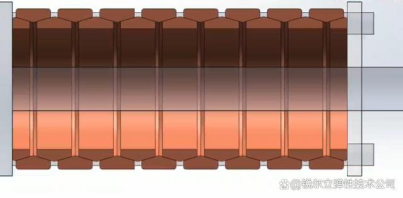
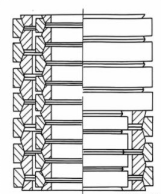
Friction springs consist of an outer ring with an inner conical surface and an inner ring with an outer conical surface, matched together. The size and number of rings depend on the load capacity and deformation requirements.
When an axial load F is applied to the end face of the rings, a normal pressure acts on the conical contact surface between the outer and inner rings. This causes the diameter of the outer ring to expand under tensile stress and the diameter of the inner ring to shrink under compressive stress. The rings move relative to each other along the conical surface, resulting in axial shortening and deformation f.
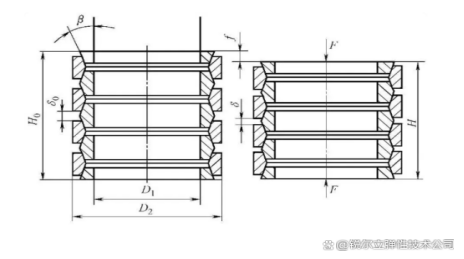
To accommodate these deformations, annular springs are typically installed in guiding sleeves or on shafts, leaving appropriate clearances between the outer ring and the sleeve, and between the inner ring and the shaft (usually about 2% of the diameter).
2. Characteristics of Friction Springs
The performance of friction springs is influenced by the frictional forces on the conical mating surfaces of the inner and outer rings.
- Loading Phase: Axial force F is balanced by surface pressure and friction, effectively reducing the applied axial load and increasing spring stiffness.
- Unloading Phase: Friction inhibits the recovery of elastic deformation, reducing the spring’s restoring force.
This results in a characteristic hysteresis curve, where energy dissipated as heat due to friction accounts for about 60%-70% of the work done during the loading phase. Consequently, annular springs exhibit excellent damping and energy absorption capabilities, with a higher energy storage capacity per unit volume compared to other spring types.
3. Applications of Friction Springs
Friction springs are ideal for scenarios where space is limited but strong cushioning is required. Common applications include:
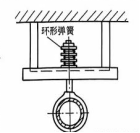
- Large Pipe Hangers
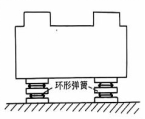
- Supports for Vibrating Machinery
- Composite Springs: Two sets of friction springs with different diameters can be installed concentrically for enhanced performance.
One of their advantages is ease of maintenance. Damaged or worn rings can be replaced individually, making repairs cost-effective and straightforward.
4. Lubrication and Maintenance
To prevent damage, reduce wear, eliminate noise, and cool the working surfaces, lubrication is essential. Common lubricants include solid materials like graphite or grease.


 English
 Arabic
 French
 Spanish
 Portuguese
 Deutsch
 Turkish
 Dutch
Dutch
 Italiano
 Russian
 Portuguese (Brazil)
 Greek
Greek
