
Why Logistics Mould Quality Matters for Supply Chain Efficiency
Understanding the Basic Tool Definition
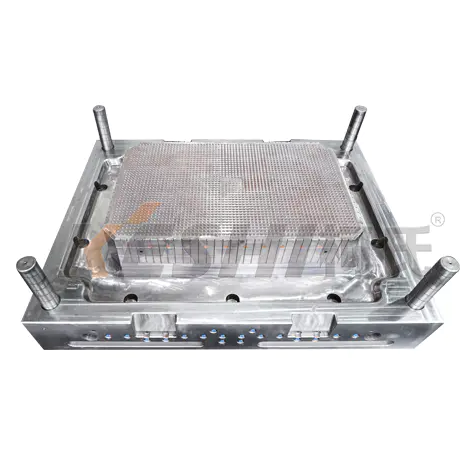
A logistics mould is a precision-engineered tool used to manufacture plastic products essential for modern supply chains, including pallets, crates, bins, totes, and containers. These moulds are typically large and robust, designed to produce items that must withstand heavy loads, repeated handling, and harsh transportation environments. Unlike moulds for consumer goods, logistics moulds create products optimized for stacking, nesting, forklift access, and compatibility with automated warehouse systems. The quality of each logistics mould directly determines whether finished products will perform reliably through years of demanding service in warehouses, distribution centers, and transportation networks.
Types of Logistics Products Produced
A wide range of supply chain essentials rely on logistics mould technology for consistent production. Pallet moulds create the foundation of modern material handling, producing units that support thousands of pounds while allowing four-way forklift entry. Crate moulds manufacture containers for transporting produce, manufactured components, and retail goods, often featuring ventilation and interlocking designs. Bin moulds produce smaller containers for warehouse organization, parts storage, and order picking operations. Tote moulds create reusable shipping containers that replace cardboard boxes in closed-loop logistics systems. Each product type presents unique design challenges to ensure functionality, durability, and compatibility with automated handling equipment.
How Logistics Moulds Are Manufactured
Large-Scale Mould Design Challenges
Creating a logistics mould involves engineering considerations unique to large-format products. Mould designers must account for plastic flow across expansive cavities, often exceeding two meters in length for pallet production. Structural analysis determines optimal rib patterns that maximize strength while minimizing material use and cycle time. Warpage control becomes critical in large flat surfaces that must remain flat for stable stacking and automated handling. Cooling channel placement must ensure uniform temperature distribution to prevent differential shrinkage that would distort finished products.
Material Selection for Heavy-Duty Moulds
The construction materials for logistics moulds must withstand extreme pressures and wear while maintaining dimensional stability. High-grade tool steels such as P20 and 4140 are commonly specified for their combination of strength, machinability, and wear resistance. For very large moulds, pre-hardened steels reduce the risk of distortion during heat treatment. Critical wear areas such as gate inserts and moving cores may use harder materials or specialized coatings to extend service life. The massive size of logistics moulds means material costs represent a substantial investment, making material selection an important economic decision balancing initial cost against expected production volume.
Machining Large Mould Components
Manufacturing a logistics mould requires specialized large-scale machining capabilities. Bridge-type CNC machining centers with extended travels cut cavity and core details from steel blocks weighing several tons. Deep hole drilling equipment creates cooling channels that may extend meters through the mould material. Large surface grinders ensure flatness of critical parting lines and mounting surfaces. Skilled mold makers assemble finished components, ensuring precise alignment of cores and cavities that may weigh thousands of pounds. The scale of logistics moulds means even minor errors can result in costly rework or scrapped components.
Why Logistics Mould Quality Matters for Supply Chain Efficiency
Load Capacity and Structural Integrity
The quality of a logistics mould directly affects the load-bearing capacity and safety of finished products. Pallets must support tons of stacked goods without deflection that could destabilize loads or damage automated equipment. Crates must withstand stacking several units high in warehouses without collapsing. Bins must carry heavy components repeatedly without cracking at stress points. Proper mould design creates reinforcing ribs and optimal wall thickness distribution that provide necessary strength without excessive material weight. Poor mould quality produces weak points that fail under load, causing product damage and safety hazards.
Dimensional Accuracy for Automated Handling
Modern warehouses increasingly rely on automated systems that demand precise logistics mould quality. Automated storage and retrieval systems require pallets and containers that fit exactly into rack positions with tight clearances. Conveyor systems need consistent product dimensions to transfer smoothly without jamming. Robotic picking systems depend on accurate container positioning for reliable operation. Moulds that maintain tight dimensional tolerances through millions of cycles enable logistics products that interface reliably with automated equipment, maximizing warehouse efficiency and minimizing costly disruptions.
Stacking and Nesting Efficiency
Space utilization in transportation and storage depends on proper stacking and nesting features created by the logistics mould. Pallets must stack securely without tipping while allowing compact storage of empty units. Crates need interlocking features that create stable stacks while empty containers nest together to minimize return shipping volume. Bins should stack when full for warehouse storage and nest when empty for efficient handling. Precision mould construction ensures these features function consistently across all production units, enabling logistics operations to maximize space utilization and minimize transportation costs.
Durability Through Repeated Use
Logistics products face demanding service conditions that test logistics mould quality. Pallets endure repeated forklift impacts that can crack poorly designed units. Crates experience temperature extremes during transport and storage. Bins accumulate years of handling in distribution centers. Quality moulds produce products with consistent material distribution that withstands this abuse without premature failure. Proper gate placement ensures strong knit lines that resist impact. Adequate cooling in the mould prevents residual stresses that could lead to stress cracking. These durability factors determine whether logistics products provide years of reliable service or require frequent replacement.
Production Efficiency for High Volume
The economics of logistics product manufacturing depend heavily on logistics mould efficiency. Large pallet moulds with optimized cooling channels reduce cycle times, increasing hourly output and reducing per-unit costs. Multi-cavity moulds for smaller containers multiply production from each machine. Hot runner systems eliminate runner waste and improve part quality through precise temperature control. Robust ejection systems prevent stuck parts and production interruptions. These efficiency factors determine whether logistics products can be produced cost-effectively for competitive global markets where material handling costs directly affect supply chain economics.
Compatibility with Global Standards
Logistics moulds must produce products that comply with international standards for interchangeability. ISO pallet sizes ensure compatibility with global shipping containers and warehouse systems. Euro container dimensions enable cross-border logistics within unified systems. GMA pallet specifications dominate North American supply chains. Moulds designed to these exacting standards produce products that work seamlessly within established logistics networks. Quality mould construction ensures consistent compliance with these specifications through millions of production cycles, enabling global trade and efficient supply chain operations worldwide.
 Spanish
 English
 Arabic
 French
 Portuguese
 Deutsch
 Turkish
 Dutch
Dutch
 Italiano
 Russian
 Romaian
 Portuguese (Brazil)
 Greek
Greek
