
What is a Social Enterprise?
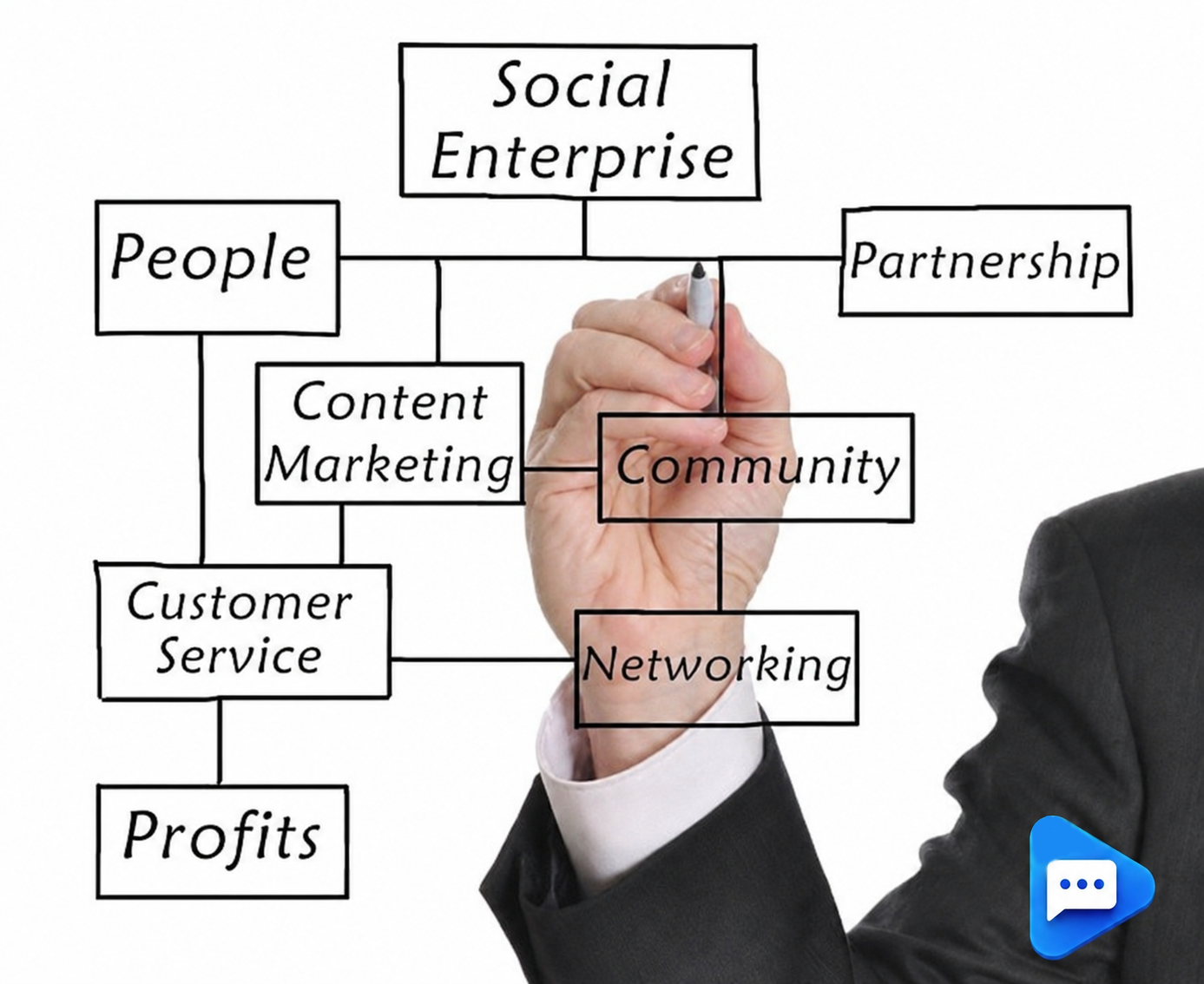
Business with a Brain, Profit with a Purpose: What is a Social Enterprise?
Imagine a business that measures its success not just by how much money it makes, but by how much good it does in the world.
It sounds like a hybrid between a traditional business and a non-profit charity, right? Well, that is exactly what a social enterprise is. It represents a massive shift in how we think about commerce, proving that capitalism and compassion can actually walk hand-in-hand.
The Core Concept: Money + Mission
A social enterprise is a business that sells goods or services to earn revenue, but uses its profits to advance a specific social, cultural, or environmental mission.
Unlike a traditional business, where the ultimate goal is to maximize wealth for shareholders, a social enterprise exists primarily to solve a community problem or improve society.
How It Differs From Other Organizations
To truly understand a social enterprise, it helps to see where it sits on the spectrum of organizational models:
-
Traditional Charity: Relies entirely on donations, grants, and fundraising to do good. They do not sell products to sustain themselves.
-
Traditional Business: Sells products or services to generate profit for owners and investors. (They may do corporate social responsibility on the side, but profit is the primary driver).
-
Social Enterprise: Sells products or services (like a business) but reinvests the majority of its profits into a cause (like a charity). It is entirely self-sustaining.
Real-World Examples: How They Work
Social enterprises come in all shapes and sizes, but they generally fall into a few common models:
1. The "Buy-One, Give-One" Model
Perhaps the most famous example of this is TOMS Shoes. For every pair of shoes purchased, a pair is donated to a child in need. This model builds the social good directly into the consumer's transaction.
2. Employment Generation
Some enterprises exist specifically to provide jobs, training, and fair wages to marginalized communities. For example, Greyston Bakery in New York employs an "open hiring" policy, offering jobs to individuals who face barriers to employment, such as a history of incarceration or homelessness. They happen to bake the brownies used in Ben & Jerry’s ice cream!
3. Environmental Innovation
Companies like Who Gives A Crap sell everyday household staples (like recycled or bamboo toilet paper) and donate 50% of their profits to build toilets and improve sanitation in developing countries.
Why the World Needs Social Enterprises
The rise of the social enterprise is being driven by a new generation of consumers and entrepreneurs who demand more accountability from the marketplace.
-
Financial Independence: Because they make their own money, social enterprises don't have to spend half their time begging for donors or writing grant applications. They control their own destiny.
-
Consumer Conscious: Modern consumers want their spending to reflect their values. Buying from a social enterprise allows people to vote for a better world with their wallets.
-
Sustainable Impact: Instead of giving a one-time handout, these organizations often create local economies, clean up environments, and provide long-term stability for communities.
The Bottom Line
A social enterprise proves that you don't have to choose between making a living and making a difference. By combining the cutthroat efficiency of a business with the heart of a charity, these innovative organizations are rewriting the rules of the global economy—one purchase at a time.

 English
 Arabic
 French
 Spanish
 Portuguese
 Deutsch
 Turkish
 Dutch
Dutch
 Russian
 Romaian
 Portuguese (Brazil)
 Greek
Greek
