
How Flow Cytometry Is Advancing Modern Cell Analysis
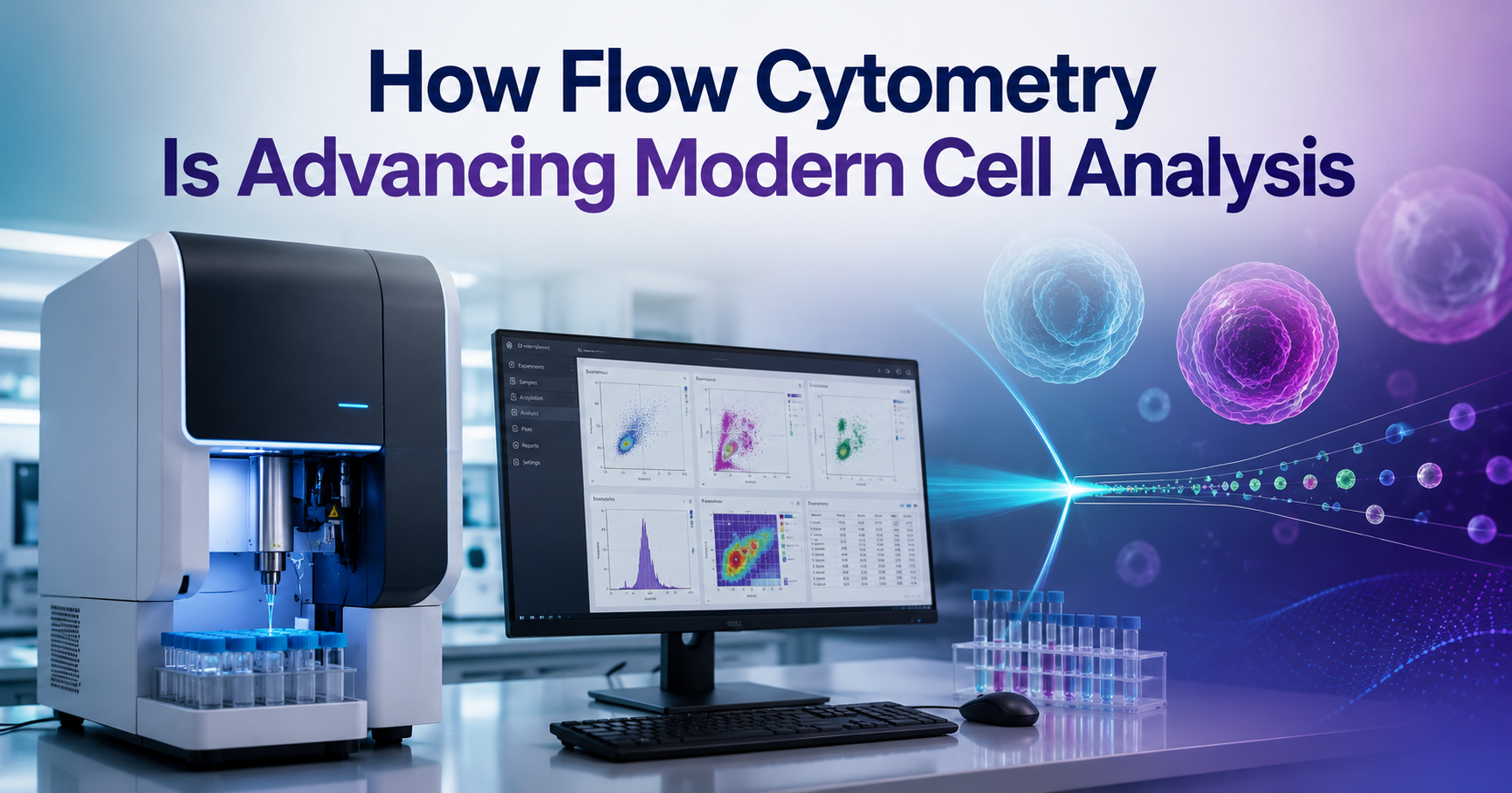
Flow cytometry has become one of the most important analytical technologies in modern life sciences and healthcare. The technique enables researchers and clinicians to examine thousands of cells within seconds, helping identify specific cellular characteristics, disease markers, and immune responses with exceptional precision. Its ability to generate rapid and detailed data has made it a valuable tool across diagnostics, drug discovery, cancer research, and biotechnology applications.
The growing importance of precision medicine and advanced diagnostics has further increased the adoption of flow cytometry solutions worldwide. According to the Global Flow Cytometry Market analysis, the industry was valued at USD 3.8 billion in 2023 and is projected to expand at a CAGR of 10.6% through 2030, reflecting the increasing reliance on cellular analysis technologies across healthcare and research environments.
Understanding the Role of Flow Cytometry in Healthcare
Flow cytometry is a laboratory technique used to measure the physical and chemical properties of cells or particles suspended in a fluid. Cells are passed through laser beams, allowing scientists to evaluate characteristics such as size, complexity, protein expression, and cellular activity. This process helps identify different cell populations with remarkable speed and accuracy.
The technology plays a critical role in diagnosing hematological disorders, monitoring immune system health, and detecting abnormal cell populations. Hospitals and research institutions increasingly rely on flow cytometry to improve clinical decision-making and support personalized treatment strategies. Its ability to provide detailed cellular information makes it particularly valuable in oncology, immunology, and infectious disease management.
Growing Demand for Cancer and Immunology Research
One of the strongest factors driving flow cytometry adoption is the increasing prevalence of chronic diseases, especially cancer. Researchers use flow cytometry to analyze tumor cells, evaluate treatment responses, and identify biomarkers that can guide targeted therapies. The technology enables detailed examination of immune cell behavior, helping scientists better understand disease progression and treatment effectiveness.
In immunology research, flow cytometry supports the study of immune responses by identifying specific cell types and measuring protein expression patterns. Organizations conducting vaccine development, autoimmune disease research, and immunotherapy trials utilize flow cytometry to generate highly accurate cellular data. The growing focus on immune-based treatments continues to expand the relevance of this technology across healthcare sectors.
Technological Innovations Enhancing Performance
Recent advancements in flow cytometry instrumentation have significantly improved analytical capabilities. Modern systems can evaluate multiple cellular parameters simultaneously, enabling researchers to gain deeper insights from a single sample. Enhanced software platforms, automated workflows, and improved data processing tools have also increased operational efficiency.
The introduction of technologies such as spectral flow cytometry, microfluidics, and advanced cell sorting solutions has expanded the range of applications available to laboratories. These innovations improve sensitivity, accuracy, and throughput, allowing scientists to conduct more complex analyses while reducing processing time. According to the MarkNtel Advisors report, technological advancements remain a key factor supporting industry expansion and broader adoption across research settings.
Research and Academic Institutions Driving Adoption
Academic laboratories and research organizations represent a significant user base for flow cytometry technologies. Universities, biomedical institutes, and pharmaceutical research centers depend on advanced cell analysis tools to support studies in genetics, immunology, molecular biology, and regenerative medicine.
The growing use of flow cytometry in academic environments is creating new opportunities for innovation. Researchers increasingly utilize the technology to investigate complex biological mechanisms, identify novel therapeutic targets, and accelerate drug development programs. Continuous investments in scientific research and laboratory infrastructure are expected to sustain demand for advanced analytical instruments.
Regional Trends Influencing Industry Expansion
North America continues to maintain a strong position within the flow cytometry landscape due to its established healthcare infrastructure, advanced pharmaceutical sector, and extensive research activities. The region benefits from substantial investments in cancer research, biotechnology innovation, and clinical diagnostics.
Other regions are also witnessing increased adoption as healthcare modernization efforts gain momentum. Expanding biotechnology industries, rising healthcare expenditures, and growing awareness of advanced diagnostic technologies are encouraging greater utilization of flow cytometry solutions across emerging economies. These developments are helping broaden access to sophisticated cellular analysis tools worldwide.
The Future of Flow Cytometry Applications
The future of flow cytometry is closely linked to the continued evolution of precision medicine, advanced therapeutics, and data-driven healthcare. As laboratories seek more detailed biological insights, demand for highly sophisticated analytical technologies is expected to increase. Integration with artificial intelligence and advanced analytics platforms may further enhance the interpretation of complex cellular data.
Flow cytometry is also expected to play a larger role in drug development, biomarker discovery, and personalized treatment planning. With ongoing technological improvements and expanding research applications, the technology is likely to remain a fundamental component of modern biomedical science. Continued collaboration between healthcare providers, research institutions, and technology developers will support the advancement of cellular analysis capabilities in the years ahead.
As scientific understanding of diseases becomes increasingly sophisticated, flow cytometry will continue serving as a critical tool for unlocking cellular insights that support innovation across diagnostics, therapeutics, and life sciences research.

 English
 Arabic
 French
 Spanish
 Portuguese
 Deutsch
 Turkish
 Dutch
Dutch
 Italiano
 Russian
 Portuguese (Brazil)
 Greek
Greek
