
Miniature Relay Solutions for Automated Equipment
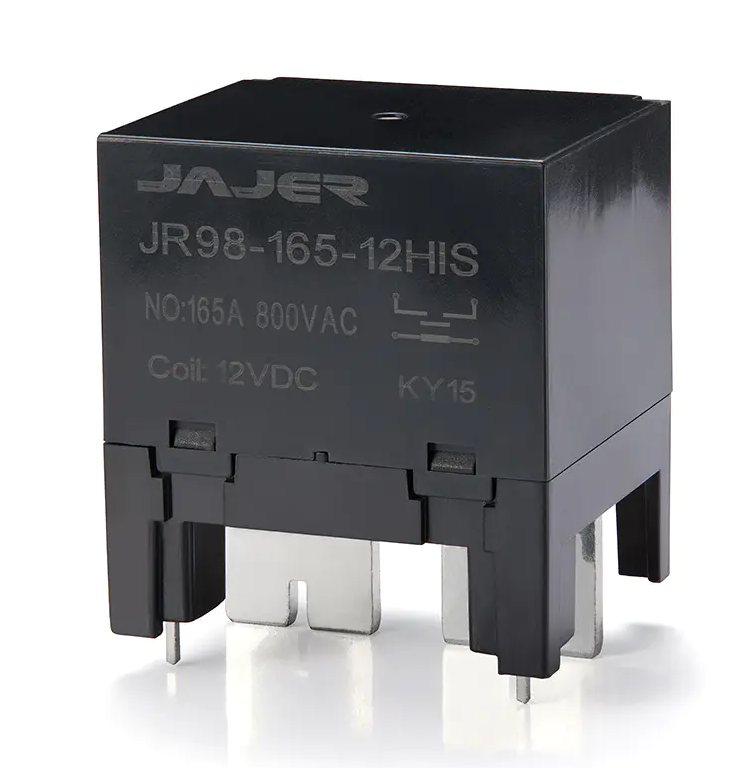
Industrial automation relies on numerous control components working together to manage machinery, monitor processes, and coordinate system activities. Among these components, the Miniature Relay remains a widely used device due to its compact structure and practical switching capabilities.
Automation systems often involve multiple sensors, controllers, motors, and monitoring devices. A Miniature Relay can act as an interface between low-power control signals and higher-power operational circuits. This function helps control equipment while maintaining electrical separation between different sections of the system.
Programmable controllers frequently use relays to activate alarms, start motors, operate indicators, or switch auxiliary devices. Because many industrial control cabinets have limited space, compact relay designs support efficient equipment layouts without sacrificing switching functionality.
Signal isolation is another important benefit. Industrial environments can contain electrical noise generated by motors, variable frequency drives, and power distribution equipment. A Miniature Relay helps separate control circuits from load circuits, reducing the impact of electrical disturbances on sensitive components.
Production equipment often requires repetitive switching throughout daily operations. Conveyor systems, packaging machines, inspection stations, and assembly lines may activate relays thousands of times during routine use. Durable relay construction helps support these continuous operating conditions.
Maintenance personnel also appreciate the straightforward operation of electromechanical relays. The switching status can often be verified through indicators or testing procedures, simplifying troubleshooting tasks. When replacement becomes necessary, relay exchange can typically be completed without major system modifications.
Modern automation equipment increasingly incorporates compact control modules and distributed systems. As control panels become smaller, Miniature Relay products help designers manage available space more effectively. Their reduced dimensions allow additional components to be integrated within the same enclosure.
Safety functions may also involve relay technology. In certain control systems, relays participate in shutdown procedures, warning circuits, or equipment interlocks. Their physical contact separation can provide an additional layer of circuit isolation when required by system design.
Manufacturing trends continue to emphasize flexibility and efficient resource utilization. As a result, automation equipment often needs adaptable control architectures capable of supporting changing production requirements. Miniature Relay solutions contribute to this flexibility by enabling convenient switching and circuit management.
While digital technologies continue to evolve, electromechanical relays remain relevant in industrial environments. Their combination of compact size, electrical isolation, and straightforward operation supports a broad range of automation applications across manufacturing, processing, and equipment control sectors.

 English
 French
 Spanish
 Portuguese
 Deutsch
 Turkish
 Dutch
Dutch
 Italiano
 Russian
 Romaian
 Portuguese (Brazil)
 Greek
Greek
