
How to Deploy an AI Agent with Client-Side Actions Using Chatbase
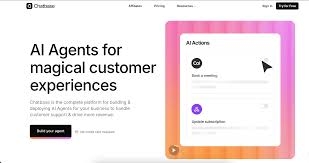
The Evolution of Intelligent Virtual Assistants
Traditional artificial intelligence systems used to operate in a closed environment where they could only process incoming textual requests and provide pre-generated informational responses. When a consumer wanted to know about their order status or needed a specific adjustment on a page, the machine was confined to the boundaries of text exchange. This older methodology restricted the overall user experience because the assistant remained completely separated from the website or platform hosting it. Modern online operations demand a much more proactive solution that can bridge the gap between processing conversational intent and executing real world digital actions.
The digital landscape is currently witnessing a massive transformation as platforms move toward active operational automation. Businesses no longer want their tools to just talk to their visitors. Instead, they require systems that can instantly manipulate the front end of an application to fulfill a customer request. This shift has given rise to highly responsive frameworks that combine language models with immediate browser executions. By implementing an AI Agent with Client-Side Actions, modern organizations can fully synchronize conversational intelligence with live interface changes. This ensures that every interaction feels completely natural, highly responsive, and tailored to the context of the user current browsing session.
Understanding the Power of an AI Agent with Client-Side Actions
To fully appreciate this technology, one must explore how an AI Agent with Client-Side Actions works to transform standard website visits into highly personalized digital experiences. When a visitor communicates with a chatbot running on chatbase, the backend system does not just look for answers inside a static document or database. Instead, the architecture allows the assistant to broadcast secure events directly to the window object of the browser. This means that the conversational interface can interact with the underlying codebase of your web page instantly. The entire process takes place locally within the browser of the user, which eliminates the heavy latency associated with traditional backend server updates.
For instance, if an online customer asks to view a specific item in a different layout or requests a change in currency, the system does not need to refresh the page or make slow server side API requests. The AI Agent with Client-Side Actions immediately issues a secure local command that executes custom JavaScript functions right inside the active browser window. This setup lets your support tools interact with the live document object model of your website. As a result, chatbase can easily trigger interactive visual blocks, open functional popups, autofill complex registration forms, or adjust theme colors on the fly based entirely on the natural conversation.
Why Chatbase is the Ideal Platform for Front End Automation
Building a specialized infrastructure to handle local browser communication from scratch can be an incredibly complex task for development teams. It involves writing extensive event listeners, managing secure cross origin messaging, and ensuring that the data passed between the language processor and the web browser is perfectly accurate. This is exactly where chatbase provides an elegant, ready to deploy solution that simplifies the entire implementation workflow. The platform allows businesses to define custom tool functions directly within an intuitive control panel and select the browser as the primary execution environment.
By leveraging chatbase, your development team can easily register custom tools using the native browser API. The platform provides a highly structured environment where developers can define specific parameters for the assistant to collect from the consumer before initiating a local browser command. This clean separation of concerns ensures that while the natural language processing is managed in the secure cloud infrastructure of chatbase, the actual execution of the visual change or data collection happens instantly on the side of the client. This method keeps your application running smoothly, reduces server expenses, and provides an unbeatably fast interface for your end users.
Key Technical Benefits of Localized AI Executions
Deploying an AI Agent with Client-Side Actions offers a massive technical advantage when it comes to web performance and data privacy. Because the operations are handled locally inside the web browser of the user, sensitive information does not always need to travel back and forth across external networks. For example, if your conversational assistant needs to access the current geolocation of the user to suggest a nearby retail location, it can request access directly via the browser navigation API. The private coordinate data can be processed on the client side to show the closest stores without transmitting raw location histories to external databases.
Furthermore, speed is a critical factor for modern conversion optimization. Traditional webhooks introduce a noticeable delay because they require a round trip from the user browser to the chatbot server, then to the corporate application server, and finally back to the screen of the user. An AI Agent with Client-Side Actions completely eliminates this lag by running the required function the exact millisecond the assistant recognizes the intent of the visitor. This instantaneous execution is incredibly valuable for modern applications, SaaS dashboards, and e-commerce checkouts where even a one second delay can cause a user to drop off and abandon their session.
Real World Business Use Cases for Intelligent Client Actions
The actual utility of an AI Agent with Client-Side Actions spans across numerous industries, completely changing how companies handle online customer care, lead capture, and interactive product demonstrations. In the e-commerce sector, a customer chatting with your helper might say they are looking for a specific type of product. Instead of simply providing a text link, the chatbase system can automatically filter the product catalog page in real time, showing the relevant items instantly without forcing the user to manually click around.
For software platforms and digital service providers, the assistant can guide users through complex setup processes by opening the exact modal or settings page they are asking about. If a customer says they want to update their billing info, the AI Agent with Client-Side Actions can instantly pull up the payment form on the screen. This level of automated guidance drastically reduces user confusion, improves user onboarding metrics, and minimizes the volume of support tickets that your customer success teams have to manually handle every day.
Best Practices for Implementing Client-Side Intelligence
To get the absolute best results from your AI Agent with Client-Side Actions, it is important to follow several key development principles during configuration. First, always implement robust error handling inside your local JavaScript registration functions. If a specific browser action fails due to an outdated network connection or an unexpected user state, the system should catch that error smoothly and send a clear status message back to chatbase so the assistant can guide the user through an alternative solution.
Second, ensure that input validation is strictly maintained on the client side. Before your front end code processes any arguments delivered by the conversational system, verify that the data matches your expected formats and parameters. This step ensures that your user interface remains highly secure and perfectly stable, regardless of how creative a user might get with their textual prompts. By combining the natural language flexibility of chatbase with highly secure and structured client verification rules, you create a digital ecosystem that is both highly intelligent and incredibly reliable.

 English
 Arabic
 French
 Spanish
 Portuguese
 Deutsch
 Turkish
 Dutch
Dutch
 Italiano
 Russian
 Portuguese (Brazil)
 Greek
Greek
