
Chemical Formula for Aluminum Sulfide Explained
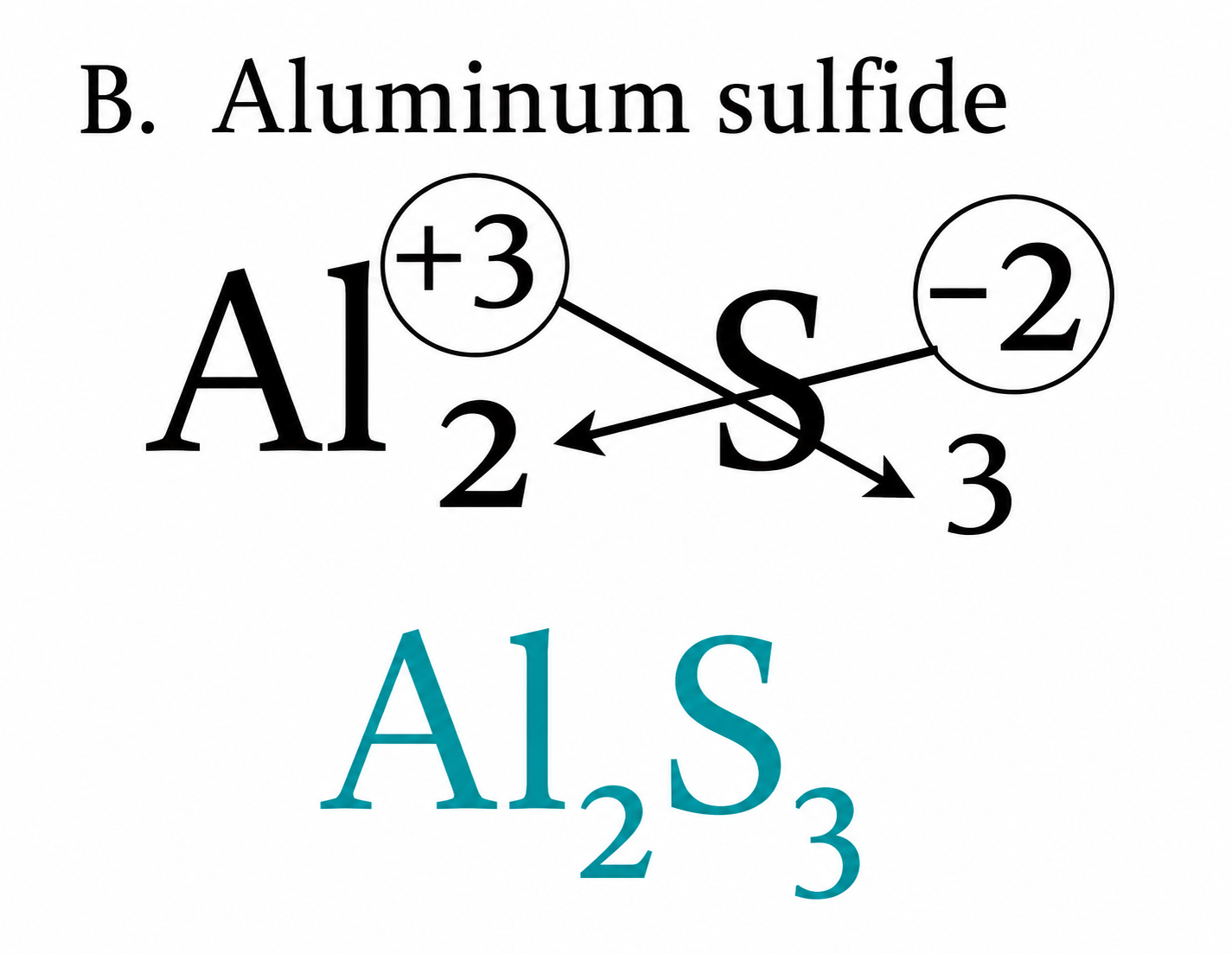
The chemical formula for aluminum sulfide is Al₂S₃. It is an inorganic chemical compound formed by the combination of aluminum and sulfur. This compound is widely used in laboratories, chemical research, and industrial applications due to its unique chemical properties. Aluminum sulfide reacts strongly with water to produce hydrogen sulfide gas, making it an interesting and important compound for chemistry students and professionals alike. In this guide, you will learn everything about aluminum sulfide, including its chemical formula, structure, preparation, physical properties, chemical properties, uses, safety precautions, and frequently asked questions.
What Is the Chemical Formula for Aluminum Sulfide?
The chemical formula for aluminum sulfide is Al₂S₃. This formula indicates that one molecule contains two aluminum (Al) atoms and three sulfur (S) atoms. The formula follows the balancing of ionic charges between aluminum ions (Al³⁺) and sulfide ions (S²⁻). Since aluminum has a +3 charge and sulfur has a -2 charge, two aluminum ions combine with three sulfide ions to create a neutral compound. This balanced ratio gives aluminum sulfide its stable chemical composition.
Understanding the Chemical Formula
Chemical formulas represent the number and types of atoms in a compound. In Al₂S₃, the subscript "2" shows there are two aluminum atoms, while the subscript "3" indicates three sulfur atoms. Because aluminum is a metal and sulfur is a non-metal, aluminum sulfide is classified as an ionic compound. The ions are held together by strong electrostatic forces, resulting in a stable crystal lattice under dry conditions.
Composition of Aluminum Sulfide
Aluminum sulfide is composed entirely of aluminum and sulfur. Aluminum belongs to Group 13 of the periodic table and commonly forms a +3 ion. Sulfur belongs to Group 16 and usually forms a -2 ion. The interaction between these oppositely charged ions creates aluminum sulfide. The compound contains no oxygen, hydrogen, or carbon, making it a simple binary ionic compound.
Molecular Structure of Aluminum Sulfide
Although the chemical formula is Al₂S₃, aluminum sulfide does not exist as individual molecules like water. Instead, it forms an ionic crystal lattice where aluminum and sulfur ions are arranged in a repeating three-dimensional pattern. This crystal structure provides strength and stability under dry conditions while allowing the compound to react rapidly with moisture.
Physical Properties of Aluminum Sulfide
Aluminum sulfide appears as a pale yellow to gray solid depending on its purity. It has a relatively high melting point and is brittle in nature. The compound is odorless when dry but develops a rotten egg smell upon contact with water because hydrogen sulfide gas is produced. Aluminum sulfide is insoluble in water because it reacts rather than dissolves.
Chemical Properties of Aluminum Sulfide
The most significant chemical property of aluminum sulfide is its reaction with water. Unlike many ionic compounds that simply dissolve, aluminum sulfide undergoes hydrolysis. During this reaction, aluminum hydroxide and hydrogen sulfide gas are formed. It can also react with acids, producing similar sulfur-containing gases under certain conditions.
Chemical Reaction with Water
When aluminum sulfide comes into contact with water, the following reaction occurs:
Al₂S₃ + 6H₂O → 2Al(OH)₃ + 3H₂S
This reaction produces aluminum hydroxide and hydrogen sulfide gas. Hydrogen sulfide has a strong odor similar to rotten eggs and can be hazardous in high concentrations. Because of this reaction, aluminum sulfide must always be stored in dry, moisture-free environments.
Preparation of Aluminum Sulfide
Aluminum sulfide is commonly prepared by heating aluminum metal with sulfur powder at high temperatures. The reaction is highly exothermic, meaning it releases heat. During production, the reactants combine directly to form Al₂S₃. Industrial preparation requires careful temperature control and moisture-free conditions to prevent unwanted side reactions.
Common Uses of Aluminum Sulfide
Although aluminum sulfide is not as commonly used as aluminum oxide, it has several important applications. It serves as a laboratory reagent for chemical experiments and educational demonstrations involving hydrolysis reactions. Researchers also use it in specialized inorganic chemistry studies. Some industrial processes employ aluminum sulfide as an intermediate for producing other sulfur-containing compounds.
Advantages of Aluminum Sulfide
Aluminum sulfide offers several benefits in chemical research. It has a well-defined chemical composition, making it useful for studying ionic compounds and reaction mechanisms. It reacts predictably with water and acids, allowing students and scientists to observe chemical changes easily. Its relatively simple preparation also makes it suitable for laboratory synthesis.
Limitations of Aluminum Sulfide
Despite its usefulness, aluminum sulfide has several limitations. Its sensitivity to moisture makes storage difficult, and accidental exposure to water releases toxic hydrogen sulfide gas. It also has limited commercial applications compared to other aluminum compounds such as aluminum oxide or aluminum hydroxide. These factors reduce its widespread industrial use.
Safety Precautions
Proper handling of aluminum sulfide is essential. Always wear protective gloves, safety glasses, and laboratory clothing when working with this compound. Store it in airtight containers away from moisture and humidity. Work only in well-ventilated areas or under a laboratory fume hood because hydrogen sulfide gas is toxic. Dispose of aluminum sulfide according to local chemical safety regulations.
Storage Guidelines
Aluminum sulfide should be stored in tightly sealed containers in a cool, dry place. Moisture exposure must be avoided because even small amounts of water can trigger chemical reactions. Desiccators or moisture-proof cabinets are commonly used in laboratories to preserve its stability. Proper labeling also helps prevent accidental misuse.
Difference Between Aluminum Sulfide and Aluminum Oxide
Many people confuse aluminum sulfide with aluminum oxide, but they are entirely different compounds. Aluminum sulfide contains sulfur and reacts readily with water, whereas aluminum oxide contains oxygen and is highly stable. Aluminum oxide is commonly used in ceramics, abrasives, and protective coatings, while aluminum sulfide is mainly used in research and laboratory applications.
Applications in Education
Chemistry teachers frequently use aluminum sulfide to demonstrate hydrolysis reactions and ionic compound behavior. Students can observe how water changes a stable solid into different chemical products while releasing gas. These demonstrations help explain reaction mechanisms, stoichiometry, and balanced chemical equations in an engaging way.
Importance in Industrial Chemistry
Although aluminum sulfide has limited commercial production, it contributes to inorganic chemistry research and specialized manufacturing. Scientists investigate its properties to develop improved materials, understand ionic bonding, and study sulfur chemistry. These studies contribute to broader advances in chemical science and industrial innovation.
Frequently Asked Questions
What is the chemical formula for aluminum sulfide?
The chemical formula for aluminum sulfide is Al₂S₃.
Is aluminum sulfide ionic or covalent?
Aluminum sulfide is primarily an ionic compound because it consists of aluminum cations and sulfide anions.
What happens when aluminum sulfide reacts with water?
It forms aluminum hydroxide and hydrogen sulfide gas through hydrolysis.
Is aluminum sulfide dangerous?
Yes. It can release toxic hydrogen sulfide gas when exposed to moisture, so it should be handled carefully.
Where is aluminum sulfide used?
It is mainly used in laboratories, educational demonstrations, and inorganic chemistry research.
Conclusion
Understanding the chemical formula for aluminum sulfide is essential for chemistry students, researchers, and professionals. With the formula Al₂S₃, this ionic compound demonstrates important concepts such as ionic bonding, hydrolysis, and chemical reactivity. Although it has limited industrial applications, aluminum sulfide remains valuable in laboratory research and education. By learning its composition, properties, reactions, preparation methods, and safety precautions, you gain a deeper understanding of one of chemistry's most interesting inorganic compounds. Whether you are studying chemistry or searching for reliable scientific information, knowing the chemical formula for aluminum sulfide provides a solid foundation for further learning.
 English
 Arabic
 French
 Spanish
 Portuguese
 Deutsch
 Turkish
 Dutch
Dutch
 Italiano
 Russian
 Romaian
 Portuguese (Brazil)
 Greek
Greek
