
How Advanced Materials and Automation Are Reshaping Plastic Thermoforming
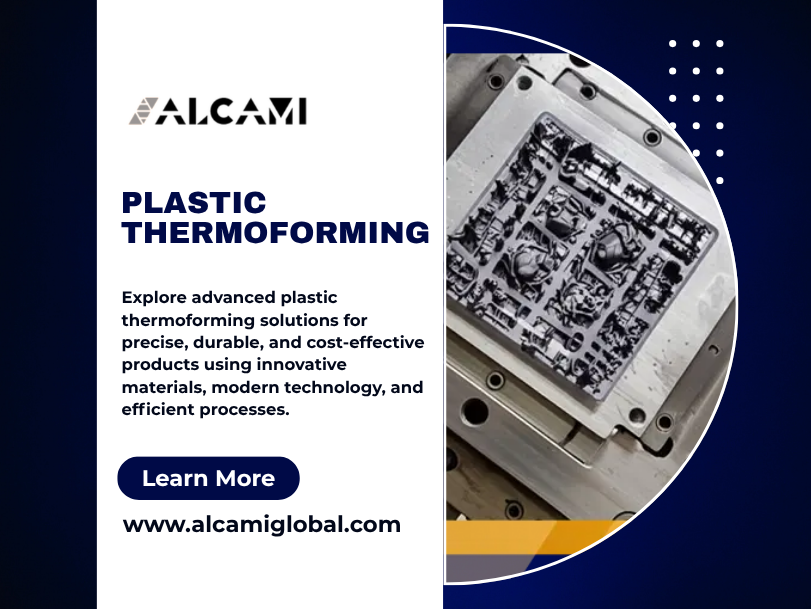
Plastic thermoforming has been a reliable manufacturing process for decades, but the industry is changing rapidly. Growing demand for lightweight products, sustainable materials, better surface finishes, and precise dimensions is encouraging manufacturers to rethink how thermoformed components are designed and produced.
Today, plastic thermoforming in Thailand is no longer limited to simple packaging and basic plastic trays. It is being used for automotive components, medical products, electronics housings, industrial equipment, food packaging, and many other applications where strength, appearance, and cost efficiency matter.
At the same time, advances in materials, automation, tooling, and quality control are giving manufacturers more flexibility than ever. These developments are helping plastic manufacturers produce complex parts while reducing material waste, production time, and overall manufacturing costs.
The Evolution of Plastic Thermoforming
Traditional thermoforming involves heating a plastic sheet until it becomes soft and flexible, forming it over or into a mold, and then cooling it to retain the desired shape. The process is relatively straightforward, but modern applications require considerably more control.
Manufacturers are now working with advanced polymers, multilayer sheets, recycled materials, and engineered plastics designed for specific performance requirements. Improvements in heating systems and forming technology have also made it possible to achieve more consistent wall thickness, tighter tolerances, and improved surface quality.
This evolution is particularly important for industries where every gram of material and every production cycle can influence the final product cost.
Advanced Materials Are Expanding Possibilities
One of the most important changes in the thermoforming industry is the development of new material options. Material selection can have a direct impact on a product's strength, durability, appearance, chemical resistance, and recyclability.
Common materials such as ABS, PET, PVC, PP, and HIPS continue to be widely used. However, manufacturers are increasingly exploring engineered plastics and material combinations that provide improved performance.
For example, PET is popular in packaging because of its clarity, strength, and recyclability. Polypropylene is valued for its chemical resistance and lightweight properties, making it suitable for containers and industrial applications. ABS offers a useful balance between impact resistance and appearance and is frequently considered for automotive and electronic components.
Another important development is the increasing use of recycled and recyclable materials. Companies are under greater pressure to reduce their environmental impact, and thermoforming can support these goals when appropriate materials and production methods are selected.
For plastic manufacturers, the challenge is finding the right balance between sustainability, performance, appearance, and production efficiency.
Multilayer Materials for Specialized Applications
Multilayer plastic sheets are another area receiving increasing attention. Instead of relying on one material to provide every required property, manufacturers can combine different layers to achieve specific performance characteristics.
One layer may provide structural strength, while another offers chemical resistance, improved appearance, or barrier protection.
This approach can be particularly useful in food packaging, medical applications, and industrial products where a single material may not provide all the necessary properties.
Multilayer construction also allows manufacturers to optimize material usage. Rather than making an entire component from an expensive high-performance polymer, a carefully engineered layer structure can place premium materials only where they are needed.
Automation Is Improving Production Consistency
Material innovation is only part of the transformation. Automation is also changing the way thermoformed products are manufactured.
Modern production lines can incorporate automated sheet loading, robotic part handling, trimming, inspection, stacking, and packaging. These systems reduce manual intervention and help maintain consistent production conditions.
Automation can also improve workplace safety by reducing the need for operators to handle hot sheets or work close to moving machinery.
For high-volume production, even small improvements in cycle time can have a significant financial impact. Automated systems can help manufacturers maintain repeatable cycle times while reducing production variability.
The result is a manufacturing environment where quality becomes less dependent on manual processes and more dependent on controlled, measurable production parameters.
Smarter Heating and Forming Technology
Heating is one of the most important stages of thermoforming. If a plastic sheet is not heated evenly, the resulting component can have inconsistent wall thickness, weak areas, or unwanted deformation.
Modern thermoforming equipment uses more sophisticated heating controls to manage temperature distribution across the sheet. Infrared heating systems, improved temperature monitoring, and programmable heating zones allow manufacturers to fine-tune the process for different materials and product designs.
Better control of temperature can lead to more predictable forming behavior and improved part quality.
Computer-controlled forming systems are also making it easier to reproduce the same process from one production run to another. This consistency is especially valuable for industries that require large quantities of identical components.
Better Tooling Is Supporting Complex Designs
Tooling technology is another area undergoing significant development. Traditional molds remain useful for many applications, but modern manufacturing allows engineers to create more sophisticated tooling solutions.
Computer-aided design and simulation can help identify potential forming problems before production begins. Engineers can evaluate factors such as material flow, wall thickness, draft angles, and potential deformation during the design stage.
This reduces the need for repeated physical prototypes and can shorten development timelines.
Advanced tooling can also incorporate cooling channels and other features designed to improve cycle times and dimensional consistency. When combined with accurate process control, improved molds can make a major difference in the quality of thermoformed components.
Sustainability Is Becoming a Manufacturing Priority
Sustainability is no longer simply a marketing consideration. It is becoming an important part of product development and manufacturing strategy.
Thermoforming can offer several opportunities for material efficiency because manufacturers can optimize sheet thickness according to the requirements of the final product. Process scrap can also potentially be collected and recycled, depending on the material and application.
At the design stage, engineers are increasingly looking for ways to reduce unnecessary material without compromising structural performance.
Lightweighting is another major trend. A lighter plastic component can reduce material consumption and, in automotive applications, may contribute to lower vehicle weight.
However, sustainability needs to be considered throughout the product lifecycle. Material selection, product durability, recyclability, manufacturing waste, transportation, and end-of-life considerations all play a role.
Quality Control Is Becoming More Precise
As thermoformed products become more sophisticated, quality control is becoming increasingly important.
Modern manufacturers can use automated inspection systems, cameras, sensors, and measurement equipment to identify defects during production. Instead of relying entirely on visual inspection, manufacturers can collect production data and monitor important process variables.
This approach allows problems to be detected earlier, reducing the number of defective components reaching later stages of production.
For industries such as medical devices, electronics, and automotive manufacturing, consistent quality is particularly important. A minor dimensional variation may affect how a component fits with other parts or performs in its intended application.
The Importance of Clean Manufacturing Environments
Certain plastic products require more than conventional production conditions. Medical, healthcare, laboratory, and other sensitive applications may require controlled manufacturing environments.
This is where Cleanroom Plastic Injection Manufacturing and Contamination control becomes especially important. While thermoforming and injection molding are different processes, both can be affected by particles, handling practices, environmental conditions, and contamination risks when manufacturing components for sensitive applications.
A controlled cleanroom environment can help minimize unwanted particles and maintain more consistent production conditions. Proper employee procedures, equipment cleaning, material handling, packaging, and environmental monitoring are all important parts of contamination control.
Manufacturers serving these industries therefore need to consider not only the forming process but also the environment in which production, assembly, and packaging take place.
Thermoforming and Injection Molding Working Together
Thermoforming is not always an alternative to injection molding. In many product development projects, the two technologies can complement one another.
A plastic injection molding factory may produce detailed clips, connectors, structural components, or other smaller parts, while thermoforming can be used for larger covers, trays, housings, or shells.
Combining different manufacturing technologies allows engineers to select the most appropriate process for each component instead of forcing an entire product to be manufactured using one method.
This can provide greater design flexibility while helping control production costs.
What the Future Holds for Thermoforming
The future of plastic thermoforming will likely be shaped by three major priorities: performance, efficiency, and sustainability.
Manufacturers will continue exploring new materials that provide better strength, durability, recyclability, and processing characteristics. Automation will become more common as companies look for greater production consistency and lower labor requirements.
Digital technologies will also play a larger role. Production data can be used to identify process variations, predict maintenance requirements, and improve overall equipment efficiency.
At the same time, customers will continue demanding shorter development times and more customized products. Manufacturers that can combine advanced materials with flexible production systems will be better positioned to respond to these expectations.
Conclusion
The plastic thermoforming industry is moving well beyond its traditional applications. New materials, smarter machinery, advanced tooling, automation, digital quality control, and sustainability-focused production methods are creating new opportunities for manufacturers and product designers.
For today's plastic manufacturers, success is no longer based solely on producing plastic parts quickly. It depends on selecting the right material, understanding the application, controlling the production environment, minimizing waste, and maintaining consistent quality.
As technology continues to develop, plastic thermoforming will remain an important manufacturing solution for companies looking for lightweight, cost-effective, and increasingly sustainable products. When supported by advanced tooling, automation, quality systems, and complementary technologies such as injection molding, thermoforming can provide manufacturers with the flexibility needed to meet the demands of modern product development.
 Spanish
 English
 Arabic
 French
 Portuguese
 Deutsch
 Turkish
 Dutch
Dutch
 Italiano
 Russian
 Romaian
 Portuguese (Brazil)
 Greek
Greek
