
Customer Satisfaction vs Customer Experience: What’s the Difference?
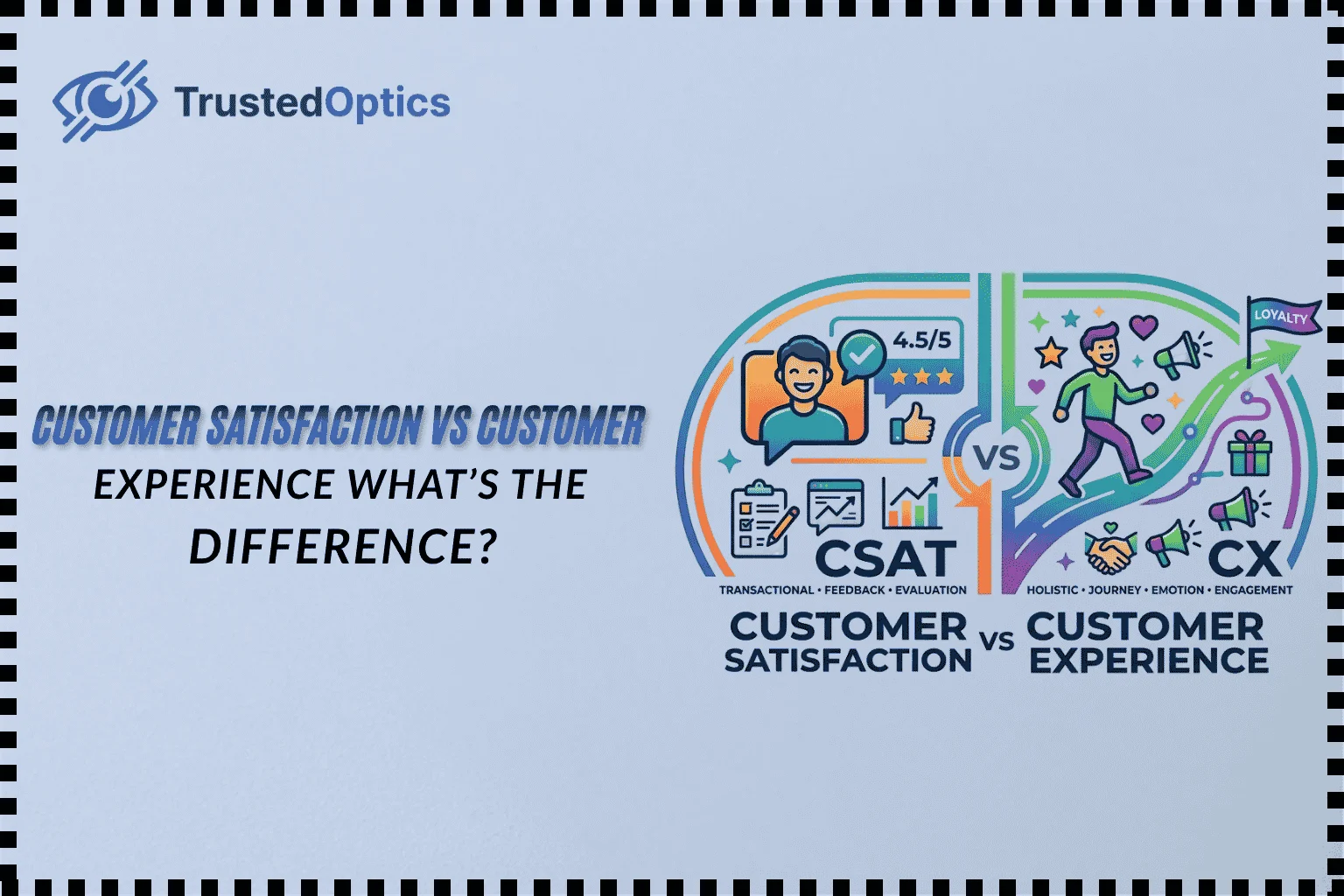
A customer can leave your business satisfied today and still choose a competitor tomorrow. That is exactly why customer satisfaction vs customer experience is an important distinction for businesses in Pakistan. Satisfaction tells you how a customer feels about a particular interaction, while customer experience looks at the bigger picture—from the first interaction to ongoing support and future purchases.
For businesses, understanding this difference is more than a terminology exercise. It helps you ask better questions, collect more useful feedback, identify problems earlier, and make decisions based on what customers actually experience.
What Is Customer Satisfaction?
Customer satisfaction measures how happy a customer is with a specific product, service, interaction, or transaction. It is usually influenced by whether the business met or exceeded the customer's expectations.
For example, a customer may rate a restaurant highly because their food arrived quickly and matched what they expected. That tells the restaurant something valuable about that particular visit.
Common ways to measure satisfaction include:
-
Customer satisfaction surveys
-
CSAT scores
-
Post-purchase feedback
-
Service ratings
-
Short SMS or QR-code surveys
-
Follow-up questions after customer support
Customer satisfaction is therefore often transaction-specific.
What Is Customer Experience?
Customer experience (CX) is the overall perception a customer develops from all interactions with a business. It can include discovering the brand, contacting the business, purchasing, receiving the product or service, getting support, and interacting with the business afterward.
Consider a customer buying from a retailer in Karachi. The product may be good, but the customer may also judge:
-
How easy it was to find information
-
How staff communicated
-
How quickly questions were answered
-
Whether payment was convenient
-
How the delivery process worked
-
How complaints were handled
-
Whether the business followed up afterward
A single positive transaction does not necessarily create a positive overall experience.
Customer Satisfaction vs Customer Experience: The Key Difference
The simplest way to understand the difference is this:
-
Customer satisfaction: How satisfied was the customer with a particular interaction?
-
Customer experience: How does the customer perceive their overall relationship and journey with the business?
-
Satisfaction is usually narrower: It focuses on a specific touchpoint, purchase, or service.
-
Experience is broader: It connects multiple touchpoints across the customer journey.
-
Satisfaction can change quickly: One excellent or poor interaction can influence the score.
-
Experience develops over time: Repeated interactions shape the customer's overall perception.
The two are closely connected, but they should not be treated as interchangeable metrics.

Why Customer Satisfaction and Customer Experience Both Matter
A business can achieve strong satisfaction scores for individual transactions while still having an inconsistent customer experience.
For example, a hotel might receive excellent ratings for room cleanliness but recurring complaints about slow check-in. Looking only at room satisfaction could hide a major experience problem.
This is where businesses need to look beyond individual scores and identify patterns across customer feedback.
Satisfaction helps businesses understand:
-
Whether customers liked a specific interaction
-
Whether expectations were met
-
Which products or services are performing well
-
Where immediate service problems exist
Customer experience helps businesses understand:
-
Where customers face friction
-
Which touchpoints create frustration
-
How different departments affect the customer journey
-
Why customers may return, leave, or recommend the business
How Customer Feedback Connects the Two
Customer feedback is the bridge between satisfaction and customer experience.
A score alone tells you what happened. The customer's comments often help explain why it happened.
For example:
CSAT: 2/5
Comment: "The product was good, but I waited three days to receive an answer from support."
The score identifies dissatisfaction. The comment identifies a potential CX issue: slow support communication.
This distinction matters because simply trying to increase the average satisfaction score may not solve the underlying problem.
How Businesses Can Measure Both
A practical feedback strategy should combine quantitative scores with qualitative comments.
Customer Satisfaction Metrics
Businesses can use:
-
CSAT
-
Rating questions
-
Post-purchase surveys
-
Service-specific feedback
-
Product satisfaction questions
Customer Experience Metrics
For broader CX analysis, businesses can examine:
-
Customer effort
-
Repeat feedback patterns
-
Complaint trends
-
Customer journey friction
-
Response sentiment
-
Retention-related feedback
-
Recommendation behavior
The goal isn't to collect every possible metric. The goal is to collect the right feedback at the right customer touchpoint.
Expert Insight: Don't Ask Every Customer the Same Question
One common mistake is sending the same generic survey after every interaction.
A better approach is to match the question to the customer's experience.
For example:
-
After a purchase: "How satisfied are you with your purchase?"
-
After support: "How satisfied are you with the support you received?"
-
After delivery: "How would you rate your delivery experience?"
-
After a complaint: "Was your issue resolved effectively?"
This creates more actionable feedback than repeatedly asking customers whether they are "satisfied overall."
Turning Feedback into Business Action
Collecting feedback is only the first step. Businesses need to turn customer responses into clear actions and measurable improvements.
Modern customer feedback software can centralize feedback and provide:
-
Collection Tools: Gather feedback through QR codes, surveys, forms, and SMS.
-
Analytics Dashboard Tool: Track satisfaction scores, trends, locations, and customer comments.
-
Reputation Management Tools: Identify issues early before they affect public reviews.
-
Automation Suite Tool: Automate surveys, follow-ups, and feedback collection.
-
Enterprise Features: Manage multiple locations with centralized reporting, advanced analytics, and scalable tools.
For multi-location businesses in Pakistan, these capabilities make it easier to identify branch-level issues and improve customer experience consistently.
A Practical Example for a Pakistani Business
Imagine a retail chain with branches in Karachi, Lahore, and Islamabad.
The overall satisfaction score might look healthy. But when managers break the feedback down by location, one branch may show significantly more complaints about staff response time.
Without location-level feedback, that problem can remain hidden inside an average score.
With centralized feedback analysis, management can:
-
Identify the underperforming location.
-
Review customer comments.
-
Find the recurring issue.
-
Discuss the problem with the branch team.
-
Make an operational change.
-
Continue collecting feedback to see whether the score improves.
This is where feedback becomes a management tool rather than just a survey exercise.
Common Mistakes Businesses Make
-
Treating satisfaction and experience as the same
A high CSAT score doesn't mean the entire customer journey is working well. -
Focusing only on average scores
Overall averages can hide problems at specific branches, services, or touchpoints. -
Collecting feedback without acting
Asking for feedback repeatedly without making improvements can frustrate customers. -
Using overly long surveys
Keep surveys short and focused on questions that provide actionable insights. -
Ignoring customer comments
Scores show what happened; comments often explain why. -
Collecting feedback too late
Ask for feedback soon after the interaction while the experience is still fresh.

Expert Tips for Improving Both
-
Measure specific touchpoints: Don't rely entirely on one overall satisfaction question.
-
Segment your feedback: Compare branches, services, products, and customer journeys.
-
Look for recurring complaints: One complaint may be an isolated event; repeated complaints indicate a pattern worth investigating.
-
Combine scores with comments: Quantitative data shows trends, while qualitative feedback provides context.
-
Close the feedback loop: Let customers know when their feedback leads to an improvement.
-
Track changes over time: A single survey result is less useful than a trend.
-
Connect feedback to action: Every important feedback pattern should have an owner and a next step.
FAQs
Is customer satisfaction the same as customer experience?
No. Customer satisfaction vs Customer experience differs because satisfaction focuses on a specific interaction, while CX covers the overall customer journey.
Which is more important, customer satisfaction or customer experience?
Both matter—satisfaction identifies immediate issues, while CX reveals broader customer journey problems.
How do you measure customer satisfaction?
Use CSAT surveys, ratings, post-purchase surveys, and direct customer feedback.
How do you measure customer experience?
Use feedback surveys, customer effort, complaint trends, journey-specific feedback, and CX metrics.
What Our Customers Say
Trusted Optics has been a great solution for collecting customer feedback. The service is easy to use and has helped us better understand what our customers need.
—Mona K., Fashion Boutique, Islamabad
Our experience with Trusted Optics has been excellent. The platform makes feedback collection simple, and the insights are useful for improving our customer experience.
—Kashif Alam, Restaurant, Multan
We’ve had a very positive experience with Trusted Optics. Their feedback solution is practical, easy to manage, and helpful for understanding customer satisfaction.
—Martin Lopez, Hotel, Karachi
Conclusion
Customer Satisfaction vs Customer Experience are closely connected but measure different aspects of the customer journey. Businesses need both to understand customer expectations, identify problems, and improve service.
Trusted Optics helps businesses collect and analyze customer feedback through customer feedback software, analytics, automation, and reputation management tools—turning customer insights into practical improvements.
Author Bio
Muhammad Ebad Ali is an SEO Specialist at Feynix Solution with 3+ years of experience in SEO and content strategy, helping businesses improve online visibility through useful, search-focused content.
 Spanish
 English
 Arabic
 French
 Portuguese
 Deutsch
 Turkish
 Dutch
Dutch
 Italiano
 Russian
 Romaian
 Portuguese (Brazil)
 Greek
Greek
