
GPT-INDIA Pulse Jet Bag Filter: How Advanced Bag Filtration Improves Industrial Dust Control
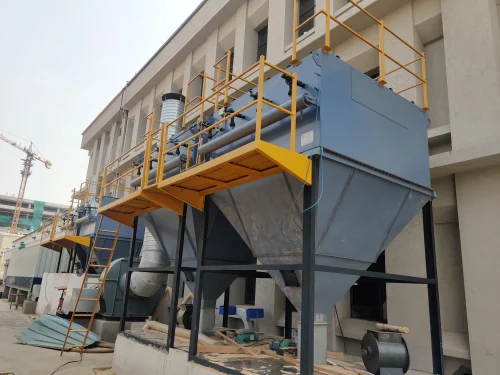
Dust management has become an essential part of modern industrial operations. Manufacturing processes involving cement, chemicals, pharmaceuticals, food products, minerals, metals, ceramics, and engineering components can release fine particulate matter into process exhaust air. If this dust is not captured efficiently, it can affect equipment, product quality, workplace cleanliness, and overall plant performance.
A Pulse Jet Bag Filter provides a continuous and practical approach to industrial dust filtration. By combining fabric filtration with automatic compressed-air cleaning, this technology allows manufacturers to maintain effective particle collection while reducing the need for frequent manual filter maintenance.
GPT-INDIA designs and manufactures customised industrial filtration systems for applications where dependable dust collection and consistent airflow are important.
What Makes a Pulse Jet Bag Filter Different?
A conventional Bag Filter uses fabric media to separate dust particles from an air stream. The dust accumulates on the surface of the filter media while filtered air passes through.
A Pulse Jet Bag Filter adds an automatic cleaning mechanism to this basic filtration principle. Short bursts of compressed air periodically remove the accumulated dust from the Filter Bags. The removed material falls into a hopper, while the bags become ready for another filtration cycle.
This automated process makes pulse jet systems particularly suitable for manufacturing facilities where equipment needs to operate for long periods without frequent shutdowns.
How Industrial Dust Filtration Takes Place
The filtration cycle starts with contaminated air entering the collector through an appropriately designed inlet. The air is distributed through the filtration chamber so that the Filter Bags receive a controlled flow.
Dust particles are retained by the fabric surface, gradually forming a dust layer. The dust layer itself can contribute to particle capture, particularly for fine particulate matter.
As the pressure difference across the filter increases, the cleaning system activates. Compressed air enters the selected row of bags through pulse pipes and valves. The resulting pressure wave causes the bags to flex and releases accumulated dust.
The material falls into the hopper and is then removed using a suitable discharge arrangement.
Why Correct Filter Bag Selection Matters
The Filter Bags are the working surface of the filtration system, so their selection directly affects performance. Different industrial processes expose filter media to different temperatures, chemicals, moisture levels, particle sizes, and abrasive conditions.
Polyester media can be suitable for many general industrial applications, while specialised materials may be required for higher temperatures or aggressive chemical environments. Surface treatments can also improve resistance to moisture or dust penetration in selected applications.
Selecting the right media helps maintain filtration efficiency and can reduce premature bag failure.
Pressure Drop and Filter Performance
Pressure drop is an important indicator of how a Bag Filter is performing. As dust accumulates on the Filter Bags, resistance to airflow generally increases.
If pressure drop becomes excessive, the system may require more fan energy and may experience reduced airflow. On the other hand, cleaning the bags too aggressively can remove too much of the dust cake and increase mechanical stress on the filter media.
An appropriately configured Pulse Jet Bag Filter maintains a balance between effective dust removal and stable filtration.
Modern systems can use differential-pressure-based controls to initiate cleaning when required rather than relying solely on fixed time intervals.
Pulse Cleaning and Maintenance Requirements
Automatic cleaning does not eliminate maintenance completely. Instead, it reduces the need for manual bag cleaning and helps make maintenance more predictable.
Operators should periodically inspect Filter Bags, pulse valves, compressed-air quality, cages, seals, hopper discharge equipment, and differential pressure readings.
Moisture in the compressed-air system can also create operational problems, particularly when the collected dust is sensitive to moisture. Proper maintenance of the compressed-air supply therefore contributes to reliable pulse cleaning.
Where Are Pulse Jet Bag Filters Used?
Pulse Jet Bag Filters are suitable for a wide range of industrial processes.
Cement and mineral industries use them for controlling process and material-handling dust. Metalworking and foundry operations use bag filtration for grinding, casting, and processing emissions.
Pharmaceutical and chemical facilities may use specialised Filter Bags for fine powders, provided the filtration materials and system design are compatible with the process.
Food processing facilities can use Bag Filters for powdered ingredients such as flour, sugar, starch, and spices. Ceramics, plastics, recycling, woodworking, biomass, and engineering industries also use fabric filtration systems for particulate control.
The final design should always reflect the characteristics of the actual process.
Designing the Complete Dust Collection System
A Pulse Jet Bag Filter is only one part of an industrial dust control installation. The extraction hood must capture contaminants effectively, while ductwork must transport the dust-laden air at an appropriate velocity.
The fan must provide sufficient airflow and overcome the total system pressure loss. The filtration unit must have adequate filter area, and the hopper and discharge equipment must handle the expected dust load.
If any of these components are incorrectly selected, overall system performance may suffer even when the Bag Filter itself is technically capable of achieving the required filtration.
For this reason, application-specific engineering is essential when designing industrial dust collection systems.
GPT-INDIA: Engineering-Focused Industrial Filtration
GPT-INDIA provides customised industrial air pollution control solutions for manufacturing industries requiring dependable dust and emission management. Its engineering approach considers the complete application, including dust characteristics, airflow requirements, filtration technology, equipment layout, and operating conditions.
The product range includes Pulse Jet Bag Filters, Bag Filters, Filter Bags, Dust Collectors, Cyclone Dust Collectors, Multicyclone Dust Collectors, Wood Dust Collectors, Portable Dust Collectors, BIBO Dust Collectors, Wet Scrubbers, Activated Carbon Filters, Fume Exhaust Systems, Paint Booths, Air Washer Systems, Rotary Air Locks, Axial Flow Fans, and Centrifugal Blowers.
GPT-INDIA operates manufacturing facilities in New Delhi and Sahibabad and serves industrial customers across India and international markets.
GPT-INDIA
59/2/1, Site 4, Industrial Area, Sahibabad, Distt. Ghaziabad – 201010, Uttar Pradesh, India
Phone: +91-9773500660
Email: info@gpt-india.com
Website: gptindia.in
Frequently Asked Questions
What is the main advantage of a Pulse Jet Bag Filter?
Its automatic compressed-air cleaning mechanism allows the Filter Bags to be cleaned during operation, making the technology suitable for continuous industrial processes.
How does a Bag Filter remove dust?
Dust-laden air passes through fabric filtration media. Particles are retained on the Filter Bags while comparatively clean air passes through the media.
What determines the life of Filter Bags?
Bag life depends on temperature, dust characteristics, airflow, filtration velocity, cleaning intensity, humidity, chemical exposure, and the selected filter material.
Why does pressure drop increase in a Bag Filter?
Pressure drop generally increases as dust accumulates on the filter surface. Proper pulse cleaning helps remove excess dust and maintain suitable airflow resistance.
Can one Pulse Jet Bag Filter serve several machines?
Yes, a centralised system can serve multiple dust-generating machines when the extraction points, duct network, fan capacity, and filtration unit are correctly designed for the combined airflow requirements.
Conclusion
A Pulse Jet Bag Filter combines reliable fabric filtration with automatic cleaning to provide continuous industrial dust control. Its performance depends on correctly selected Filter Bags, suitable airflow, appropriate pulse-cleaning parameters, and a well-engineered extraction system.
For industries looking to improve particulate control without frequent production interruptions, a properly designed Bag Filter system can provide a practical long-term solution. GPT-INDIA combines filtration expertise and application-specific engineering to help industries achieve cleaner operations and dependable dust collection performance.

 English
 Arabic
 French
 Spanish
 Portuguese
 Turkish
 Dutch
Dutch
 Italiano
 Russian
 Romaian
 Portuguese (Brazil)
 Greek
Greek
