
Factors to Consider Before Buying a Bar Bending Machine
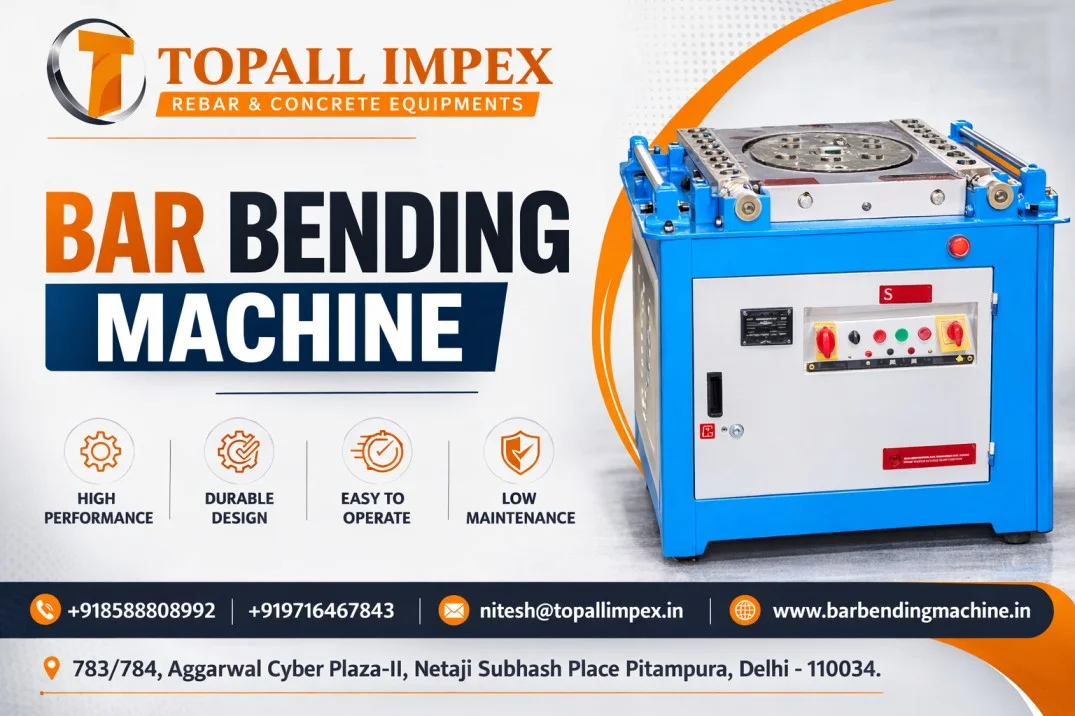
A bar bending machine is an important investment for construction companies, reinforcement contractors, infrastructure developers, and fabrication businesses. The right machine can improve productivity, bending accuracy, workplace efficiency, and overall project performance. However, choosing the wrong machine can result in unnecessary operating costs, frequent maintenance, material wastage, and production delays.
With different models, capacities, automation levels, and specifications available, it is important to evaluate your requirements before making a purchase. A machine that works well for a small construction project may not be suitable for a high-volume infrastructure project.
In this guide, we discuss the most important factors to consider before buying a bar bending machine so you can make a practical and informed decision.
1. Understand Your Bending Requirements
The first step is to clearly understand your project's requirements. Consider the type, size, quantity, and shape of reinforcement bars you need to bend regularly.
Ask yourself:
- What diameter of bars will you be bending?
- How many bars need to be processed per day?
- What bending angles are commonly required?
- What types of bends and shapes are needed?
- Is the machine intended for occasional or continuous production?
Understanding these requirements helps you select a machine with the appropriate specifications instead of paying for unnecessary capacity or choosing a machine that cannot handle your workload.
2. Check the Machine's Bending Capacity
Bending capacity is one of the most important specifications to evaluate. Every bar bending machine has a defined range of bar diameters and material types it can process.
Before purchasing, check the manufacturer's specifications for:
- Maximum bar diameter
- Minimum bar diameter
- Single-bar bending capacity
- Multiple-bar bending capacity, where applicable
- Maximum bending angle
- Recommended material specifications
Choosing a machine with sufficient capacity provides greater flexibility and helps prevent excessive stress on the motor, gears, bending pins, and other components.
It is generally better to select a machine that comfortably handles your regular requirements rather than consistently operating at its maximum rated capacity.
3. Consider Bending Accuracy
Accuracy is critical in reinforced concrete construction. Incorrectly bent reinforcement bars can create problems during installation and may result in material wastage or rework.
Look for a bar bending machine that provides consistent and repeatable bending angles. Advanced machines may offer digital controls, programmable settings, or CNC technology to improve precision.
When comparing machines, consider:
- Angle accuracy
- Repeatability
- Programmable bending operations
- Digital controls
- Automatic positioning features
For projects involving complex reinforcement designs or high production volumes, precision and repeatability can be especially valuable.
4. Evaluate Production Speed
Production speed directly affects construction productivity. If your project requires thousands of reinforcement bars to be processed, a slow machine can create a bottleneck.
Compare the machine's bending speed with your expected daily production requirements.
However, speed should not be considered independently. A machine that operates quickly but produces inconsistent bends may increase rework and material waste.
The ideal machine should provide a practical balance between speed, accuracy, reliability, and ease of operation.
5. Choose the Right Level of Automation
Bar bending machines are available with different levels of automation. Depending on your requirements, you may consider manual, semi-automatic, automatic, or CNC-controlled equipment.
Manual Machines
These can be suitable for smaller operations where production requirements are relatively low.
Semi-Automatic Machines
These provide greater productivity while still allowing operator involvement in machine setup and operation.
Automatic Machines
Automatic systems can reduce manual intervention and improve production consistency, making them suitable for higher-volume applications.
CNC Machines
CNC bar bending machines provide advanced control and programmable bending operations. They can be particularly useful for complex reinforcement requirements and large-scale production.
Choose automation based on your production volume, workforce, budget, and required precision.
6. Check Motor Power and Electrical Requirements
The machine's motor is responsible for delivering the power required for bending operations. Motor specifications should therefore be carefully evaluated.
Check:
- Motor power
- Voltage requirements
- Phase configuration
- Power consumption
- Electrical protection features
Make sure your construction site or workshop has a suitable electrical supply. Selecting a machine without considering electrical requirements can create installation and operational difficulties.
7. Consider Machine Build Quality
A bar bending machine is exposed to significant mechanical stress. Build quality can therefore have a major impact on durability and long-term performance.
Pay attention to the quality of:
- Machine frame
- Gears
- Bearings
- Shafts
- Bending pins
- Rollers
- Electrical components
A robust machine may have a higher initial purchase price but can provide better reliability and service life when properly maintained.
8. Look at Ease of Operation
A machine should be powerful and accurate, but it should also be easy for operators to use.
An intuitive control panel can reduce setup time and minimize operator errors. If you are considering an automatic or CNC model, check whether the controls, programming interface, and operating procedures are easy to understand.
Operator training should also be considered when evaluating a machine.
A machine that is difficult to operate may reduce productivity even if its technical specifications are impressive.
9. Prioritize Safety Features
Safety should always be an important consideration when purchasing construction machinery.
Look for features such as:
- Emergency-stop controls
- Protective covers
- Overload protection
- Secure control systems
- Stable machine construction
- Clearly accessible operating controls
Also verify whether the manufacturer provides appropriate operating and maintenance instructions.
A safe machine, combined with proper operator training and workplace procedures, can help reduce the risk of accidents.
10. Consider Maintenance and Spare Parts
Before purchasing, find out how easy it is to maintain the machine and obtain replacement components.
Ask the supplier about:
- Recommended maintenance intervals
- Availability of spare parts
- Lubrication requirements
- Service support
- Warranty coverage
- Technician availability
Common wear components such as bending pins, rollers, bearings, and electrical components should be readily available.
Reliable after-sales support can be just as important as the machine itself, particularly for businesses that depend on continuous production.
11. Compare Total Cost of Ownership
The purchase price should not be the only factor in your buying decision.
Consider the machine's total cost of ownership, including:
- Initial purchase price
- Electricity consumption
- Maintenance costs
- Spare parts
- Labor requirements
- Downtime
- Expected service life
A low-cost machine may not always be the most economical option if it requires frequent repairs or produces inconsistent results.
Instead, consider how the machine will perform over several years of operation.
12. Choose a Reliable Manufacturer and Supplier
Finally, research the manufacturer and supplier before placing your order.
A reliable supplier should be able to provide detailed technical specifications, installation guidance, operator training, warranty information, and after-sales service.
Check the manufacturer's experience, customer reviews, service network, and availability of spare parts.
Do not select a machine solely because it has the lowest price. Reliability, support, performance, and long-term value should all be part of your decision.
Conclusion
Buying a bar bending machine is a significant investment, and selecting the right equipment requires more than simply comparing prices. You should evaluate your bending requirements, machine capacity, accuracy, production speed, automation, motor power, build quality, safety features, maintenance requirements, and after-sales support.
The right machine should match your current workload while providing enough capacity and flexibility for future requirements. By carefully comparing specifications and considering the total cost of ownership, construction businesses can select equipment that delivers reliable performance, consistent bending quality, and improved productivity.
Before making a final decision, request detailed specifications from the manufacturer and confirm that the machine meets your project's technical and production requirements.
Looking for the right bar bending machine for your construction needs? Contact a trusted manufacturer today and compare the specifications, capacity, and features before making your purchase.

 English
 Arabic
 French
 Spanish
 Portuguese
 Deutsch
 Turkish
 Dutch
Dutch
 Italiano
 Romaian
 Portuguese (Brazil)
 Greek
Greek
