
How Photo Scanning Helps Protect Old Photos from Damage
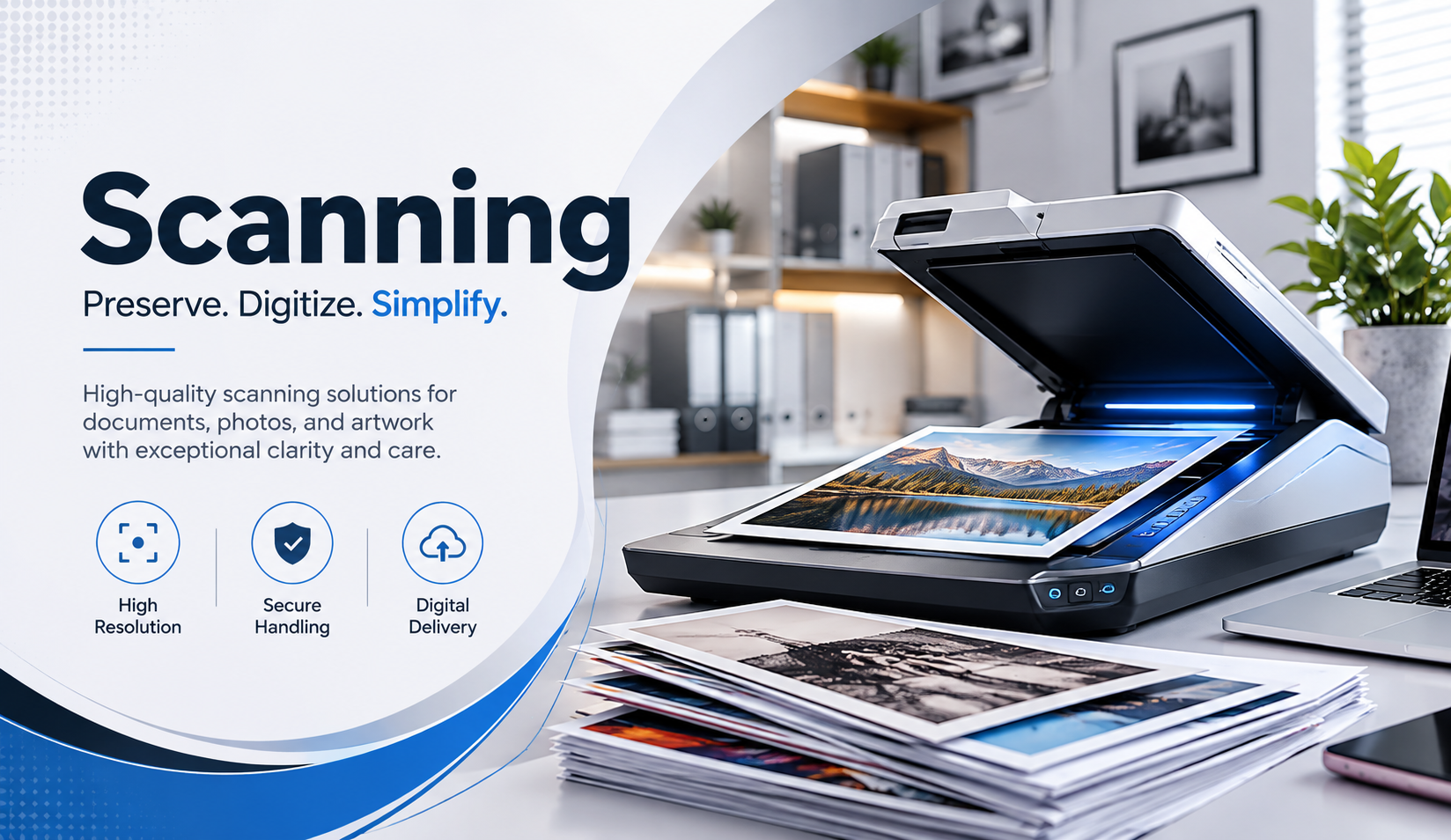
We often see business owners and families walk into our studio with shoeboxes full of memories that have seen better days. These photos represent decades of history, yet they sit vulnerable to the slow, inevitable march of time. Professional Photo Scanning provides a way to freeze that timeline before the damage becomes irreversible. We understand that these aren't just pieces of paper; they are unique assets that deserve a permanent digital life.
The Silent Threats to Physical Photo Collections
Physical photographs face a constant battle against their environment. We have observed that even the best-stored collections eventually succumb to the chemical breakdown of paper and ink. Sunlight acts as a slow-motion bleach, stripping the vibrant colors from your most cherished moments. When you leave photos in original frames or magnetic albums, you expose them to acids that eat away at the image.
Humidity poses an even greater risk to your archives. We have witnessed countless collections where moisture caused the photos to stick together in a solid block. Once those layers fuse, you cannot separate them without tearing the image emulsion. Digital files do not worry about the weather or the basement's humidity levels. They remain consistent regardless of the external environment.
Environmental Degradation and Fading
Silver halide and other chemicals used in traditional photography eventually break down when they meet oxygen. We notice this most often as "yellowing" or "silver mirroring" on the surface of old prints. This process happens even in dark storage if the air quality remains poor. By converting these physical prints into high-resolution digital files, we stop the chemical clock.
Handling and Physical Wear
Every time you touch a physical photo, the oils from your skin transfer to the surface. These oils attract dust and can lead to permanent staining over many years. We see many business archives that suffer from "dog-eared" corners and surface scratches from frequent sorting. Digital files allow you to share and view the images thousands of times without ever touching the original master.
Why Digital Conversion is the Ultimate Shield
We believe that true preservation requires more than just a sturdy box. Digital conversion creates a master record that you can replicate and store in multiple locations. If a fire or flood affects your physical property, your digital assets remain safe in the cloud. This redundancy offers a level of security that physical paper simply cannot match.
Modern technology also allows us to improve the image during the scanning process. We use advanced sensors to capture details that the human eye might miss on a faded print. This doesn't just "copy" the photo; it often captures a version that looks better than the current state of the original. We provide a safety net that protects your history from total loss.
Creating Redundancy through Backups
A single physical photo exists in only one place at one time. If you lose it, that history disappears forever. We recommend a "3-2-1" backup strategy for all digital archives: three copies, two different media types, and one off-site. This approach ensures that your family or business legacy survives even the most catastrophic hardware failures.
Stopping the Aging Process
Once we digitize a photo, its quality remains locked in time. While the physical print continues to fade and crack on your shelf, the digital file stays vibrant. We see this as an insurance policy for your memories. You can use the digital version for printing new copies, creating books, or sharing on social media while the original rests safely in acid-free storage.
Professional Scanning vs. DIY Methods
Many people try to use home all-in-one printers to save their collections. We find that these consumer-grade machines often lack the depth of field and color accuracy required for true archival work. Professional equipment captures a higher dynamic range, ensuring that shadows don't just look like black blobs. We focus on capturing every nuance of the original grain.
When we handle more specialized media, we often suggest High-Res Slide Scanning to ensure every detail remains sharp. Slides and negatives hold significantly more data than a standard 4x6 print. Using the wrong equipment results in "pixelation" that ruins the image when you try to enlarge it later. We use industrial-grade optics to prevent these common quality issues.
Resolution and Color Accuracy
We measure the quality of a scan in Dots Per Inch (DPI), but resolution is only half the story. Professional scanning involves calibrating colors to match the original photographer's intent. We see many DIY scans that look "cold" or "blue" because the scanner wasn't properly profiled. Our team ensures that skin tones and landscapes look natural and lifelike.
Proper Dust and Scratch Removal
Older photos often accumulate tiny micro-scratches that a standard home scan will magnify. We utilize infrared cleaning technology to identify and remove these imperfections digitally. This process saves hours of manual retouching and results in a much cleaner final product. We treat every image with the care it deserves to produce a flawless digital replica.
Practical Steps for Long-Term Asset Protection
After we complete the scanning process, we advise our clients on how to store their originals. You should always use acid-free, lignin-free folders and boxes. We suggest keeping these boxes in a climate-controlled area of your home, rather than an attic or garage. Extreme temperature fluctuations cause the paper fibers to expand and contract, which leads to cracking.
Organizing your digital files is just as important as the scanning itself. We recommend using a clear naming convention that includes dates and descriptions. A digital archive is only useful if you can actually find the images you need. We help businesses and families build systems that make their history searchable and accessible for future generations.
FAQs
Does scanning a photo damage the original print?
No, our professional scanning process is completely non-destructive. We use flatbed and specialized scanners that do not use high heat or harsh rollers. Your original photos return to you in the exact same condition as when you dropped them off.
What is the best resolution for scanning old family photos?
For standard prints, we typically recommend a minimum of 300 DPI for viewing and 600 DPI if you plan to enlarge the photo. For slides and negatives, we use much higher resolutions because the original source is so small.
Can you fix photos that already have water damage or cracks?
While scanning captures the photo in its current state, we offer digital restoration services. We can digitally "repair" cracks, remove water stains, and balance faded colors without touching the original physical print.
How long does the photo scanning process usually take?
The timeline depends on the size of the collection and the level of organization. We work efficiently to ensure a quick turnaround, typically finishing most projects within one to two weeks while maintaining our high quality-control standards.
Preserving Your History for the Future
We believe that every photo tells a story that deserves protection. Physical degradation happens silently, but it doesn't have to mean the end of your records. By investing in professional scanning, you secure your legacy against environmental damage, accidents, and the simple passage of time. We take pride in helping our clients turn fragile paper into durable digital assets.
At Laguna Digital, we combine years of technical expertise with a genuine passion for preservation. We handle every project with the same care we would use for our own family archives. If you have a collection of old photos that you want to protect, contact us today to discuss how we can help you create a lasting digital legacy.

 English
 Arabic
 French
 Spanish
 Portuguese
 Deutsch
 Turkish
 Dutch
Dutch
 Italiano
 Romaian
 Portuguese (Brazil)
 Greek
Greek
