
How the Seiko Presage Line Changed Watch History
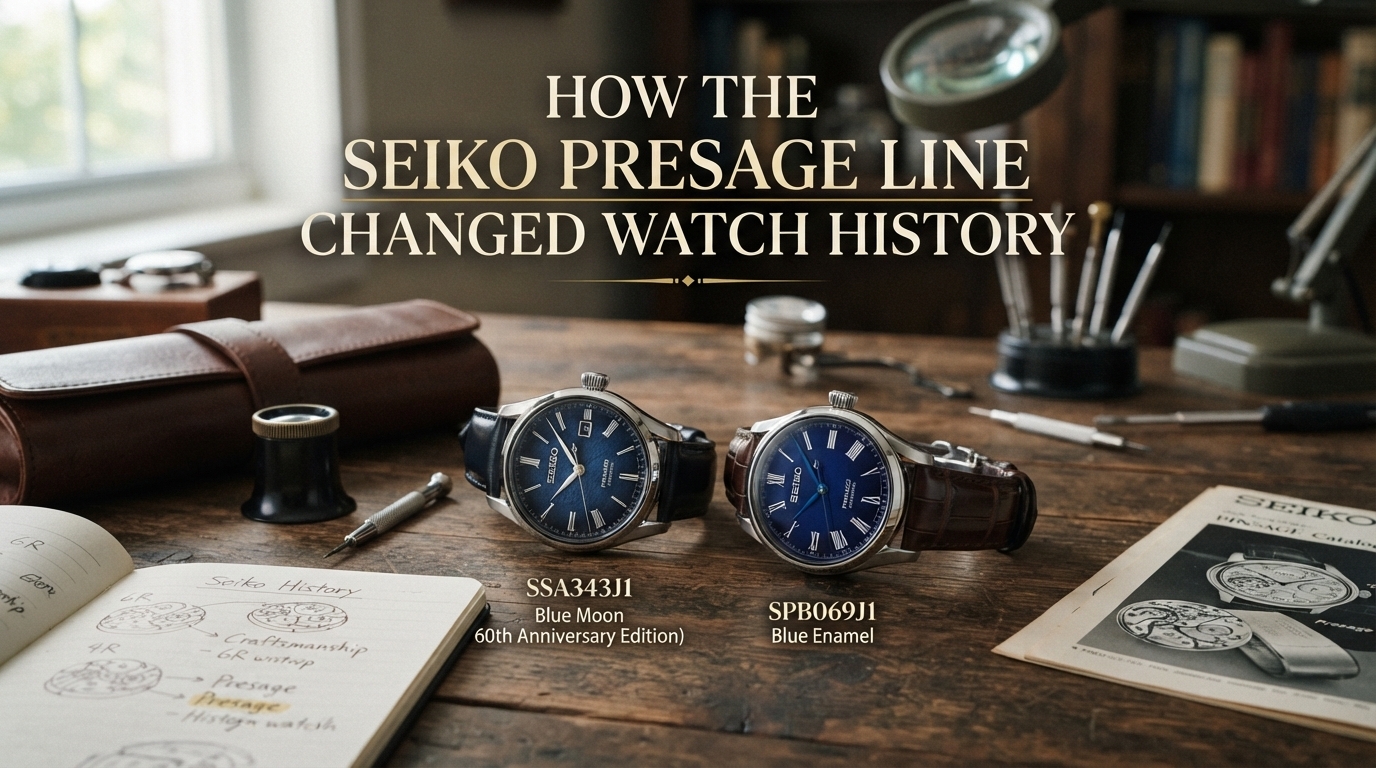
Few watch collections have quietly rearranged buyer expectations in the way this one did, sort of without anyone noticing at first. When Seiko Presage arrived in 2010 with the Cocktail Time reference SARB065, it did something buyers hadn’t really seen at that price point before. It basically brought dial craftsmanship, finishing quality, and mechanical reliability into the conversation under $500. And that didn’t just “fill” a gap in the market; it made people rethink what they had been settling for for years.
The Japanese Answer to a Stubborn Industry Assumption
For years collectors moved on an assumption that rarely got questioned. If you wanted a beautifully finished dial with a true movement inside, you paid Swiss prices. Seiko had already shaken that logic in 1969 when it released the world’s first quartz wristwatch, and it unsettled Swiss manufacturers overnight, but the Presage line came with a different kind of trouble. It brought traditional Japanese craftsmanship into the accessible price tier without stripping out the bits collectors actually care about.
The philosophy sitting underneath the collection connects straight to Seiko’s mechanical watchmaking history, especially the reputation the brand built during the 1960s and 70s when it was stacking up genuine technical wins. What Presage did was funnel all of that into a tight, elegant lineup for enthusiasts who wanted substance, not surface.
What Made the Seiko Presage Cocktail Time a Turning Point
So, the original Cocktail Time thing was more like a 40.5 mm automatic dress watch, with this sky blue sunburst dial, and the design sort of followed the cocktail glass outline. There were applied indices and Dauphine hands, plus a solid automatic movement in there. It sat under the $500 mark, and pretty much right away it became one of those most talked about dress watches in that same bracket, with a proper little fanbase from buyers who really did know what they were looking at.
The response wasn’t only "wow, that looks great." Collectors recognized the finishing and build came from a brand with over a century of serious watchmaking behind it. The Cocktail Time sold out repeatedly, and it turned into a reference point across watch communities online. It also proved there was a sizable crowd that wanted real craft under the dial but couldn’t find it at that price anywhere else. Seiko then read the room and expanded the line step by step, adding colors, sizes, and dial changes while keeping the same core logic in place.
Bringing Traditional Japanese Art to the Wrist
As the collection grew, Seiko went past simple colorways and case updates. They started building sub-lines around traditional Japanese craft techniques that most buyers had never seen on a watch dial, ever.
Enamel dials work with powdered glass; it gets applied and fired at very high temperatures multiple times. Each firing bonds the glass to the metal base slightly differently, so no two dials end up exactly the same. The payoff is a glossy deep surface finish that printed or stamped dials usually can’t touch. Urushi lacquer dials go even further. The lacquer is sourced from the urushi tree and built by hand in dozens of thin layers, and each layer is polished before the next one goes on. The whole thing can take weeks. Some urushi dials in the upper Presage tier are made by artisans Japan officially recognizes as National Living Treasures. That’s not just marketing language; it’s a specific government designation for masters of traditional craft.
Seiko also pulled in craftsmen from the Arita region to produce porcelain dials, leaning on a ceramic tradition that’s been active there for about 400 years. At these price levels, having that much artisan involvement is pretty hard to find anywhere else.
How Presage Redefined What the Middle of the Market Could Be
Before this line existed, the mid-tier watch market had a real issue. Spend around $300 and you get something that worked but felt plain. Spend $3,000 and you get something worth examining closely, in detail. The space between those numbers mostly felt like filler, meaning watches that looked the part but didn’t have much substance behind the appearance.
Presage filled that space with something that holds up to scrutiny. A $500 cocktail time shows more handcraft and visual depth in its dial than many Swiss pieces at twice that price. That's not a collector's opinion. It's measurable and visible in person. Once buyers started noticing it, it shifted how they thought about the whole mid-tier category. Presage didn't just offer an alternative to Swiss dress watches. It forced a harder question about what other brands in that range were actually delivering.
A Track Record That Speaks Without a Pitch
What keeps the line worth paying attention to isn't marketing spend. It's consistent. Seiko has built the Presage around a clear and stable identity: mechanical watchmaking grounded in Japanese craft tradition, at prices that don't require a dedicated savings plan. Every major release, whether a limited anniversary piece, a new collaboration with a traditional artisan, or an updated version of an existing favorite, adds to that identity rather than pulling it in different directions.
Collectors who own one kind tend to get it; there’s a small thing that’s easy to skip if you haven’t had the watches in hand yourself. Like a $425 piece can sit in a collection right next to pieces worth ten times more and still not look oddly misplaced. Not because it’s trying to dress up as luxury or mimic the scene, but because the dial craft feels real and the movement just does its job without fuss. Getting that blend is harder than it seems, though, and most brands never really quite nail it.
That's the real reason Seiko Presage didn't just improve one corner of the watch market. It changed what buyers thought they were allowed to expect in the first place.

 English
 Arabic
 French
 Spanish
 Portuguese
 Turkish
 Dutch
Dutch
 Italiano
 Russian
 Romaian
 Portuguese (Brazil)
 Greek
Greek
