
How Do You Know Which Yoga Practice Is Right for Deepening Personal Practice?
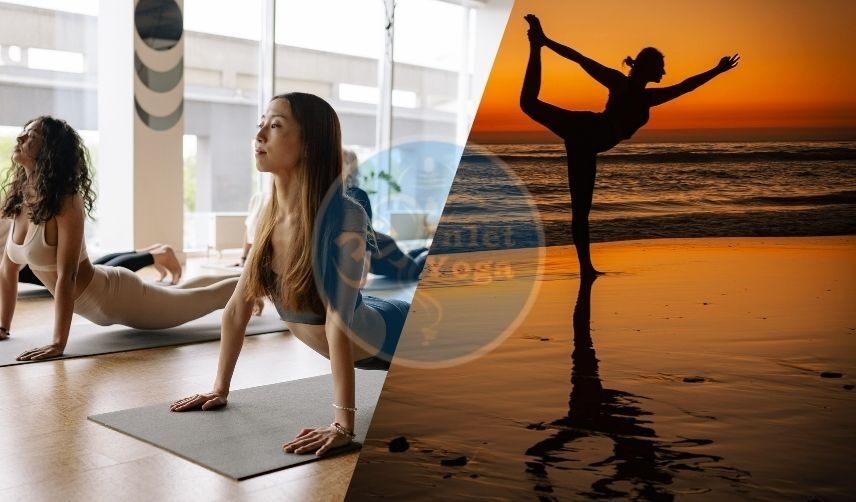
The right yoga practice for deepening personal practice depends on your experience, physical needs, goals, preferred pace, and what you want to learn. Beginners may benefit from foundational or gentle classes, while experienced students may explore Vinyasa, restorative work, private instruction, or deeper yoga study. The best practice is not necessarily the most challenging one. It is the practice that matches your current needs and gives you room to keep learning.
Introduction
Have you ever walked out of a yoga class feeling good but still wondered, “Is this the practice I should be doing right now?”
As your experience grows, that question becomes more useful.
You may start wanting more than simply completing a class. Perhaps you want to understand your alignment, improve your breathing, build strength, work with your mobility, or develop a more consistent routine.
That is when choosing the right yoga practice becomes important. Instead of asking which style is considered best, ask which practice supports what you want to develop at this stage.
What Does Deepening Personal Practice Mean?
Deepening personal practice is not simply about performing advanced poses or choosing the most difficult class on the schedule.
It can involve becoming more aware of your body, understanding your breath, developing concentration, learning yoga principles, or becoming more intentional about how you practice.
For one student, deepening may mean exploring Vinyasa with greater awareness. For another, it may mean slowing down through restorative yoga and learning how the body responds.
The right direction depends on what you need to learn next.
How Do You Know Which Yoga Practice Is Right for You?
Start by looking at four areas: your experience, goals, physical needs, and preferred pace.
Consider Your Experience Level
If you are still learning basic postures and breathing patterns, a beginner or foundational class can provide the structure you need.
If you have more experience, you may be ready for practices that offer greater focus on sequencing, strength, alignment, breath, or yoga philosophy.
The question is not, “How advanced is this class?” Instead, ask, “Will this practice help me understand and develop my yoga?”
Identify Your Main Goal
Your reason for practicing can point you toward the right style.
You may want to:
-
Build strength and stamina
-
Improve mobility and flexibility
-
Develop better body awareness
-
Support relaxation and recovery
-
Improve concentration
-
Understand breath and movement
-
Study yoga more deeply
Once your goal is clear, choosing between different practices becomes much easier.
Listen to Your Physical Needs
Your body should also have a say in your practice.
A dynamic class may suit someone looking for strength and continuous movement. Someone recovering from a demanding routine may benefit more from gentle or restorative sessions.
Pay attention to how you feel during class and afterward. A practice can be challenging without leaving you feeling that you have pushed beyond what your body currently needs.
Which Yoga Styles Can Help Deepen Your Practice?
Different practices offer different development opportunities.
|
Yoga Practice |
Best Suited For |
|
Beginner Yoga |
Learning foundations and building confidence |
|
Vinyasa Flow |
Strength, coordination, and breath with movement |
|
Gentle Yoga |
Mobility and slower-paced practice |
|
Restorative Yoga |
Relaxation, recovery, and body awareness |
|
Private Yoga |
Focused instruction and individual feedback |
|
Yoga Teacher Training |
Deeper study of yoga, philosophy, and teaching |
You do not have to commit to one style permanently. Your needs can change, and your practice can change with them.
How Does Your Preferred Pace Matter?
Think about how you naturally learn.
Do you enjoy moving continuously from one pose to another? A flowing practice may keep you engaged.
Do you prefer more time to understand positioning and notice how your body responds? A slower class may offer more value.
Neither approach is better. The right choice is the one that allows you to stay engaged and learn without feeling pressured to keep up.
When Can Private Yoga Help?
Sometimes you know that you want to deepen your practice but are not sure where to focus.
Private yoga can provide an opportunity to work directly with an experienced teacher. You can ask questions, receive feedback on specific postures, discuss physical limitations, and spend more time on areas that may receive less attention in a group setting.
For someone focused on deepening personal practice, that individual attention can make the learning process more focused and purposeful.
What Should You Look for in a Yoga Teacher?
The teacher matters as much as the class style.
Look for an instructor who:
-
Gives clear and practical guidance
-
Understands different experience levels
-
Offers appropriate modifications
-
Welcomes questions
-
Explains why a movement or technique matters
-
Encourages awareness rather than competition
A strong teacher helps you become more aware of your own practice instead of simply asking you to copy their movements.
How Do You Know You Chose the Right Practice?
The results may not always appear as a new pose.
You may notice that you understand your body better, breathe with greater awareness, feel more confident during practice, or recognize when you need to challenge yourself and when you need to slow down.
You might also find yourself becoming more consistent because the practice feels relevant to your current goals.
These are useful signs that your practice is supporting genuine development.
Reassess Your Practice as You Grow
Your yoga practice does not need to follow one fixed path.
Every few weeks, ask yourself:
-
What am I learning?
-
What feels difficult right now?
-
What would I like to understand better?
-
Does my current practice match my goals?
-
Would another style complement what I am already doing?
These questions can help you make informed choices instead of changing classes simply because something new looks appealing.
Final Thoughts
There is no universal formula for deepening personal practice. The right yoga practice is the one that meets you where you are while allowing you to learn and develop.
Start with your goals, consider your experience and physical needs, and pay attention to how different practices affect your body and mind.
You do not have to find the perfect style immediately. Explore, learn from qualified teachers, and allow your practice to develop as your needs change.
The most useful question may simply be: “What does my yoga practice need from me at this stage?”
Your answer can help point you toward the practice that is right for your next step.
About the Author:
The author is a yoga content writer and wellness-focused content specialist who creates practical, research-informed content around yoga practice, movement, and personal development. Their work focuses on making yoga information clear, useful, and accessible for readers at different stages of their practice
FAQs
1. How do I know which yoga practice is right for me?
The right yoga practice depends on your experience level, physical needs, goals, preferred pace, and what you want to develop through yoga. Trying different styles can help you identify what fits your current needs.
2. What does deepening personal practice mean in yoga?
Deepening personal practice means developing greater awareness of your body, breath, focus, movement, and understanding of yoga. It does not necessarily mean performing more advanced poses.
3. Which yoga style is best for deepening personal practice?
There is no single best style. Vinyasa may support strength and breath-linked movement, while restorative or gentle yoga can support recovery and body awareness. Private yoga can provide more focused instruction.
4. Can beginners focus on deepening personal practice?
Yes. Deepening personal practice can begin at any experience level. Beginners can focus on learning basic postures, breathing, alignment, and developing a consistent practice.
5. How can private yoga help deepen personal practice?
Private yoga provides individual attention, allowing students to ask questions, receive direct feedback, work on specific postures, and focus on areas that may need more attention.
6. How often should I change my yoga practice?
There is no fixed schedule for changing your practice. Reassess it when your goals, physical needs, interests, or experience level change. You may also combine different yoga styles rather than replacing one completely.
 Spanish
 English
 Arabic
 French
 Portuguese
 Deutsch
 Turkish
 Dutch
Dutch
 Italiano
 Russian
 Romaian
 Portuguese (Brazil)
 Greek
Greek
