
Investment Risk and Taxation Course: Build Essential Finance Knowledge
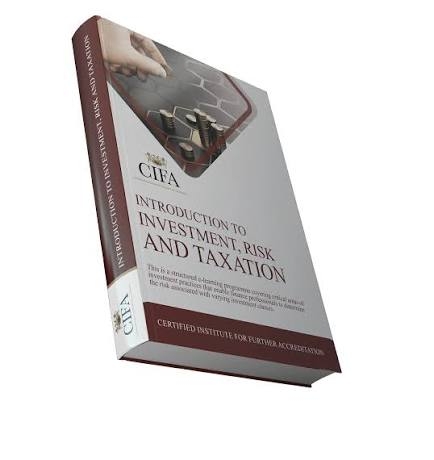
An investment risk and taxation course can help learners develop a stronger understanding of two important areas of financial decision-making: investment risk and taxation. These subjects are relevant to individuals interested in investment, wealth management, financial planning and the wider financial services industry.
Understanding how different types of risk can affect investments is an important part of finance education. Taxation can also influence financial decisions and investment planning. A structured course can introduce learners to these concepts and help them build a foundation for further professional development.
For students, graduates, career changers and finance professionals, an investment risk and taxation course can provide valuable knowledge that supports continued learning in finance.
What Is an Investment Risk and Taxation Course?
An investment risk and taxation course is designed to introduce learners to the principles of investment risk, risk management, risk and return, and general taxation considerations.
Depending on the programme, learners may study:
- Investment risk
- Risk and return
- Market risk
- Credit risk
- Liquidity risk
- Inflation risk
- Diversification
- Investment objectives
- Risk tolerance
- Taxation principles
- Investment-related tax considerations
- Financial planning
- Risk management
The exact course content will depend on the individual programme and provider.
Why Is Investment Risk Important?
Every investment can involve a degree of risk. The value and performance of investments may be influenced by financial markets, economic conditions and other factors.
Different types of investments can involve different levels and forms of risk. Understanding these risks can help learners develop a broader perspective on financial decision-making.
An investment risk and taxation course can introduce the principles that help explain why risk assessment is an important part of investment and financial planning.
Understanding Different Types of Investment Risk
Investment risk can take many different forms.
Market Risk
Market risk relates to the possibility that changes in financial markets may affect the value of an investment.
Market movements can be influenced by economic conditions, investor confidence, interest rates and other developments.
Credit Risk
Credit risk refers to the possibility that a borrower or issuer may fail to meet its financial obligations.
Understanding credit risk can be important when studying certain financial products and investments.
Liquidity Risk
Liquidity risk relates to the ability to buy or sell an investment efficiently.
Some assets may be easier to trade than others, and market conditions can influence liquidity.
Inflation Risk
Inflation can reduce the purchasing power of money over time.
For long-term financial planning, understanding the potential impact of inflation can be an important consideration.
Interest Rate Risk
Changes in interest rates can influence financial markets and affect certain investments.
An understanding of interest rate risk can help learners recognise the relationship between economic conditions and investment performance.
Understanding Risk and Return
One of the central concepts covered in an investment risk and taxation course is the relationship between risk and potential return.
Investment decisions often involve balancing potential opportunities against the possibility of financial losses. Different investments may have different levels of volatility and uncertainty.
Higher potential returns do not guarantee successful investment outcomes, and lower-risk investments can still involve losses.
Learning about risk and return can help individuals develop a more balanced understanding of investment principles.
What Is Diversification?
Diversification is an important concept in investment management.
It generally involves spreading investments across different assets, sectors, markets or investment types rather than concentrating exposure in one area.
Diversification may help manage concentration risk, although it does not guarantee profits or eliminate the possibility of investment losses.
An investment risk and taxation course can help learners understand how diversification fits into wider risk management and portfolio principles.
Investment Objectives and Risk Tolerance
Investment decisions can depend on the objectives and circumstances of an individual or organisation.
Important considerations may include:
- Financial goals
- Investment time horizon
- Attitude towards risk
- Capacity for potential losses
- Existing financial circumstances
- Investment knowledge
- Future financial objectives
Understanding these factors can help learners recognise why different investors may have different approaches to investment.
A financial strategy that may be appropriate in one situation may not be suitable in another.
The Role of Taxation in Investment
Taxation can be an important consideration when examining financial and investment decisions.
The tax treatment of investments can vary depending on the type of investment, applicable rules and individual circumstances.
An investment risk and taxation course can introduce learners to general taxation principles and explain why taxation may be relevant when evaluating financial decisions.
Areas of study may include:
- Basic taxation principles
- Investment-related tax considerations
- Financial planning considerations
- The relationship between taxation and investment outcomes
- The importance of understanding relevant tax rules
Tax rules may change, and individual circumstances differ. General education should not be considered a substitute for personalised tax advice.
Investment Risk and Financial Planning
Investment risk and taxation are closely connected with broader financial planning.
Financial planning may involve considering objectives, investment strategies, time horizons and wider financial circumstances.
Understanding investment risk can help learners recognise the importance of evaluating potential outcomes and uncertainty when considering financial decisions.
Taxation knowledge can also contribute to a broader understanding of the factors that may affect financial planning.
Who Should Take an Investment Risk and Taxation Course?
An investment risk and taxation course may be suitable for:
- Finance students
- University graduates
- Career changers
- Investment professionals
- Wealth management professionals
- Banking professionals
- Financial services employees
- Individuals interested in investment
- Learners developing finance knowledge
The suitability of a particular programme will depend on its entry requirements and the learner's existing knowledge.
CIFA Investment Risk and Taxation Course
CIFA offers an Introduction to Investment Risk and Taxation course for learners who want to develop foundational knowledge in these important areas.
The course can support individuals interested in building their understanding of investment risk, taxation and wider financial principles.
Learners may also benefit from studying related areas such as:
- Securities and Investment
- Financial Planning and Advice
- Introduction to UK Financial Regulation and Professional Integrity
- Foundations in Wealth Management
- Compliance and Anti-Money Laundering
- Introduction to Derivatives
- ESG Investment Strategies
Studying connected subjects can help learners develop a broader understanding of investment, financial markets, risk and regulation.
How Can an Investment Risk and Taxation Course Support Your Career?
Knowledge of investment risk and taxation may be relevant across different areas of financial services.
Investment Careers
Individuals interested in investment may benefit from understanding the factors that can influence investment performance and financial risk.
Wealth Management
Wealth management can involve investment knowledge, financial planning, risk awareness and other financial considerations.
Studying these connected subjects can support broader professional development.
Financial Planning
Understanding risk and taxation can be relevant when studying wider financial planning principles.
Banking and Financial Services
Professionals working in banking and financial services may benefit from developing broader knowledge of investment concepts and financial risk.
Completing an investment risk and taxation course can support learning and professional development, but it does not guarantee employment or automatically qualify an individual for a particular role.
Is an Investment Risk and Taxation Course Suitable for Beginners?
Yes. An introductory investment risk and taxation course may be suitable for learners who are new to finance and want to build foundational knowledge.
Students and career changers may use an introductory programme as a starting point before progressing to more specialised subjects.
A possible learning pathway could include:
Finance Fundamentals → Securities and Investment → Investment Risk and Taxation → Financial Regulation → Professional Development
The most suitable pathway will depend on your existing knowledge and long-term career goals.
Benefits of Studying Investment Risk and Taxation Online
Online learning can provide flexibility for individuals who want to study alongside work, university or other commitments.
Flexible Learning
Online study can allow learners to organise their learning around existing responsibilities.
Specialist Finance Knowledge
Learners can focus on important areas of finance, including investment risk, financial planning and taxation principles.
Professional Development
Studying a specialist subject can help individuals expand their knowledge and demonstrate a commitment to continued learning.
Foundation for Further Study
An introductory course can provide a useful starting point for further education in investment, wealth management, financial planning or financial services.
How to Choose the Right Investment Risk and Taxation Course
Before selecting a programme, consider several important factors.
Course Content
Review the syllabus and learning outcomes to understand what the programme covers.
Look for subjects relevant to your goals, such as investment risk, diversification, risk and return and taxation.
Course Level
Choose a course that matches your current knowledge and experience.
Beginners may prefer an introductory programme, while experienced professionals may seek more advanced or specialised learning.
Assessment Requirements
Check whether the programme includes examinations, assignments or other forms of assessment.
Understanding the assessment process can help you prepare for the course.
Certification
Review the certificate awarded following successful completion and consider how it fits into your wider professional development.
Career Relevance
Consider whether the course supports your intended career direction in investment, wealth management, banking or financial planning.
Building a Broader Finance Learning Pathway
Investment risk and taxation can be studied alongside other important areas of finance.
For example:
Securities and Investment + Investment Risk and Taxation + UK Financial Regulation + Professional Integrity
This combination can help learners develop broader knowledge of investment principles, financial risk and the regulatory environment.
Individuals interested in wealth management may also consider studying:
Investment + Financial Planning + Risk + Taxation + Wealth Management
A structured approach can help learners build knowledge across connected areas of financial services.
Important Considerations for Financial Services Careers
Completing an investment risk and taxation course can help learners develop relevant knowledge, but it does not automatically provide authorisation to offer regulated financial advice or carry out regulated financial activities.
Specific roles may have separate requirements relating to:
- Professional qualifications
- Competence
- Practical experience
- Employer requirements
- Regulatory responsibilities
Learners should research the requirements associated with their intended career path before selecting a course.
Why Continuing Professional Development Matters
The financial services industry can change through developments in financial markets, regulation, technology and professional practices.
Continued learning can help individuals maintain and develop their understanding of important finance topics.
For beginners, an investment risk and taxation course can provide an introduction to essential concepts. For professionals, further education can support continued knowledge development in areas relevant to their work.
Frequently Asked Questions
What is an investment risk and taxation course?
An investment risk and taxation course is designed to provide learners with foundational knowledge of investment risk, risk and return, diversification and general taxation considerations relevant to financial decision-making.
Who should study investment risk and taxation?
The course may be suitable for finance students, graduates, career changers, investment professionals, wealth management professionals and individuals interested in developing their financial knowledge.
Is an investment risk and taxation course suitable for beginners?
Yes. An introductory programme can provide a useful starting point for learners who are new to investment, risk and financial services.
Can an investment risk and taxation course help my finance career?
A course can help you develop relevant knowledge and demonstrate a commitment to professional development. However, career opportunities may also depend on experience, skills, employer requirements and additional qualifications.
Does completing the course allow me to provide investment advice?
No. Completing an introductory course does not automatically authorise an individual to provide regulated investment advice or carry out other regulated financial activities. Specific qualification, competence and regulatory requirements may apply.
Conclusion
An investment risk and taxation course can provide valuable foundational knowledge for individuals interested in investment, wealth management, financial planning and the wider financial services industry.
By studying investment risk, risk and return, diversification, financial objectives and taxation principles, learners can develop a stronger understanding of the factors that may influence financial decision-making.
CIFA's Introduction to Investment Risk and Taxation course can support learners who want to build knowledge in these areas while developing a broader foundation for continued professional development in finance.

 English
 Arabic
 French
 Spanish
 Portuguese
 Deutsch
 Turkish
 Dutch
Dutch
 Italiano
 Russian
 Romaian
 Greek
Greek
