
Collapsible Rigid Boxes Explained - Custom, Printed, and Wholesale
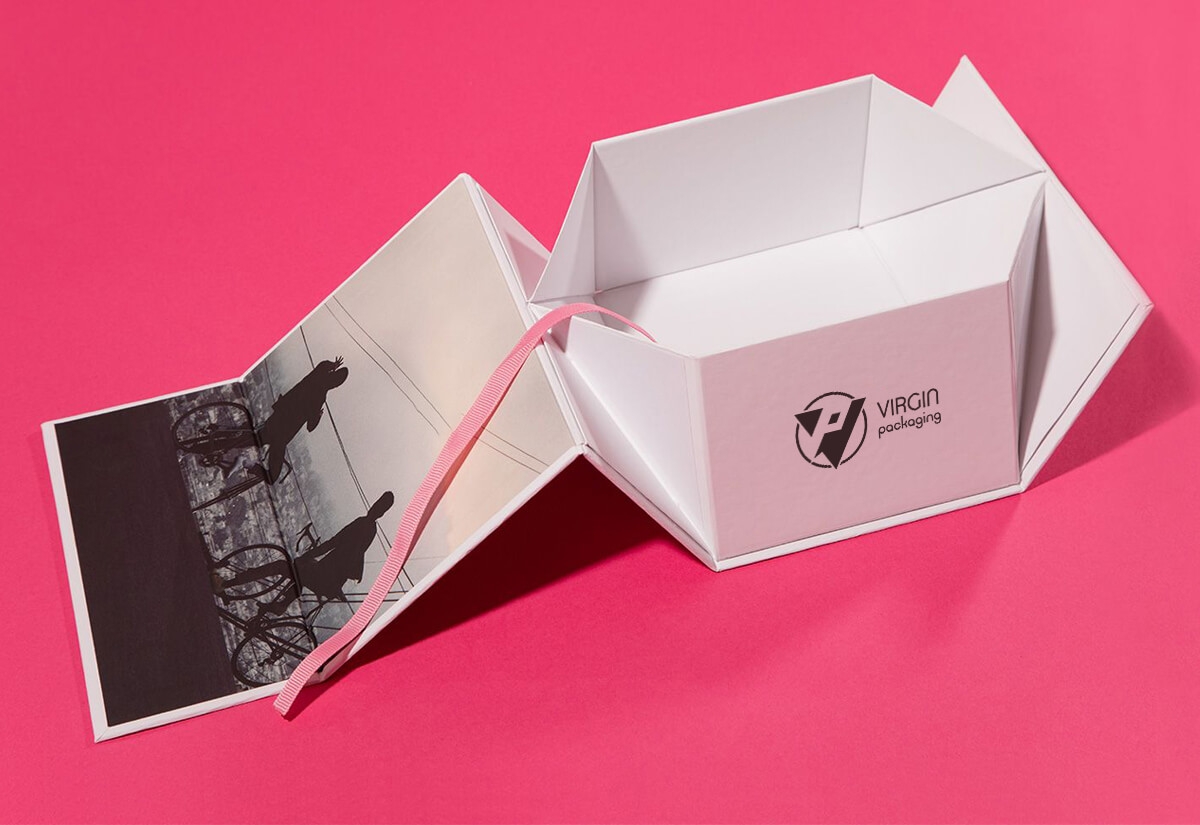
Collapsible rigid boxes use scored, hinged wall panels — usually reinforced with fabric or paper tape at the fold lines — so the box folds flat for shipping and storage, then pops back into a rigid rectangular shape when assembled.
It's an engineering answer to the single biggest drawback of standard rigid packaging: rigid boxes ship and store as fully-formed boxes, which wastes freight space and warehouse footprint.
The fold lines are the trade-off. A collapsible box will never feel quite as solid at the corners as a fully wrapped, permanently rigid box, since the hinge is a structural compromise by design.
For most products, that compromise is small enough not to matter; for a handful of fragile or unusually heavy items, it's worth testing before committing to a full production run.
How the Fold Mechanism Actually Works
• Magnetic-seam collapsible: side panels fold flat and are held rigid by concealed magnets when assembled
• Locking-tab collapsible: interlocking tabs on the base and walls hold the shape without magnets
• Fabric-hinge collapsible: cloth tape reinforces fold lines on all four corners, the most common construction
Each mechanism has a slightly different assembly motion, which matters more than it sounds like it should once you're packing hundreds of units a day. A magnetic-seam box tends to snap into shape almost instantly; a fabric-hinge box usually needs a firmer, more deliberate push at each corner to seat properly.
The Freight and Storage Math Behind Collapsible Rigid Boxes
A pallet of pre-assembled rigid boxes is mostly empty air. Flat-packed, the same box count can occupy a fraction of the freight volume — which is the entire commercial case for collapsible construction. The savings show up twice: once in inbound freight from the packaging supplier, and again in warehouse shelf space until the boxes are used.
Here's what most buyers overlook: collapsible boxes still need to be assembled by hand or by machine before packing, which adds a labor step that pre-formed rigid boxes skip entirely. Factor that labor time into your total cost comparison, not just the freight savings.
Run the numbers on a real shipment before assuming collapsible automatically wins. For a domestic order shipped a short distance, the freight savings might be marginal; for an overseas order shipped by ocean freight, the difference in container space alone can be substantial.
Where Collapsible Rigid Fits Best
The format is most common in cosmetics, electronics accessories, and mid-tier gifting — categories that want the rigid look and feel but ship at high enough volume that flat-pack freight savings are meaningful.
For products that don't need the flat-pack benefit and prioritize maximum structural solidity instead, standard two-piece rigid boxes remain the more rigid option at a similar price point.
It's also worth considering the assembly environment. A brand fulfilling from an in-house warehouse with steady staff can absorb the assembly step relatively easily.
A brand relying on a third-party logistics provider should confirm that provider is actually equipped and willing to assemble collapsible boxes before specifying the format.
Sourcing Collapsible Rigid Boxes Wholesale
Alpha Global Packaging offers custom collapsible rigid boxes wholesale, printed with logo branding, in magnetic-seam and fabric-hinge constructions.
Specify your target shipping volume when requesting a quote, it directly affects whether collapsible construction actually saves you money versus standard rigid.
Board weight matters here too. Collapsible construction generally works best with slightly lighter chipboard than a fixed rigid box of the same size, since thicker board is harder to fold cleanly at the hinge without cracking the fiber over repeated use.
How Collapsible Rigid Boxes Are Assembled on the Line
Once flat-packed boxes arrive at a warehouse, assembly typically takes a few seconds per unit once staff are familiar with the mechanism, pop the base into shape, fold and lock or seat the walls, and the box is ready to pack.
Fabric-hinge versions usually need a bit more deliberate pressure at each corner than magnetic-seam versions, which tend to snap into place with less effort.
For higher-volume operations, some suppliers can pre-assemble a portion of an order for an added fee, giving a brand the flexibility to keep some units flat for storage and receive others ready to pack immediately during a busy period.
Storage Best Practices for Flat-Packed Inventory
Flat-packed collapsible boxes still deserve some care in storage, even though they take up far less room than assembled boxes. Stacking flat bundles too high can put pressure on the score lines over time, slightly affecting how cleanly they fold once finally assembled. Most suppliers can recommend a reasonable maximum stack height for a given board weight and bundle size.
Common Questions About Collapsible Rigid Boxes
How many times can a collapsible box be folded and reassembled? This depends on the fold mechanism and board weight, and it's worth asking your supplier for a cycle rating if your product involves any reuse, return, or retail display application rather than a single one-way shipment.
Do collapsible rigid boxes cost more than standard rigid? Sometimes, depending on the fold mechanism chosen. Magnetic-seam construction typically carries a higher unit cost; fabric-hinge construction is often close to standard rigid pricing once freight savings are factored into the total picture.
Can any rigid box design be made collapsible? Not always. Some very deep or unusually shaped boxes don't fold cleanly, so it's worth discussing your specific dimensions with a supplier before assuming a collapsible version is possible.
How Collapsible Rigid Boxes Compare on Total Cost of Ownership
Looking only at the quoted unit price misses most of the actual financial picture. A complete comparison should include inbound freight cost per unit, warehouse rent allocated to packaging storage, and the labor cost of assembly, weighed against the equivalent figures for a fixed rigid box of the same size and finish.
Most brands find that collapsible construction wins on total cost of ownership once shipping distance and storage constraints are significant, even when the unit price alone looks slightly higher than a comparable fixed rigid box.
The reverse is also true, a brand with cheap, ample local warehouse space and short freight runs may find fixed rigid comes out ahead once the math is actually run.
Working With Your Supplier on a First Collapsible Order
A first order in a new format goes more smoothly with a supplier who can walk through assembly with your team, not just ship a box of parts with a written instruction sheet.
Ask whether your supplier offers a short video or in-person walkthrough for a new collapsible mechanism, particularly if it's magnetic-seam or locking-tab construction that behaves differently from a simple fabric hinge.
It's a small ask that pays off the first time a busy packing shift runs into a question nobody on staff knows how to answer, and it turns what could be a frustrating rollout into a smooth one.
The Bottom Line on Collapsible Rigid Boxes
For the right product and the right shipping profile, collapsible rigid boxes deliver nearly all of the presentation value of standard rigid packaging while solving one of its biggest practical drawbacks.
They're not the right fit for every brand or every product, but for anyone shipping meaningful volume across real distance, they're worth a serious look before defaulting to fixed rigid out of habit.

 English
 Arabic
 French
 Spanish
 Portuguese
 Turkish
 Dutch
Dutch
 Italiano
 Russian
 Romaian
 Portuguese (Brazil)
 Greek
Greek
