
White Label Web Development Guide for Digital Agencies
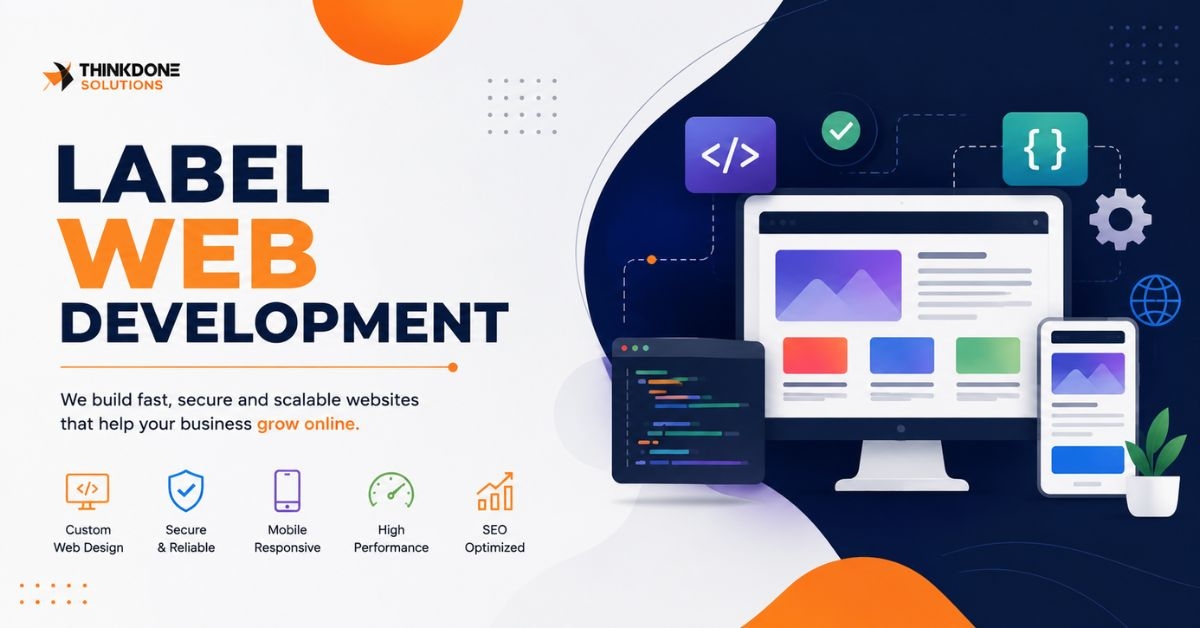
Every agency owner knows the feeling: a great new client signs on, and then the panic sets in because your team is already stretched thin. Maybe your designers are buried in revisions, or your one developer is juggling three projects at once. This is one of the most common growing pains agencies face, and it's exactly the gap that white label web development was built to fill.
In plain words, white label website development means teaming up with a specialized outside team that builds the website for you, but the finished product carries your agency's name, not theirs. The client sees your logo, your communication, and your professionalism. What happens behind the scenes stays behind the scenes.
Breaking Down White Label Web Development
Imagine a coffee shop that doesn't roast its own beans but buys them from a trusted roaster and serves them under its own café name. Customers just enjoy a great cup of coffee; they don't need to know who roasted it. A white label development agency operates the same way. It quietly manages the design, coding, and testing of a website while your agency stays the visible brand your client relies on.
This setup has grown in popularity for a simple reason: agencies want to take on more work without the burden of hiring, training, and managing a bigger in-house team. Rather than turning down promising projects, more and more agencies now rely on white label web design partners to expand their service list overnight.
A Real-World Example Worth Knowing
Consider a mid-sized agency called "PixelNova Marketing" (a scenario very typical in the industry). They were experts in branding and paid ads, but whenever a client requested a full website, they either turned the project away or outsourced it to an unreliable freelancer, which usually ended in missed deadlines. After partnering with a dependable white label web development services provider, things shifted almost immediately. They started accepting every website request that came their way. Turnaround time improved, quality became consistent, and revenue climbed steadily, all without adding a single developer to payroll. This is the kind of transformation agencies commonly see once they adopt this approach.
Why More Agencies Are Choosing This Route
There are several down-to-earth reasons agencies are moving toward this model, and once you understand them, the appeal becomes obvious.
1. It frees up time and lowers stress. Rather than micromanaging developers, agency owners can focus on what actually grows the business, client relationships and strategy, while the technical work is handled by specialists who do it every single day.
2. It raises the bar on quality. A dependable white label software development partner usually brings deep, focused expertise across multiple platforms, often producing stronger results than a small generalist team could manage alone.
3. It boosts profit margins. Since there's no need to cover full-time salaries, benefits, or ongoing training, project costs stay lower for the agency, even though client pricing remains unchanged.
4. It makes scaling effortless. Whether an agency needs to deliver two websites or twenty in a single month, a solid white label website design partner can adjust instantly, something an internal team often can't do on short notice.
Step-by-Step: How the Process Actually Works
If you're curious how this plays out day to day, here's a simplified walkthrough:
Step 1: Find a Trustworthy Partner Search for a white label web development provider with a proven portfolio, honest reviews, and dependable communication habits.
Step 2: Pass Along the Project Details Share your client's requirements, branding assets, and any special features they've requested.
Step 3: Let the Specialists Handle the Build The development team designs, codes, and tests everything, keeping you in the loop at each milestone.
Step 4: Check the Work and Suggest Edits Review the final draft, request any tweaks, and confirm it matches your client's expectations.
Step 5: Hand It Over Under Your Own Brand Once everything looks good, deliver the finished website to your client as your agency's own work.
Following this structure keeps every project consistent, predictable, and on schedule, without piling extra technical pressure onto your team.
Why This Approach Builds Real Client Trust
Clients ultimately care about the outcome, not who built it behind the scenes. When your agency reliably delivers polished, functional websites on time, trust builds naturally. Over time, that trust often translates into repeat contracts and word-of-mouth referrals, which fuel long-term agency growth.
On top of that, working with a seasoned white label development agency allows you to offer high-level, enterprise-grade skill without the enterprise-level payroll. That's a clear advantage for both you and your clients.
What to Look for When Choosing a Partner
Not every provider delivers the same experience, so it pays to be selective. Prioritize a team known for clear pricing, strong technical know-how, realistic deadlines, and responsive communication. It also helps if they offer continued support after launch, since most websites need regular updates and maintenance well after the project wraps up.
Conclusion
At the end of the day, white label web development is far more than a workaround, it's a practical, long-term strategy for agencies aiming to grow without burning out their team. By teaming up with a capable, trustworthy partner, your agency can widen its service offerings, deliver stronger results, and strengthen client relationships, all while your brand stays front and center. If limited resources have been holding your agency back from expanding, this is the right moment to explore this model with confidence. It has already helped countless agencies scale smoothly, and it can do the same for yours.
Frequently Asked Questions
1. What does white label web development actually mean?
It means an outside team builds the website for your agency, and you present the final result to your client under your own brand name, with no mention of the third party involved.
2. Is white label web design a good fit for small agencies?
Absolutely. It's especially valuable for smaller agencies since it lets them handle bigger projects without the cost of hiring additional in-house staff.
3. Will my clients find out I used a white label provider?
No. The entire arrangement stays confidential. Clients only ever interact with your agency, while the technical work happens quietly in the background.
4. What should I check before picking a white label development agency?
Look at their portfolio, client reviews, communication style, and track record for meeting deadlines before committing to a partnership.
5. Can white label web development actually improve my profit margins?
Yes. Since you skip the cost of full-time developer salaries and benefits, your expenses stay lower while your service pricing to clients remains the same.
 Spanish
 English
 Arabic
 French
 Portuguese
 Deutsch
 Turkish
 Dutch
Dutch
 Italiano
 Russian
 Romaian
 Portuguese (Brazil)
 Greek
Greek
