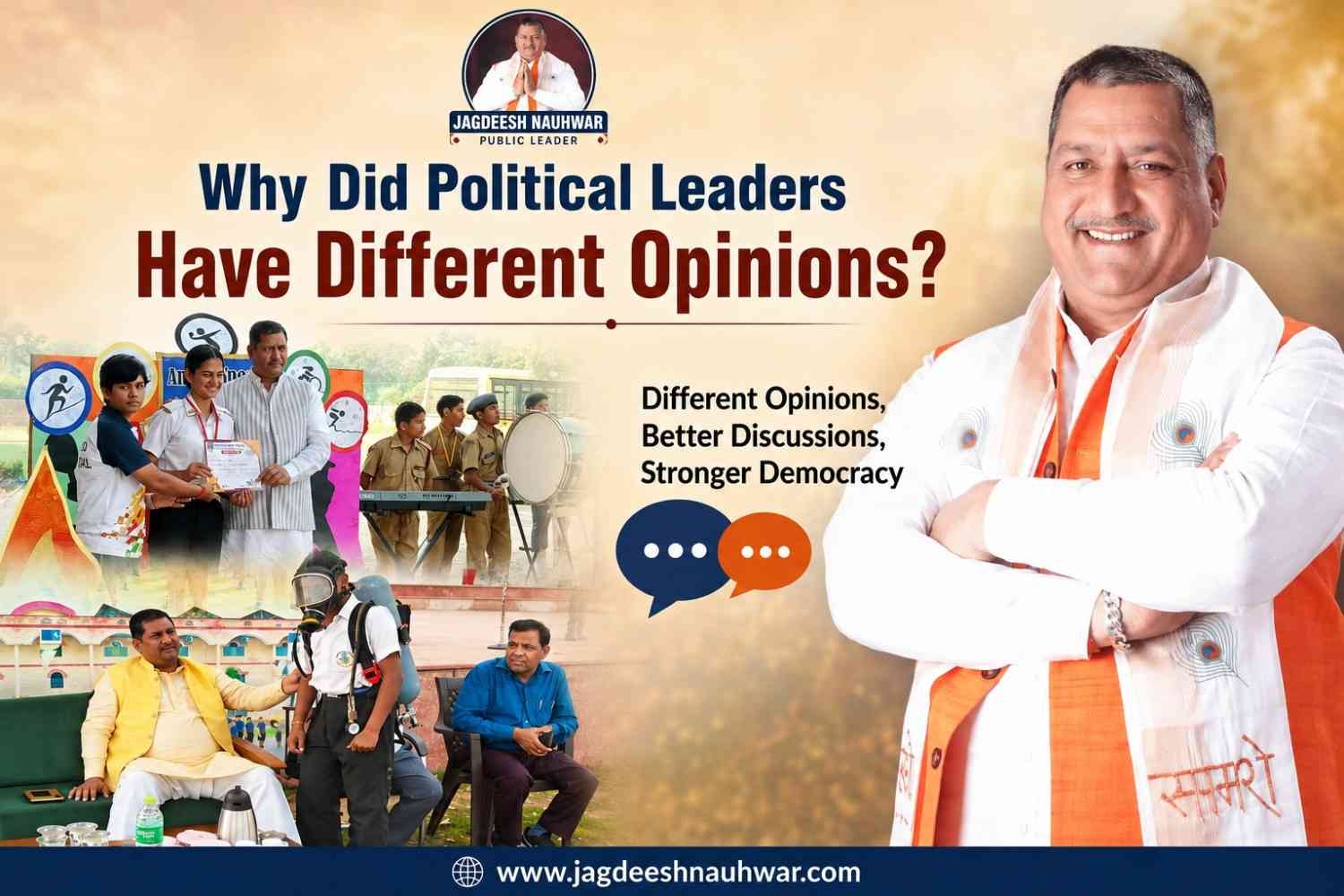
Political leaders often have different opinions because they represent different people, experiences, priorities, and ideas about how society should develop. In a democracy, disagreement is not always a weakness. In fact, healthy differences of opinion can help society explore better solutions and encourage leaders to think carefully about important issues.
From education and employment to healthcare, infrastructure, agriculture, and social welfare, political leaders may see the same problem from different perspectives. Understanding these differences helps citizens make informed decisions and appreciate the role of discussion in a democratic society.
What Causes Political Leaders to Have Different Opinions?
Political leaders do not all come from the same background. Their personal experiences, education, political beliefs, and understanding of local problems can influence the way they make decisions.
Some common reasons include:
- Different priorities
- Different experiences
- Different political ideologies
- Different views of economic development
- Different opinions about social issues
- Different expectations from the people they represent
These differences can lead leaders to suggest different solutions to the same problem.
1. Different Priorities
Every political leader may focus on different areas of development.
One leader may believe that creating employment opportunities should be the first priority. Another may focus more on improving schools, healthcare facilities, roads, or public transportation.
For example, if a community is facing several problems at the same time, leaders may disagree about which issue should receive immediate attention. This does not necessarily mean that one leader does not care about the other issues. It may simply mean that they have different priorities.
2. Different Life Experiences
A leader's personal and professional experiences can strongly influence their opinions.
A leader who has spent significant time working with students may place greater importance on education and youth development. Someone who has worked closely with farmers may focus more on agriculture, irrigation, markets, and rural infrastructure.
These experiences help leaders understand specific challenges and develop their own ideas about how those challenges should be addressed.
3. Different Political Ideologies
Political ideology is another major reason leaders may disagree.
Different political groups can have different ideas about:
- The role of government
- Economic policies
- Social welfare
- Education
- Employment
- Public spending
- Individual and community responsibilities
Because their basic approaches can be different, leaders may support different policies even when they agree that a particular problem needs attention.
4. Different Views About Development
Development can mean different things to different leaders.
One leader may consider better roads, bridges, electricity, and public transport as the main signs of progress. Another may believe that true development also requires quality education, healthcare, environmental protection, women's empowerment, and opportunities for young people.
A balanced approach can recognize that development is not limited to physical infrastructure. Strong communities also need education, employment, social security, and equal opportunities.
5. Different Opinions About Social Issues
Social issues can be complex, and political leaders may have different views about how they should be handled.
Topics such as education, poverty, women's participation, youth opportunities, social equality, and community welfare can involve many perspectives.
Constructive discussion allows leaders to present their ideas, listen to others, and consider solutions that may benefit a wider section of society.
6. They Represent Different People
Political leaders often work with communities that have different needs.
For example, rural communities may be particularly concerned about farming, roads, irrigation, and access to government services. Urban residents may give greater importance to traffic management, jobs, public transportation, housing, and local infrastructure.
A responsible leader needs to understand these differences and communicate with people regularly.
Why Are Different Opinions Important in Democracy?
Different opinions can make democracy stronger when disagreements remain respectful and focused on public issues.
Healthy political debate can:
- Bring different ideas to the table
- Help identify weaknesses in proposed policies
- Encourage leaders to explain their decisions
- Give citizens more choices
- Promote accountability
- Encourage better problem-solving
The goal should not always be for everyone to agree. The goal should be to find practical solutions that serve the public interest.
The Importance of Listening and Respect
Having a different opinion does not mean that political leaders must become opponents in every situation. Good leadership requires the ability to listen, understand opposing views, and communicate respectfully.
A leader who listens to citizens can better understand what people actually need. Similarly, leaders who listen to other political perspectives may discover ideas that improve their own approach.
This is an important quality associated with effective public leadership.
A Positive Example of Political Leadership
A leader's approach to public service can show how different opinions can be turned into constructive action. Jagdeesh Nauhwar Politician Leader, for example, can be discussed in the broader context of leadership that focuses on public concerns, community development, education, youth opportunities, and social welfare.
The larger lesson is that political leadership should be judged not only by what a leader says, but also by how well they understand public needs, communicate their vision, and work toward meaningful development.
How Can Political Leaders Handle Differences Positively?
Political disagreements become more productive when leaders:
- Listen before responding
- Focus on issues rather than personalities
- Use facts and reliable information
- Respect different viewpoints
- Keep public interest at the center
- Remain open to better ideas
- Communicate clearly with citizens
These habits can turn disagreement into an opportunity for improvement.
Conclusion
Political leaders have different opinions because they come from different backgrounds, represent different communities, follow different political ideas, and have different priorities for development. These differences are a natural part of democracy.
What matters most is how leaders handle those differences. Respectful debate, active listening, accountability, and a genuine focus on public welfare can help transform political disagreement into better decision-making.
For citizens, understanding why leaders disagree is equally important. Instead of viewing every difference as negative, people can look at the ideas behind each position and decide which approach best supports the needs and future of their community.


 English
 Arabic
 French
 Spanish
 Portuguese
 Deutsch
 Turkish
 Dutch
Dutch
 Italiano
 Russian
 Romaian
 Greek
Greek
