
What Acoustic Treatment Does for a Home Theatre Room
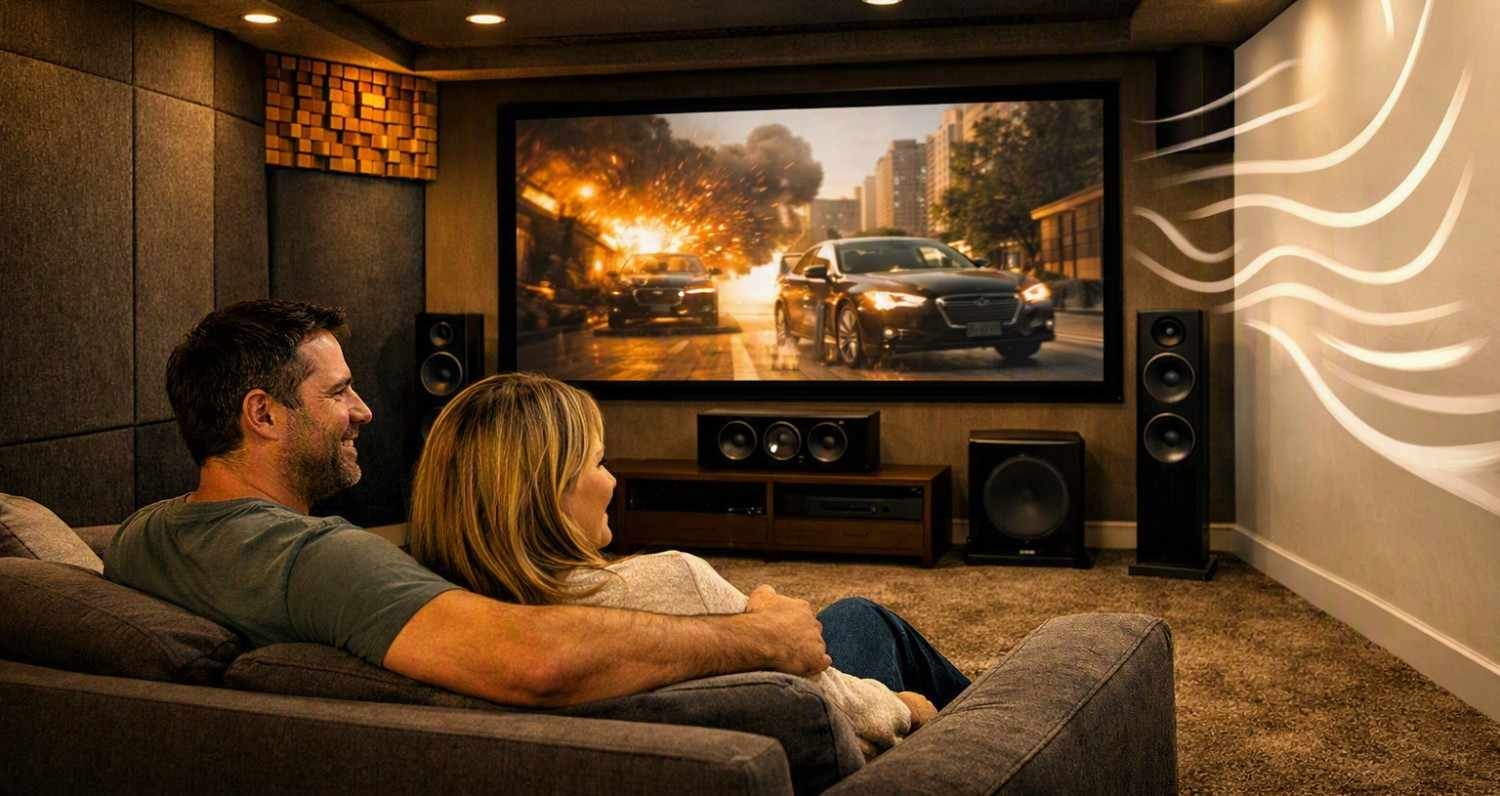
Creating a comfortable movie room involves more than choosing a large screen and good speakers. home theatre Solutions dubai can also involve planning how sound behaves inside the room. Acoustic treatment helps control unwanted echoes, reflections, and sound buildup, making dialogue easier to hear and improving the overall listening experience.
What Is Acoustic Treatment?
Acoustic treatment refers to materials and methods used to manage sound inside a room. Sound waves can bounce from walls, ceilings, floors, doors, and furniture. When too many reflections happen at the same time, the sound may become unclear.
Acoustic panels, bass traps, carpets, curtains, and other soft surfaces can help control these reflections. The purpose is not to make a room completely silent. Instead, acoustic treatment creates a more balanced sound environment.
Why Does a Home Theatre Need Acoustic Treatment?
Home theatre rooms often contain several speakers working together. Sound travels around the room and reaches the listener from different directions. Hard surfaces such as glass, tile, concrete, and bare walls can reflect sound strongly.
These reflections can cause echoes or make certain sounds seem louder than others. A properly treated room reduces these problems and allows the sound system to perform more consistently.
Even a good speaker system can sound less clear when the room has poor acoustics. This is why the room itself should be considered when planning a home theatre.
How Acoustic Panels Help
Acoustic panels are designed to absorb some of the sound energy that would otherwise bounce around the room. They are commonly placed on walls where strong reflections occur.
For example, sound from the front speakers can travel toward the side walls and reflect back toward the seating area. Panels in suitable positions can reduce these reflections.
The placement of panels matters. Covering every wall with the same material is not always necessary. A balanced approach can provide better results while keeping the room comfortable and attractive.
The Role of Bass Traps
Low-frequency sounds behave differently from higher frequencies. Bass can collect in corners and create areas where certain low notes sound unusually strong or weak.
Bass traps are used to help manage these low-frequency problems. They are often placed in room corners because corners can become areas where bass energy builds up.
Managing bass can make music, sound effects, and other low-frequency sounds feel more controlled instead of heavy or uneven.
How Furniture Affects Room Acoustics
Furniture can also change the way sound behaves. Sofas, fabric seats, carpets, curtains, and other soft materials can absorb some sound.
A room with completely bare walls and hard flooring may produce more reflections than a room with suitable furniture and fabric surfaces.
However, too many soft materials can also absorb too much sound. The goal is to create a natural balance rather than making every surface absorb sound.
Where Should Acoustic Treatment Be Placed?
The correct locations depend on the size and shape of the room, speaker positions, seating arrangement, and type of surfaces.
Common areas for treatment include side walls, rear walls, ceiling areas, and room corners. The first reflection points are especially important because they can send strong reflections toward the listening position.
Before installing acoustic materials, it can be useful to consider where the speakers and seats will be located. This helps avoid placing treatment randomly.
Acoustic Treatment and Soundproofing Are Different
Acoustic treatment and soundproofing are often confused, but they have different purposes.
Acoustic treatment manages sound inside a room. It helps reduce reflections and improve sound clarity.
Soundproofing is mainly concerned with reducing sound travelling into or out of a room. It can involve construction methods, insulation, sealing gaps, and changes to walls, ceilings, doors, or floors.
A home theatre may need one or both depending on the building and the room's requirements.
Choosing Treatment for a Home Theatre
The best acoustic treatment depends on the room rather than simply choosing the thickest or largest panels available. Room dimensions, wall construction, flooring, ceiling height, speaker placement, and seating position can all affect the result.
It is also important to consider the appearance of the room. Acoustic products are available in different sizes, shapes, fabrics, and finishes, allowing them to fit into a home theatre without making the space feel uncomfortable.
Understanding the room's sound behaviour first makes it easier to decide which treatment is actually needed. This approach can help create a clearer and more enjoyable listening environment when planning home theatre Solutions dubai.

 English
 Arabic
 French
 Spanish
 Portuguese
 Deutsch
 Turkish
 Dutch
Dutch
 Italiano
 Russian
 Romaian
 Greek
Greek
