
Can 5G FWA Accelerate Digital Inclusion Around the World?
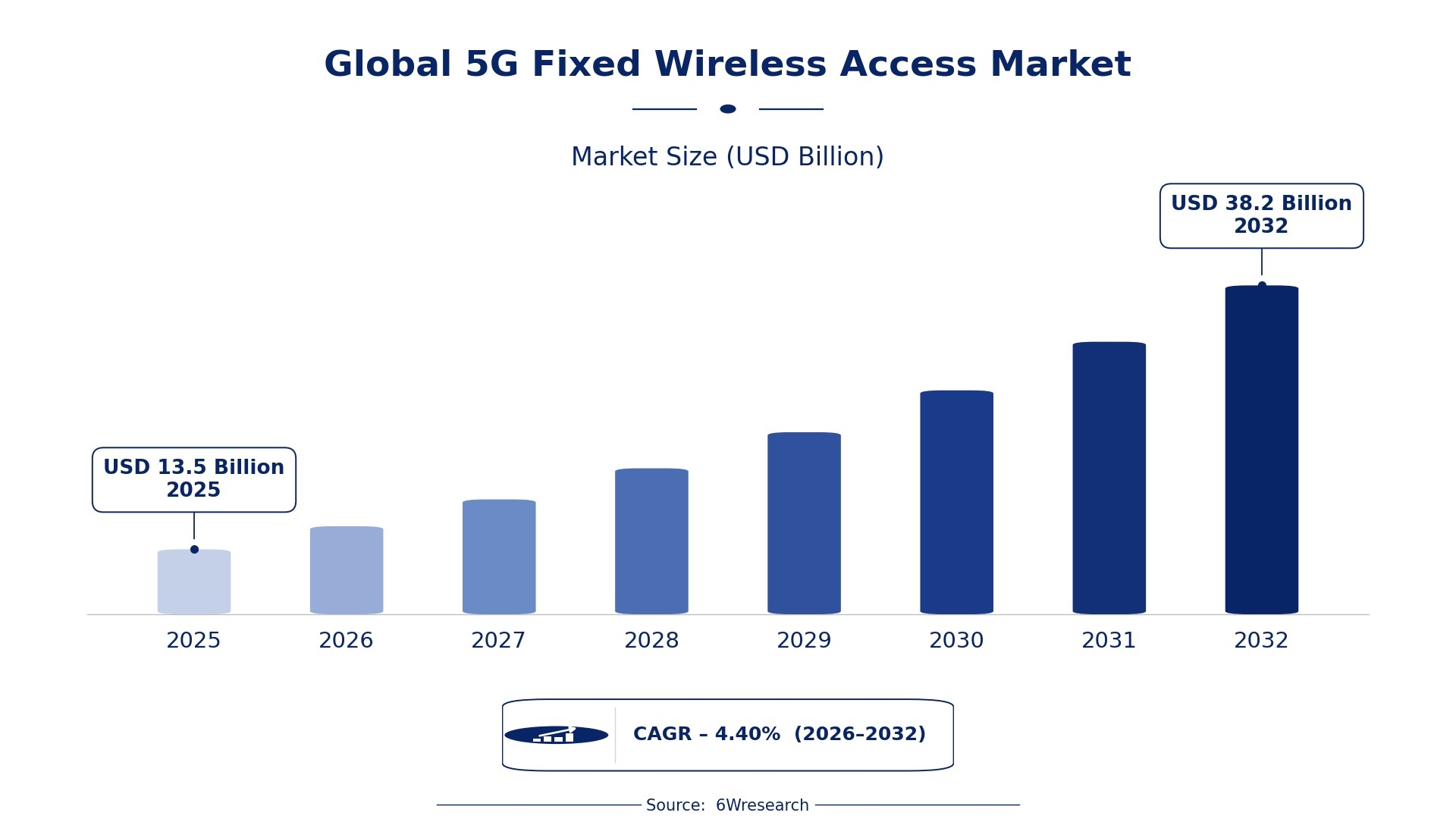
Digital connectivity has become closely linked to economic development. Governments increasingly view reliable broadband as essential infrastructure for education, healthcare, employment, public services and business growth. Yet extending traditional networks to every community remains challenging. The 5G Fixed Wireless Access Market offers governments and telecom operators another approach to expanding broadband availability, particularly in underserved locations.
Broadband as Critical Infrastructure
Modern economies depend on digital connectivity.
Citizens use online government services, students attend digital classes, businesses communicate with customers and patients increasingly access healthcare remotely.
A lack of reliable internet can therefore create economic and social disadvantages.
This has encouraged governments around the world to prioritize broadband expansion.
Why FWA Fits Digital Inclusion Strategies
Traditional broadband expansion often requires extensive physical infrastructure.
FWA can reduce dependence on last-mile cabling by using wireless networks.
This can be particularly useful in locations where terrain, population density or construction costs make fiber deployment difficult.
The technology can therefore complement existing broadband programs.
Connecting Underserved Communities
Remote and underserved communities may not always generate enough commercial demand to justify immediate fiber investment.
FWA can potentially provide a more flexible deployment model.
A suitable wireless network can cover multiple locations without requiring an individual physical connection to every building.
This can improve the economics of broadband expansion.
Education and Skills Development
Internet access is increasingly essential for education.
Students can access online courses, digital libraries and educational platforms.
Teachers can use cloud-based resources and communicate with students remotely.
For governments focused on improving digital skills, connectivity is therefore an important foundation.
5G FWA can contribute to these objectives where suitable network coverage exists.
Public Services Can Become More Accessible
Governments are moving many services online.
Citizens may need internet access to apply for documents, access benefits, make payments or communicate with public institutions.
Improved broadband can make these services more accessible and reduce dependence on physical offices.
This can be especially important in geographically dispersed communities.
Supporting Small Enterprises
Small businesses in underserved areas can benefit from better connectivity.
Online marketplaces allow entrepreneurs to reach customers beyond their local communities.
Digital payment systems simplify transactions, while cloud applications can improve business operations.
FWA can therefore support entrepreneurship as well as household connectivity.
Public Policy Matters
Technology alone cannot solve the digital divide.
Governments may need to create supportive policies around spectrum allocation, infrastructure investment and rural broadband programs.
Public-private partnerships can also help operators expand networks into locations where commercial returns may initially be limited.
Spectrum and Regulation
Spectrum policy can strongly influence the availability of FWA.
Governments need to balance multiple requirements, including mobile services, fixed wireless applications and other spectrum users.
Clear licensing frameworks can encourage telecom operators to invest in infrastructure.
Regulatory certainty is therefore an important factor in market development.
Affordability Remains Important
Coverage does not automatically equal adoption.
A household may have access to broadband but still be unable to afford the service.
Governments and operators therefore need to consider affordability alongside infrastructure.
Flexible pricing, targeted subsidies and entry-level broadband plans can help translate network availability into actual usage.
Measuring Real Digital Inclusion
Success should not be measured only by the number of connected locations.
Governments should also examine:
-
Broadband speed.
-
Reliability.
-
Affordability.
-
Usage.
-
Digital skills.
-
Service availability.
This broader approach provides a better understanding of whether connectivity is producing meaningful social and economic outcomes.
A Long-Term Opportunity
5G FWA can become an important component of national digital strategies.
It offers governments another tool for connecting communities while complementing fiber, cable and other broadband technologies.
Its greatest value may come from flexibility.
Where wired deployment is practical, fiber can remain central. Where physical infrastructure is difficult or expensive, wireless connectivity can fill important gaps.
The Road Ahead
Digital inclusion will remain a major policy priority as more economic and social activities move online.
5G FWA cannot solve every connectivity challenge, but it can contribute to a more flexible broadband ecosystem.
With supportive spectrum policies, investment incentives, affordable services and effective network planning, FWA can help governments extend the benefits of high-speed connectivity to a wider population.
The future of digital inclusion may therefore depend not on one technology, but on combining multiple technologies intelligently.
Who We Are
About 6Wresearch: It is a commercial strategy and growth advisory firm founded in 2011 and headquartered in New Delhi, India, with partners across Southeast Asia and the Middle East & Africa. The firm has delivered over 20,000 commercial engagements for over 2,000 organizations, including Fortune 500 companies, government agencies, and multilateral institutions such as the World Bank and the Asian Development Bank. Backed by proprietary market research and advanced analytics, 6Wresearch combines sector expertise with data-driven intelligence to help organizations navigate market complexity and drive sustainable growth. These capabilities explain why organizations trust 6Wresearch Global Market Research & Consulting Firm for reliablecommercial insights and confident decision-making.
Our Proprietary Platform: 6W Export GTM
6W Export GTM is 6Wresearch's proprietary trade intelligence and go-to-market platform, built on UN Comtrade data and enhanced with 6Wresearch's in-house analytical and simulation models, including system dynamics-based forecasting. Unlike broad, sector-level market sizing tools, 6W Export GTM operates at the individual product level down to specific HS codes and micro-segments to identify precise, actionable export opportunities by country and product pair, including markets where trade currently does not exist. This granular, simulation-driven approach allows 6W Export GTM to surface opportunities that sector-wide analysis typically misses, positioning it among a small number of platforms globally offering this depth of product-and-country-specific export intelligence.
 Turkish
 English
 Arabic
 French
 Spanish
 Portuguese
 Deutsch
 Dutch
Dutch
 Italiano
 Russian
 Romaian
 Portuguese (Brazil)
 Greek
Greek
