
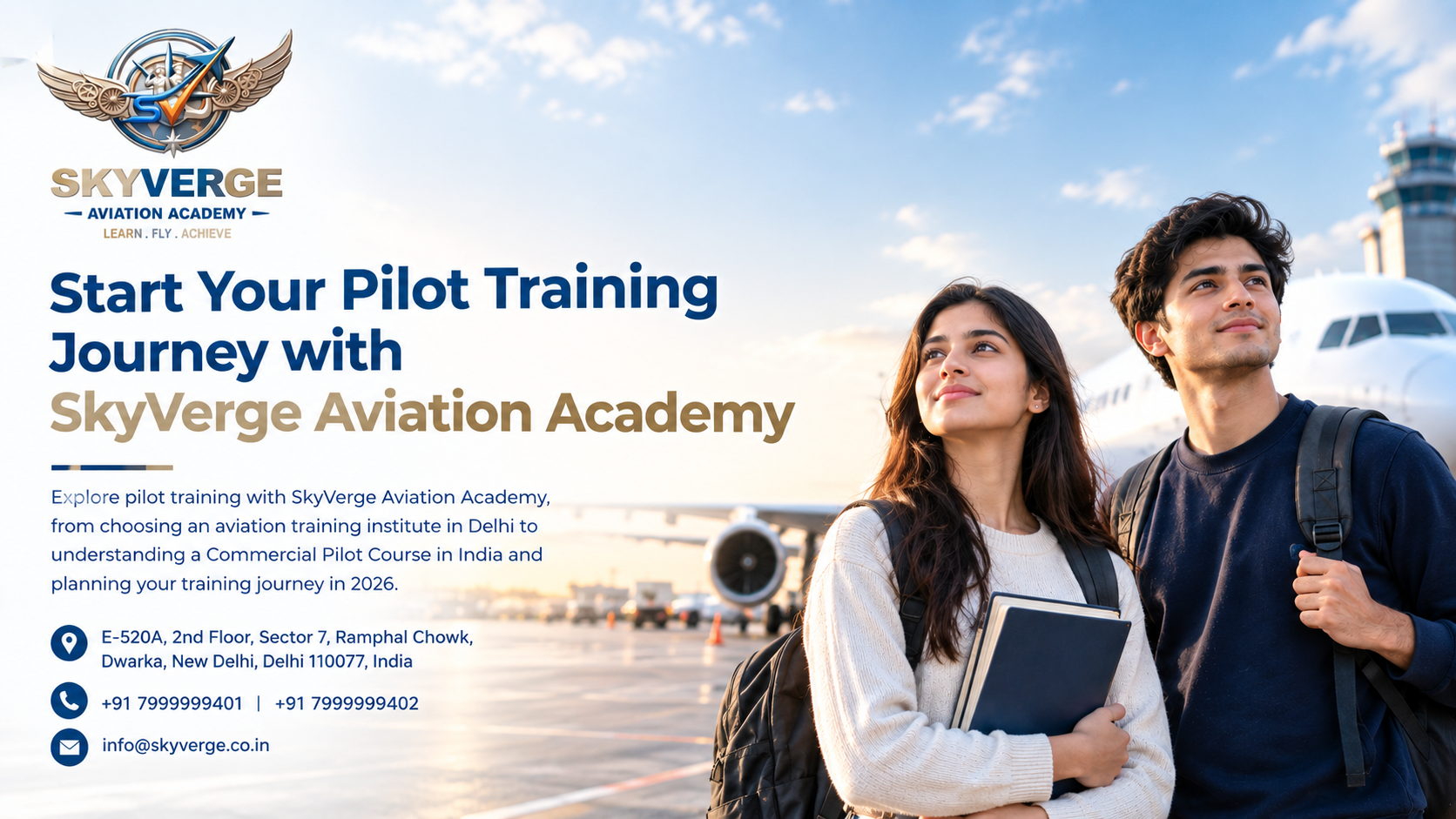
Start Your Pilot Training Journey with SkyVerge Aviation Academy
Turning Your Aviation Ambition into a Structured Career Path
Becoming a pilot is a goal that combines academic preparation, discipline, technical knowledge, practical training, and a strong understanding of aviation regulations. For many students, the dream starts with a simple thought: “I want to fly an aircraft.” But as they begin researching the profession, several questions naturally appear. What qualifications are required? How does pilot training work? Which examinations need to be completed? How should students prepare financially? And what should they look for before choosing an aviation academy?
At SkyVerge Aviation Academy, we believe that students should understand these aspects before beginning their training journey. Our focus is on helping aspiring pilots develop a clearer understanding of aviation education, DGCA-related preparation, ground studies, and the different stages involved in professional pilot training.
We speak with students directly, understand their questions, and help them approach their aviation plans with realistic expectations. Whether you are researching aviation as a career for the first time or already preparing for your next step, having the right information can make your planning more organised.
Choosing the Right Aviation Learning Environment
When students search for an aviation training institute in Delhi, they are usually looking for more than a classroom. They want an environment where they can understand aviation concepts, ask questions, prepare for examinations, and receive guidance about the broader pilot-training pathway.
At SkyVerge Aviation Academy, we believe aviation education should be approached step by step. Students need to understand the academic foundation, theoretical subjects, examination requirements, practical training pathway, medical considerations, and licensing process relevant to their career goals.
We also encourage students to verify regulatory information through official DGCA sources because aviation requirements and procedures can change. The DGCA Pariksha portal currently provides flight-crew registration, examination information, syllabi, calendars and candidate resources, making it an important official reference for aspiring pilots.
Our role is not simply to give students information and send them on their way. We want students to understand why each stage matters and what questions they should ask before making an important training decision.
Building a Strong Foundation Before Flight Training
Many students become excited about the flying component of pilot training, but professional aviation requires much more than learning how to operate an aircraft.
A strong foundation in aviation theory can help students understand the concepts they will encounter throughout their training. Depending on the student's pathway, preparation may involve areas related to navigation, meteorology, regulations, aircraft systems, communication, and other aviation subjects.
Theoretical learning also becomes important when students prepare for regulatory examinations. Rather than approaching examinations as something to memorise and finish, students can benefit from developing conceptual understanding and consistent study habits.
This is where structured guidance can make the learning process easier to manage. Students can identify difficult subjects early, create a realistic study routine, practise regularly, and seek clarification instead of allowing doubts to accumulate.
At SkyVerge Aviation Academy, we encourage students to approach their aviation education with this long-term mindset.
Understanding the Commercial Pilot Pathway
For students who want to build a professional career in commercial aviation, understanding the complete pathway is essential. A Commercial Pilot Course in India can form an important part of that journey, but students should understand that a course is only one component of becoming a professional pilot.
Before enrolling, students should learn about the applicable academic qualifications, medical requirements, ground studies, DGCA examinations, flight training, documentation, and licensing requirements associated with their intended pathway.
It is also important to understand that the exact training journey can differ depending on the student's circumstances and the training arrangement selected. This is why we encourage aspiring pilots to ask detailed questions before committing to a programme.
For example, students should ask what their training includes, what requirements they need to fulfil, which examinations are relevant to their pathway, how practical training is organised, and what additional expenses they may need to consider.
Planning Your Pilot Training Financially
One of the biggest concerns for students and parents is the financial commitment involved in pilot education. Aviation training requires careful planning, and students should understand the different categories of expenditure before they begin.
When researching commercial pilot training fees, you may find different figures from different providers. This does not necessarily mean that one figure is correct and another is incorrect. Training costs can vary because of factors such as training organisation, aircraft, flying requirements, location, duration, additional training, examination-related expenses, accommodation, and other applicable charges.
For this reason, we recommend looking beyond a single advertised number.
Ask for a detailed breakdown. Understand what is included in the quoted amount and what may be charged separately. If additional flying or training becomes necessary, ask how those expenses are calculated. You should also understand the payment structure and any other costs that may arise during your training journey.
At SkyVerge Aviation Academy, we encourage students and parents to approach financial planning carefully so that the focus remains on building a sustainable training plan rather than simply comparing one headline figure with another.
Understanding the DGCA Examination Process
The DGCA exam preparation is another important area that aspiring pilots need to understand during their preparation.
DGCA's official Pariksha portal is used for flight-crew examination registration and related services. The portal provides information about examinations, examination calendars, syllabi, candidate registration and other resources.
According to the current DGCA Pariksha FAQ, applicants other than the PPL category must have passed 10+2 with Physics and Mathematics from a recognised board or university, or an equivalent qualification, for registration as a flight-crew candidate. Students should still verify the latest applicable requirements and instructions before proceeding because official guidance takes precedence over general educational content.
The official portal also states that a candidate receives a computer number for flight-crew examinations, and the same computer number is used across flight-crew examination categories.
For students, this means preparation should not be limited to studying subjects. Understanding registration procedures, documentation, examination notices, applicable syllabi, and official instructions is also part of being prepared.
A Conversation Between a Student and a SkyVerge Counsellor
Student: I want to become a pilot, but I am confused about where I should begin.
Counsellor: Start by understanding the complete pathway. First, look at your educational and medical requirements. Then understand your ground-training needs, applicable DGCA examinations, flight-training pathway, and licensing requirements.
Student: I have seen many different aviation academies online. How do I choose one?
Counsellor: Don't compare them only by advertisements. Ask about the training structure, academic support, faculty, learning resources, fees, additional expenses, and the overall pathway. You should also verify regulatory information through official DGCA sources.
Student: I am worried about the total cost of training.
Counsellor: That's a valid concern. Instead of focusing only on one advertised fee, ask for a complete breakdown. Understand what is included, what is excluded, and whether additional training or flying could create further expenses.
Student: What about the DGCA examination?
Counsellor: You should understand the applicable examination requirements and prepare systematically. The official Pariksha portal is an important source for current examination information, registration and notices.
Student: So should I start studying before joining training?
Counsellor: Building your aviation fundamentals early can certainly help. The important thing is to follow a structured approach and make sure the information you are using is current.
What Students Should Consider Before Enrolling
Choosing a pilot-training pathway is a major decision, so we encourage students to slow down and ask practical questions before enrolling.
First, understand your own career objective. Do you want to pursue commercial aviation, explore aviation as a long-term career, or are you still deciding which licence pathway suits you?
Next, review your educational background and determine which requirements apply to your intended pathway. Students should also understand the importance of medical fitness and seek appropriate professional guidance where required.
You should then research the academic and practical components of your training. Find out what ground preparation is provided, how students receive academic support, and how the training pathway connects with the examinations and practical flying stages.
Finally, understand the financial side. Ask for a transparent fee structure and identify expenses that may not be included in the basic course price.
Taking these steps before enrolling can help you approach your training journey with greater confidence.
Questions Students Commonly Ask
1. What should I do first if I want to become a pilot?
Start by understanding the applicable eligibility, educational, medical, examination and training requirements for the licence or career pathway you want to pursue. Getting clear information early can help you plan your next steps.
2. Is commercial pilot training difficult?
Pilot training requires consistent study, discipline, technical understanding and practical skill development. The experience can vary from student to student, so maintaining a regular study routine and asking questions when you need help can be valuable.
3. How much does commercial pilot training cost?
There is no single universal cost for every student. Expenses can vary according to the training organisation, flying requirements, location, duration, aircraft, additional training and other applicable expenses. Students should request a detailed and current fee structure before enrolling.
4. What is required for DGCA flight-crew examination registration?
Current DGCA Pariksha guidance states that, except for the PPL category, flight-crew applicants must have passed 10+2 with Physics and Mathematics from a recognised board or university or an equivalent qualification. Students should check the latest official requirements applicable to their case.
5. Where can I find official DGCA examination information?
The DGCA Pariksha portal provides flight-crew registration, examination information, calendars, syllabi and candidate resources. Students should use official DGCA resources when checking current examination procedures and requirements.
6. What should I ask before joining a pilot-training programme?
Ask about the course structure, academic support, applicable examinations, training pathway, fee inclusions, additional expenses, documentation, and the support available to students throughout their training.
Begin Your Aviation Journey with SkyVerge Aviation Academy
At SkyVerge Aviation Academy, we understand that every aspiring pilot has a different starting point. Some students arrive with a clear goal of becoming a commercial pilot, while others are still learning about the aviation industry and deciding whether it is the right career path for them.
Our focus is to help students understand the journey before they commit to it. We believe good aviation education should combine structured learning with clear communication, practical guidance and an awareness of current regulatory requirements.
If you are exploring pilot training and want to understand the next steps, our team is available to discuss your questions and help you understand the areas you should consider before beginning your training.
SkyVerge Aviation Academy
E-520A, 2nd Floor, Sector 7, Ramphal Chowk, Dwarka, New Delhi, Delhi 110077, India
Phone: +91 7999999401 / +91 7999999402
Email: info@skyverge.co.in

 English
 Arabic
 Spanish
 Portuguese
 Deutsch
 Turkish
 Dutch
Dutch
 Italiano
 Russian
 Romaian
 Portuguese (Brazil)
 Greek
Greek
