
How to Balance a Job and BEd in One Year: Study Plan for Working Professionals
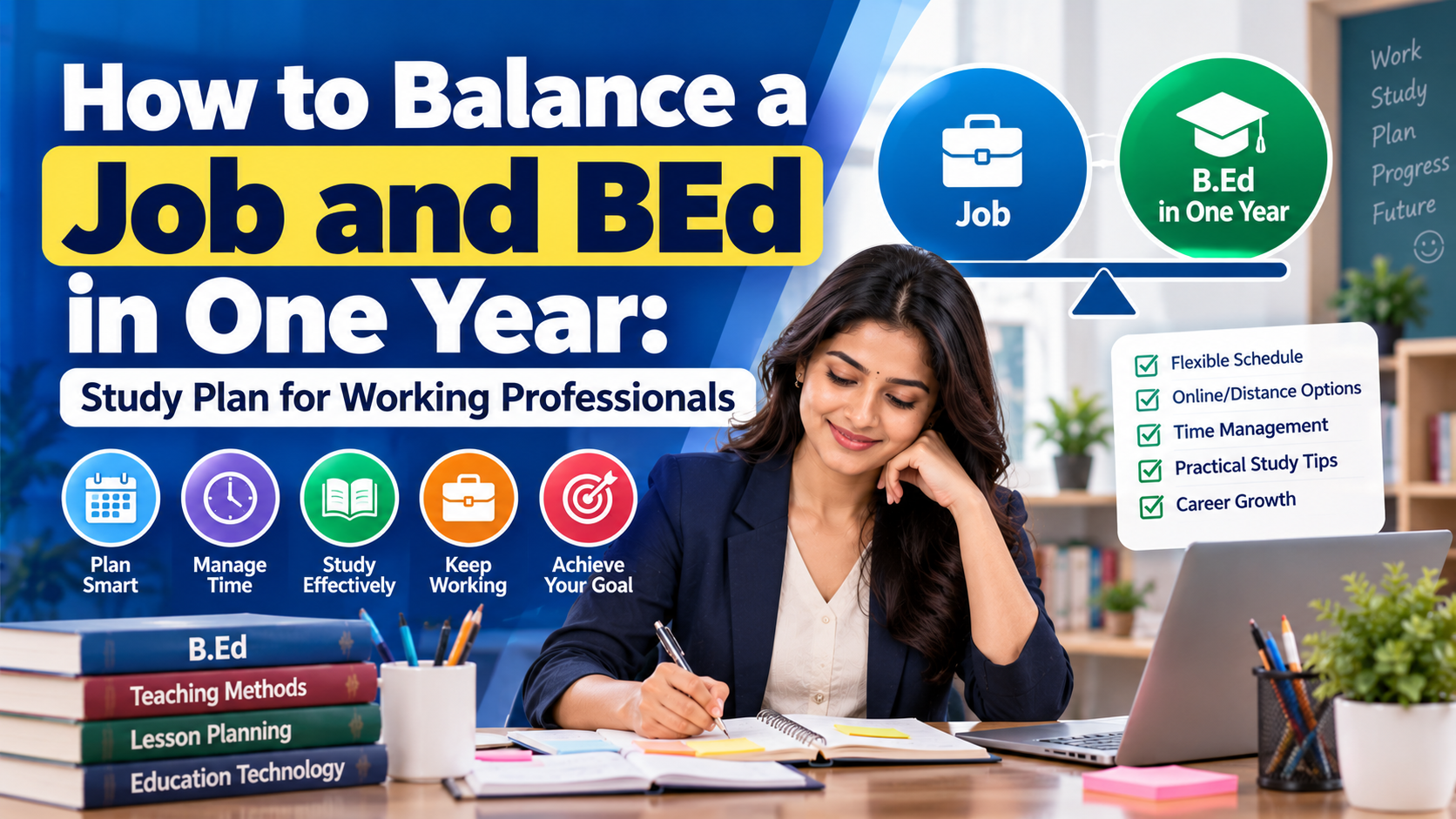
Many people who consider a B.Ed in one year are already working. Some want to switch careers into teaching. Others are teachers in private schools who need a professional qualification to move ahead. For them, the main worry is practical: how do you manage a job and an intensive one-year course at the same time?
It is possible, but it takes honest planning. This guide explains what to check first, how to organize your week, and how to handle the toughest parts of the course without burning out.
The one-year program is being reintroduced from the 2026-27 academic session for four-year degree holders and postgraduates. Because the course is new, confirm the schedule, attendance rules and internship structure with your chosen college before you commit.
First, Be Realistic About the Workload
A regular full-time B.Ed in one year is not designed for people working full-time. Classes usually run during the day, attendance is often compulsory, and the school internship needs you to be in a school for several weeks. The compressed schedule leaves little spare time.
So before anything else, ask yourself:
- Can I attend college during working hours, or can I take leave?
- Can I take a career break during the internship weeks?
- Do I have family or financial commitments that limit my time?
- How many hours a week can I realistically study?
If the honest answers are discouraging, a part-time or flexible program may suit you better than a regular one.
Check Your Options Before You Apply
Regular full-time one-year B.Ed. Best for those who can take a break from work or reduce their working hours. It offers the strongest training but the least flexibility.
Part-time or evening programs. Some institutions, where approved by the National Council for Teacher Education (NCTE), run schedules suited to working people. Verify recognition carefully.
Distance or open learning B.Ed. Mainly meant for in-service teachers and subject to specific eligibility rules. These still require school internship and may not be accepted for every job.
Working as a teacher while studying. If you already teach in a school, you may be able to use your own classroom for parts of your practice work, but only if the college and university allow it. Ask for this in writing.
Talk to Your Employer Early
Your employer can make or break your plan. Have an honest conversation before the course begins.
- Explain the course dates and the internship period.
- Ask about flexible hours, study leave or unpaid leave.
- Find out if a temporary reduction in responsibilities is possible.
- Confirm in writing whatever arrangement you agree on.
Many employers respond well to candid, early requests, especially when the new qualification will benefit them, as with a school that wants its teacher to be certified.
Build a Weekly Study Plan
A realistic weekly routine matters more than a perfect one. Here is a sample structure for someone balancing a job and a part-time or flexible B.Ed. Adjust it to your own schedule.
Weekdays, early morning (45 to 60 minutes). Review notes from the previous day or read one chapter. Your mind is freshest early, so use this time for difficult theory papers.
Weekdays, evening (60 to 90 minutes). Work on assignments, lesson plans or project files. Keep this time consistent each day.
Saturday (3 to 4 hours). Attend contact classes if your program has them, or complete bigger tasks like teaching aids and practical files.
Sunday (2 to 3 hours). Revise the week's learning, plan the coming week, and take a short mock test or self-quiz.
Keep at least one half-day completely free each week. Rest is part of the plan, not a reward for finishing it.
Use Weekly Planning Habits
- Sunday planning session. Spend 15 minutes listing deadlines, classes and work commitments for the week.
- Daily top three. Write down the three most important study tasks each day and finish those first.
- Time blocks. Treat study sessions like meetings that cannot be moved.
- Calendar reminders. Set alerts for assignment dates, internship dates and exams.
- Buffer time. Leave gaps in your schedule for delays and unexpected work demands.
Study Smarter, Not Longer
When time is short, technique matters.
Study in short, focused sessions. Work for 25 to 45 minutes, then take a short break. This keeps your concentration high.
Use commute and waiting time. Listen to recorded lectures, read summaries or revise flashcards while travelling.
Make notes as you learn. Short, clear notes save hours of revision later.
Learn by teaching. Explaining a concept aloud, even to an empty room, shows you what you really understand.
Prioritize by marks. Know which papers carry more weight and give them proportionally more time.
Do not leave assignments for the end. Break big tasks into small daily steps.
Handling Lesson Plans and Teaching Files
Lesson plans and practical files are among the most time-consuming parts of any B.Ed. To save time:
- Write one good lesson plan template and reuse the structure.
- Prepare plans for several topics in a single sitting rather than one by one.
- Collect teaching aids and resources gradually through the course.
- Ask seniors and mentors to share examples of well-made files.
- Start early and ask for feedback so you do not need to redo large pieces.
Surviving the School Internship
The internship is the hardest period for working people because it needs consistent daily presence in a school. Plan this part in advance.
- Find out the internship dates on day one, and tell your employer immediately.
- Take leave or arrange a temporary break for the full internship period if possible.
- If you already teach, ask whether your own school can be approved as your internship school, and get it confirmed in writing.
- Prepare lesson plans before the internship begins, so you are not writing them late at night during school hours.
- Keep your reflective journal updated daily, even with short entries.
- Rest well. Teaching all day and working on files at night is draining, so protect your sleep.
Protect Your Health and Energy
Burnout is the biggest risk when you combine study and work.
- Sleep at least seven hours on most nights.
- Eat regular meals instead of skipping them during busy weeks.
- Move daily, even a 20-minute walk helps your focus.
- Take real breaks with no screens and no study.
- Watch for warning signs such as constant fatigue, irritability, or loss of motivation, and adjust your plan early.
- Talk to someone if you feel overwhelmed, whether a friend, mentor or counselor.
Build a Support System
You do not have to do this alone.
- Tell family and friends about your schedule so they understand when you are unavailable.
- Share household tasks where you can.
- Form a study group with classmates to share notes and keep each other motivated.
- Connect with mentors and faculty who can guide you through difficult papers.
- Join online communities of B.Ed students and teachers for tips and encouragement.
Manage Money Carefully
Working while studying often means reduced income or extra costs.
- Budget for tuition, books, travel and internship expenses before you start.
- Keep an emergency fund for unexpected costs.
- Explore scholarships and education loans if needed.
- Avoid large purchases during the course year.
Start Eligibility Test Preparation Early
If you plan to apply for government jobs, begin light preparation for CTET or your State TET while you study. Much of the syllabus overlaps with B.Ed coursework on child development and pedagogy. Spending an hour or two a week on previous year papers is easier than starting from scratch later.
Common Mistakes to Avoid
- Underestimating the workload and trying to do everything at full speed
- Not telling your employer early about internship dates
- Choosing a program without checking whether its schedule fits your job
- Leaving assignments and files for the last month
- Neglecting sleep and health
- Choosing an unrecognized part-time or online program because it looks convenient
- Giving up too early after a bad week instead of adjusting the plan
Is It Worth Trying?
For many working professionals, yes, provided the program is recognized, the schedule is realistic and your employer is supportive. If you cannot get the time you need, it may be wiser to wait for a better moment, or to choose a flexible program, rather than struggle through a rushed course.
Frequently Asked Questions
Can I do a B.Ed in one year while working full-time?
It is very difficult with a regular full-time program because of daily classes and the school internship. Part-time or flexible options, where approved, may be more manageable.
Will my employer allow me time for the internship?
It depends on your employer. Speak to them early and agree on leave or flexible hours in writing.
How many hours should I study each week?
Most working students need around 10 to 15 hours a week outside class time, though this varies by program and your own pace.
Can I use my own school for the internship?
Only if your college and university allow it. Ask in writing before assuming.
Should I quit my job for the B.Ed?
Not necessarily. Consider reducing hours, taking leave, or choosing a more flexible program before making a big decision.
Final Thoughts
Balancing a job and a B Ed in one year is challenging but achievable with the right planning. Choose a recognized program that fits your schedule, talk to your employer early, build a steady weekly routine, protect your health, and lean on the people around you. Most importantly, be honest about your limits, and adjust when something is not working.
A year of focused effort can open the door to a career you actually want, and careful planning is what makes that year manageable.
https://facerelation.com/read-blog/102968_is-b-ed-in-one-year-worth-it-pros-cons-and-advice.html
https://gracebook.app/blogs/221872/Can-You-Become-a-Government-Teacher-with-a-B-Ed
https://tannda.net/read-blog/385933_bed-in-one-year-syllabus-and-subjects-semester-guide.html
https://www.mcmacademy.in//blog/best-ece-colleges-in-india/
https://www.mcmacademy.in//blog/top-10-llm-specializations-in-demand/
https://www.mcmacademy.in//fast-track-courses/
https://www.mcmacademy.in//graduation-degree-one-year-bangalore/
https://www.mcmglobaleducation.com/blog/mba-degree-15-best-specializations/

 English
 Arabic
 French
 Spanish
 Portuguese
 Deutsch
 Turkish
 Dutch
Dutch
 Italiano
 Russian
 Romaian
 Greek
Greek
