
Ball Joint Rod End Bearing Materials for Industrial Environments
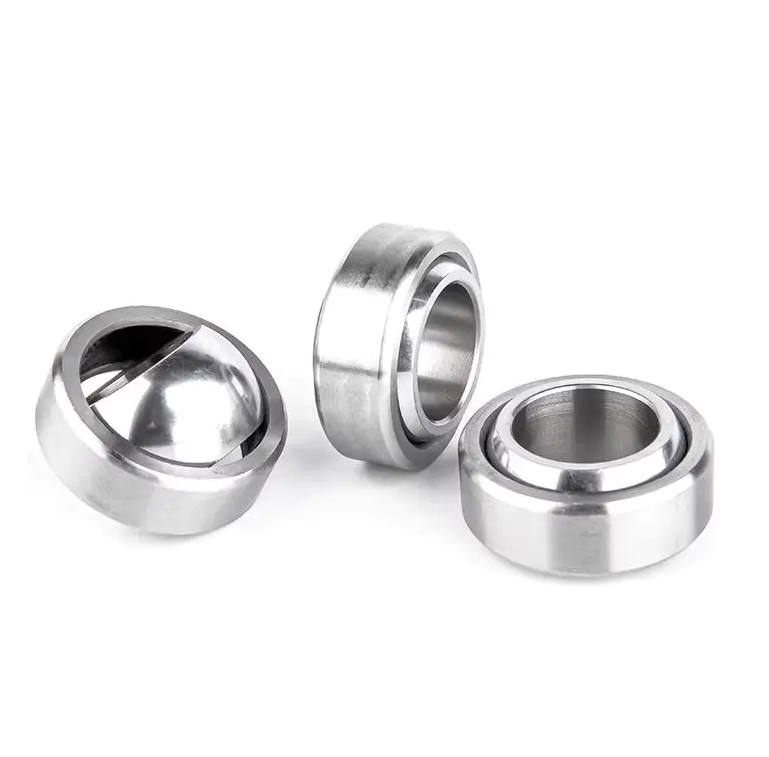
Mechanical systems often contain rods and shafts that move through different angles during operation. A Ball joint rod end bearing provides a connection that accommodates this movement without requiring the entire assembly to remain in a fixed alignment. It is widely applied in industrial automation, packaging machinery, agricultural equipment, and mechanical control systems where flexible connections are needed.
The component generally consists of a rod end housing and a spherical bearing element. The spherical interface allows angular movement around the joint, while the housing provides a mounting point for the connected structure. Some models feature internal threads, while others use external threads or alternative mounting arrangements. These variations allow engineers to integrate the bearing into different mechanical designs.
Load requirements should be reviewed before selecting a suitable model. Radial loads act perpendicular to the shaft, whereas axial loads act along its axis. A mechanism may experience both forces during normal operation. The direction, frequency, and intensity of these loads influence the bearing size and material requirements. Dynamic movement and occasional impact loads should also be considered when evaluating the operating conditions.
Surface treatment can affect the component's resistance to wear and environmental exposure. Zinc-plated steel may be used for general corrosion protection, while stainless steel construction can suit equipment operating in damp conditions. In applications where maintenance access is limited, a bearing with a self-lubricating liner may help reduce routine servicing. Lubricated metal-to-metal designs remain useful where load conditions and maintenance procedures support their use.
A Ball joint rod end bearing also helps simplify the connection between actuators and moving mechanisms. For example, a pneumatic cylinder may need to push a lever that follows an angled path. A rigid connection could introduce unwanted side forces if alignment changes during the stroke. A spherical joint allows the connection to adjust its angle within the specified movement range.
Before installation, check thread engagement, mounting dimensions, alignment, and clearance around the joint. Excessive angular movement beyond the permitted range can damage the contact surfaces. Correct tightening and suitable supporting structures are equally important for stable operation.
Engineers should also consider the operating temperature, contamination level, expected service life, and inspection schedule. A Ball joint rod end bearing selected around these practical conditions can provide a dependable connection and help maintain consistent movement in industrial machinery.
https://www.linearbearingfactory.com/product/spherical-plain-bearing-rod/
You can contact us for more information at:
Whatsapp:+86 17398543323
E-mail: viola@jldbearing.com

 English
 Arabic
 French
 Spanish
 Portuguese
 Deutsch
 Turkish
 Dutch
 Italiano
 Russian
 Romaian
 Portuguese (Brazil)
