
Fully Ground Twist Drill for Metal Fabrication Workshops
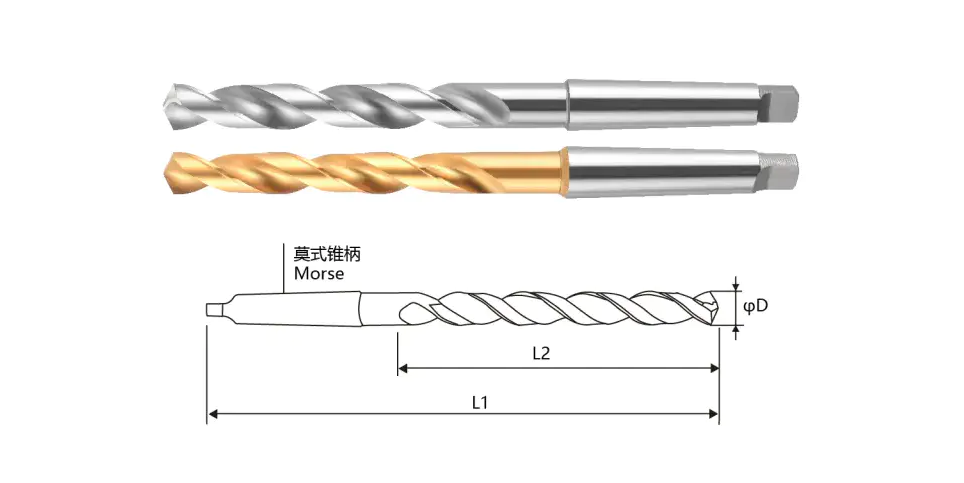
Metal fabrication requires drilling tools that can handle repeated operations across different workpieces. A Fully Ground Twist Drill offers a ground cutting structure designed to support accurate hole formation and steady machining. Grinding helps refine the cutting lips, flutes, and outside diameter, allowing the tool geometry to remain consistent within the specified manufacturing tolerances.
During fabrication, holes may be needed for bolts, fasteners, brackets, frames, and assembly components. In these applications, diameter consistency and hole positioning affect how parts fit together. A suitable Fully Ground Twist Drill can help operators achieve the required results when the workpiece is secured correctly and the machine is maintained in good condition.
Tool material should be selected according to the production environment. High-speed steel drills are commonly used for general metalworking because they offer a practical balance of toughness and cutting capability. Cobalt-containing grades can provide additional heat resistance for suitable applications. For automated equipment and specific high-speed machining tasks, other tool materials may be considered according to the workpiece and operating parameters.
The drill point determines how the cutting edges engage with the material. Different point angles are suited to different workpiece characteristics, while flute design affects chip removal. A suitable helix angle helps transport chips away from the cutting zone, especially when drilling into materials that produce long chips. These design factors influence cutting stability, surface condition, and tool wear.
When using a Fully Ground Twist Drill, operators should check the workpiece hardness, required hole depth, and machine speed before beginning. Thin metal sheets may require additional support to prevent deformation, while deeper holes may need periodic chip removal. Proper clamping also reduces vibration and helps maintain the intended hole position.
Maintenance practices contribute to consistent results. Cutting edges should be inspected for chipping, dullness, or uneven wear. Damaged tools may produce rough holes, increase cutting resistance, or place additional stress on the machine. Suitable coolant or cutting fluid can reduce heat and assist chip evacuation when recommended for the material and process.
For industrial distributors, a range of drill diameters and lengths can support different fabrication tasks. Product descriptions should explain material grade, dimensions, shank design, and recommended applications. This information helps workshops identify compatible tools without relying on assumptions. By combining suitable drill geometry with controlled operating conditions, a Fully Ground Twist Drill can support repeatable hole making throughout metal fabrication work.
https://www.cutting-tool.net/product/din-345-high-cobalt-taper-shank-fully-ground-twist-drill/
 English
 Arabic
 French
 Spanish
 Portuguese
 Deutsch
 Turkish
 Dutch
 Italiano
 Russian
 Romaian
 Portuguese (Brazil)
 Greek
