
The Evening I Stopped Guessing and Started Reading the Manual
I used to believe that reading an instruction manual was something people did only when everything else had failed. If a device had buttons, a screen, or a few switches, I assumed I could figure it out. Most of the time, that confidence got me through ordinary tasks. Occasionally, it turned a simple problem into an evening-long mystery.
The incident that changed my attitude began with a family gathering, a playlist that refused to cooperate, and a tool I had borrowed for a small repair. By the end of the night, I had learned something surprisingly useful: when several unrelated things go wrong, the solution is not always more effort. Sometimes, it is better information.
A Perfectly Ordinary Plan
The plan was uncomplicated. I wanted to prepare the living room before my relatives arrived, fix a loose section of shelving, and make sure the entertainment system was ready for music and a film afterward. Nothing required professional expertise. I had handled similar jobs before, and I expected to finish everything with time to spare.
The first problem appeared when I tried to adjust the sound system. Music played, but the balance between the speakers seemed wrong. The remote control offered more options than I remembered, and changing one setting appeared to affect another. I turned a few knobs, pressed several buttons, and made the situation worse.
My instinct was to keep experimenting. After all, surely one of the available settings would restore the sound I wanted. Instead, I found myself switching between inputs, changing volume levels, and wondering whether the problem came from the speakers, the receiver, or something I had accidentally activated.
That was when I remembered seeing denon user manuals mentioned in an online discussion about home entertainment equipment. I had never thought much about manuals for audio devices. I expected them to contain little more than diagrams and obvious warnings. Still, I decided that looking up the exact model would be quicker than continuing to press buttons at random.
The manual explained the controls in the context of the system rather than treating every button as an isolated feature. I discovered that one of my adjustments had changed the listening mode, which explained why the sound no longer matched my expectations. A few deliberate changes brought everything back to normal.
The lesson was small, but it arrived early enough to save the rest of the evening: I had been trying to solve a system-level problem by guessing at individual controls.
The Shelf That Would Not Cooperate
With the music sorted out, I moved to the shelving unit. One bracket had loosened, and the shelf leaned just enough to make the problem obvious. I had borrowed a power tool from a neighbor and was confident that tightening the fasteners would take only a minute.
The tool was more capable than the compact screwdriver I normally used. It had several settings, and I was not entirely sure which one suited the job. I chose what seemed reasonable and started working. The first fastener went in easily. The second resisted, and I began applying more pressure.
Fortunately, I stopped before damaging the material.
I checked the tool's markings and then searched for dewalt user manuals so I could understand the settings properly. The instructions helped me distinguish between operating modes and recognize why using maximum power was not automatically the best choice. The material, fastener, and amount of control all mattered.
I changed the setting, repositioned the tool, and finished the repair without forcing anything. The shelf was secure, and the surrounding wood remained intact.
What struck me was how familiar the pattern felt. With the sound system, I had assumed that more button presses would eventually reveal the answer. With the tool, I had assumed that more force would compensate for uncertainty. Both instincts were wrong for the same reason: I was acting before understanding what the equipment was designed to do.
Instructions did not make me less capable. They helped me use my existing skills with better judgment.
The Question I Had Not Expected to Ask
By the time my relatives arrived, the room looked ready. The sound system worked, the shelf was level, and dinner was nearly finished. I thought the evening's technical problems were behind me.
Then someone asked about a warning light in a car parked outside.
It was not an emergency, and the vehicle was not mine. A relative had noticed the light earlier and wanted to know whether it indicated a routine reminder or something that needed immediate attention. Several people offered guesses. One person suggested that the car probably needed servicing; another thought the warning might disappear after restarting the engine.
I recognized the familiar temptation to choose the most reassuring explanation.
Instead, I asked for the vehicle's model and year. The conversation turned to dodge user manuals, because the owner's documentation was the sensible place to begin identifying the symbol and understanding the manufacturer's guidance. We looked for information specific to that vehicle rather than relying on a vague memory of what a similar light meant in another car.
The important distinction was between understanding what a warning might indicate and deciding what action was safe. A manual can explain the meaning of an indicator and direct the owner toward the appropriate next step, but it cannot diagnose every mechanical fault remotely. If a warning signals a serious issue, the vehicle behaves unusually, or the instructions say to stop driving, guessing is not an acceptable substitute for inspection by a qualified professional.
That answer was less dramatic than the theories circulating around the table, but it was much more useful. We agreed that the owner should follow the vehicle's guidance and seek professional help if necessary.
For the first time that evening, I noticed that the same habit applied to something more consequential than a crooked shelf or an awkward audio setting.
What Changed After That Night
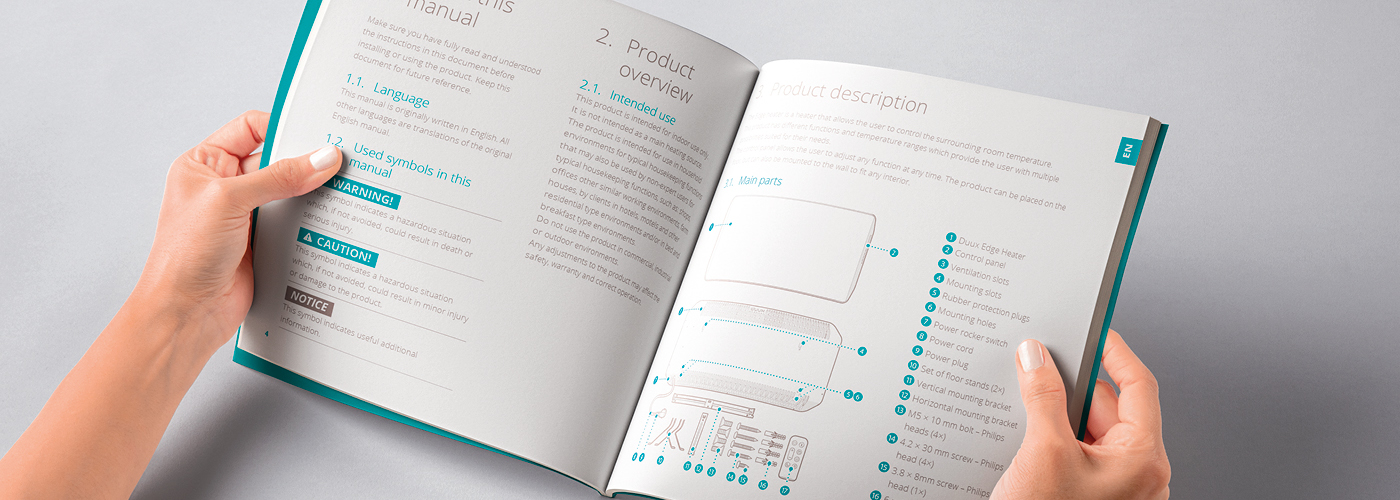
I did not become a person who reads every page of every manual from beginning to end. I still prefer practical solutions, and I still learn by doing. The difference is that I no longer treat documentation as a last resort.
Now, when I encounter unfamiliar equipment, I begin with three questions:
-
Do I know the exact model? Instructions for a similar product may describe different controls, features, or safety requirements.
-
What am I trying to achieve? Defining the problem prevents me from changing settings or using tools without a clear purpose.
-
What could go wrong if I guess? The consequences determine whether experimentation is reasonable or whether I should consult the instructions first.
I also look for the information that matters to the task rather than assuming I must read every section. Setup procedures, operating modes, troubleshooting steps, maintenance guidance, and safety warnings often provide the quickest route to an answer. If the manual is available digitally, searching for a model number or a specific warning can make the process even more efficient.
There is another advantage that I had overlooked: a manual gives people a common reference point. Instead of arguing about what a button, setting, or warning probably means, everyone can examine the same instructions and make a more informed decision.
The Difference Between Confidence and Competence
Looking back, none of the evening's problems was particularly complicated. The sound system needed a setting corrected. The shelf required a more appropriate tool setting. The car's warning light called for accurate information rather than speculation.
Yet each problem exposed the same weakness in my approach. I had confused confidence with understanding.
Confidence says, "I can probably work this out." Competence adds, "I know where to verify what I am doing, and I recognize when I need help."
That distinction has stayed with me far longer than the specific solutions. Equipment changes, models evolve, and controls that seem familiar can behave differently from one product to another. Guesswork may occasionally succeed, but it is a poor method when a reliable explanation is available.
The next time I am tempted to dismiss an instruction manual as unnecessary paperwork, I remember that evening: the music that sounded wrong, the fastener that nearly caused damage, and the warning light that attracted a table full of confident opinions.
The manuals did not make the problems disappear by magic. They helped me ask better questions, make fewer unnecessary changes, and recognize the limits of what I knew. For someone who likes solving problems independently, that turned out to be a valuable kind of independence.

 English
 Arabic
 French
 Spanish
 Portuguese
 Turkish
 Dutch
 Italiano
 Russian
 Romaian
 Portuguese (Brazil)
 Greek
