
How Could China’s Military Robotics Market Reshape the Future of Defense Logistics?
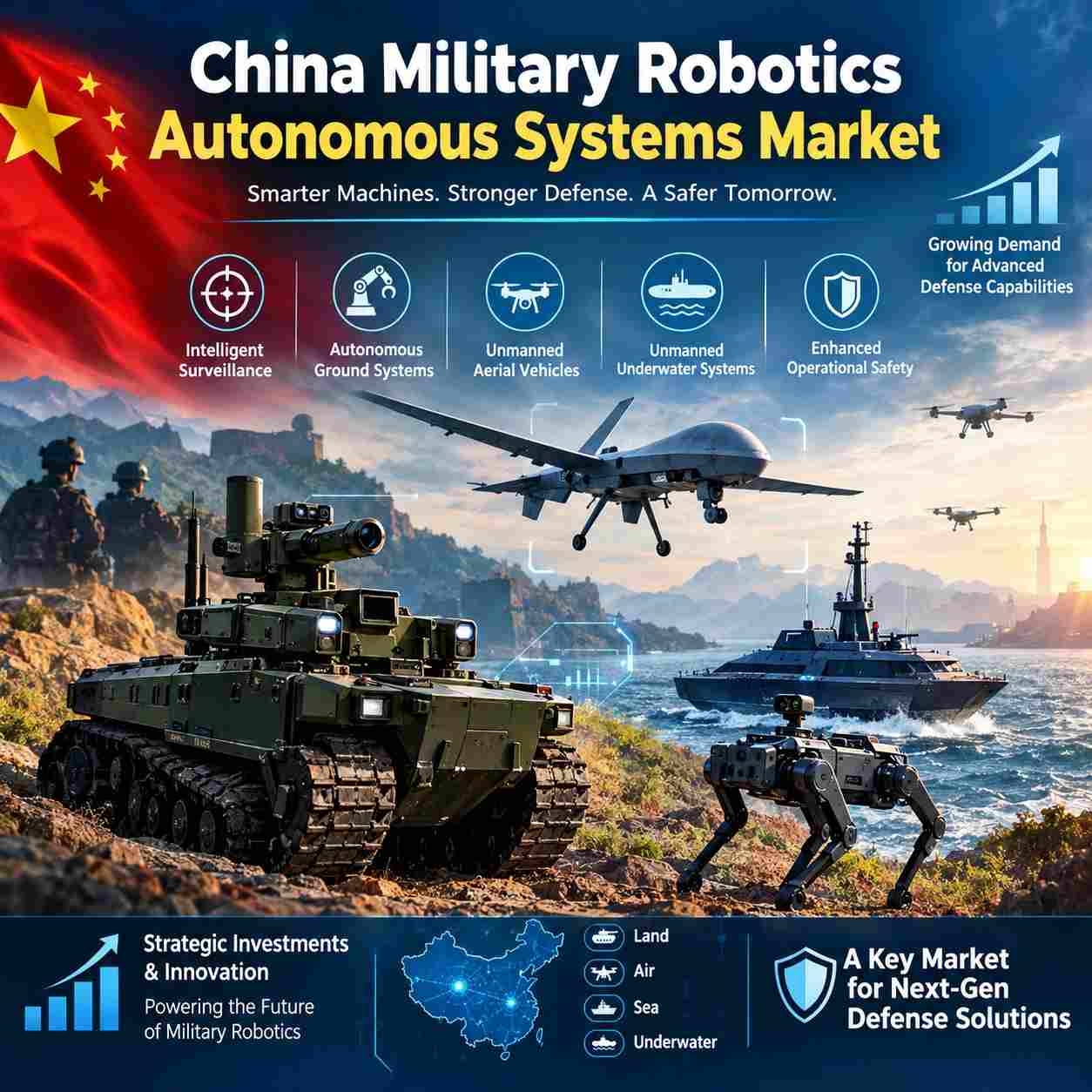
The China Military Robotics Autonomous Systems Market is not limited to autonomous platforms used for observation or reconnaissance. Robotics can also support logistics, equipment inspection, transportation, and other activities that help defense organizations maintain their operations. These applications illustrate how automation can contribute to military readiness without requiring every robotic system to perform a combat-related function.
The 6Wresearch report identifies military and defense, along with homeland security, as end-use categories in its market analysis. It also highlights the broader importance of modernization, technological development, and integration. Within this landscape, logistics and maintenance represent useful areas for examining how robotics might improve efficiency while creating new technical and procurement requirements.
Why Does Military Logistics Matter?
Defense organizations depend on the timely movement of equipment, spare parts, supplies, and other essential resources. Delays can affect readiness, while repetitive inspection and transportation tasks can consume valuable personnel time.
Robotics may help with selected activities by automating predictable work, collecting equipment data, or operating in locations that are difficult for people to access. The benefits depend on whether a system can perform its assigned task safely, reliably, and economically.
Potential applications include:
-
Equipment inspection: Robotic systems can help examine machinery and infrastructure in demanding environments.
-
Inventory support: Automated identification and tracking tools can help organize equipment and supplies.
-
Maintenance assistance: Sensors and analytics can identify performance changes that warrant inspection.
-
Material movement: Suitable robotic platforms may assist with controlled transportation tasks.
-
Remote monitoring: Unmanned systems can collect information from areas where direct access is difficult.
These applications vary in maturity and complexity. A controlled warehouse task may be easier to automate than a task involving unpredictable terrain, changing conditions, or limited communications.
The Role of Predictive Maintenance
Unexpected equipment failures can disrupt schedules and increase maintenance costs. Predictive maintenance uses equipment data to identify patterns that may indicate developing problems.
In a robotics context, monitoring tools may assess battery performance, motor condition, temperature, vibration, or other measurable indicators. The resulting information can help maintenance teams decide when equipment needs further inspection.
For these tools to be effective, organizations need dependable sensors, suitable data, and clear maintenance procedures. An automated warning should support qualified technical judgment rather than replace it.
Manufacturers also need to consider spare-part availability, software updates, repairability, and the skills required to service complex equipment. These factors influence total lifecycle cost and may determine whether a technically capable system is practical to operate over time.
Can Robotics Improve Operational Efficiency?
Automation can help standardize repetitive processes and reduce the time personnel spend on selected manual tasks. It may also support more consistent data collection and improve visibility into equipment condition.
However, efficiency should be measured rather than assumed. Relevant indicators may include:
-
Time required to complete an assigned task.
-
Frequency of equipment failures and unplanned maintenance.
-
Accuracy of inventory or inspection records.
-
Availability of equipment when needed.
-
Total operating and maintenance expenditure.
-
Training requirements and operator workload.
A system that performs quickly but requires frequent repairs may not deliver meaningful savings. Similarly, automation may introduce new costs for software, cybersecurity, integration, and specialist support.
The strongest business case is likely to emerge where tasks are sufficiently repetitive, requirements are clearly defined, and performance can be measured objectively.
Integration with Existing Infrastructure
Robotic systems used for logistics and maintenance must fit into established workflows. They may need to exchange information with inventory platforms, equipment-management systems, maintenance records, and authorized communication infrastructure.
Compatibility can be difficult when systems use different interfaces or data formats. Organizations should therefore evaluate integration requirements before selecting equipment.
Operator training is equally important. Personnel need to understand when automation is suitable, how to interpret system alerts, and what to do when a platform encounters an unexpected condition.
Cybersecurity also remains essential. Equipment-management systems may contain sensitive information, and connected robotic platforms can introduce additional digital dependencies. Security controls, access permissions, and software maintenance should be considered from the beginning.
What Challenges Could Restrict Adoption?
Several obstacles may influence the adoption of robotics in defense support operations.
-
Initial investment: Hardware, software, testing, and integration can be expensive.
-
Unpredictable environments: Robots may struggle with obstacles or conditions outside their design limits.
-
Maintenance requirements: Specialized components may require trained technicians and reliable supply chains.
-
Infrastructure compatibility: Existing processes may need adjustment before automation becomes practical.
-
Security and compliance: Defense equipment may be subject to procurement restrictions, cybersecurity rules, and export controls.
Organizations should also consider the human implications of automation. Personnel may need new technical skills, and responsibilities must be clear when automated systems malfunction.
Opportunities for Suppliers and Technology Firms
The logistics-support ecosystem may offer opportunities for providers of sensors, rugged computing, inventory software, batteries, inspection tools, cybersecurity, and maintenance services.
Potential suppliers should identify a specific operational problem they can solve and demonstrate the measurable value of their proposed solution. They should also understand procurement procedures, technical qualification requirements, and long-term service expectations.
A supplier’s ability to provide dependable support may be as important as its initial product specification. Defense customers often need systems that can be maintained, upgraded, and integrated throughout an extended service life.
The Outlook for Robotics in Defense Support
As China continues to modernize defense capabilities, robotics may contribute to selected support activities alongside more visible unmanned platforms. The scale of adoption will depend on practical performance, affordability, integration, and procurement priorities.
The most promising applications will be those that solve clearly defined problems rather than automate tasks simply because automation is technically possible. By combining reliable hardware, useful analytics, trained personnel, and lifecycle planning, defense organizations can evaluate where robotics offers genuine operational value.
For businesses tracking the market, logistics and maintenance provide an additional perspective on the opportunities surrounding military robotics and autonomous systems.
Who We Are
About 6Wresearch
About 6Wresearch: 6Wresearch is a commercial strategy and growth advisory firm founded in 2011 and headquartered in New Delhi, India, with partners across Southeast Asia and the Middle East & Africa. The firm has delivered over 20,000 commercial engagements for over 2,000 organizations, including Fortune 500 companies, government agencies, and multilateral institutions such as the World Bank and the Asian Development Bank. Backed by proprietary market research and advanced analytics, 6Wresearch combines sector expertise with data-driven intelligence to help organizations navigate market complexity and drive sustainable growth. These capabilities explain why organizations trust 6Wresearch Global Market Research & Consulting Firm for reliable commercial insights and confident decision-making.
Our Proprietary Platform: 6W Export GTM
6W Export GTM is 6Wresearch's proprietary trade intelligence and go-to-market platform, built on UN Comtrade data and enhanced with 6Wresearch's in-house analytical and simulation models, including system dynamics-based forecasting. Unlike broad, sector-level market sizing tools, 6W Export GTM operates at the individual product level down to specific HS codes and micro-segments to identify precise, actionable export opportunities by country and product pair, including markets where trade currently does not exist. This granular, simulation-driven approach allows 6W Export GTM to surface opportunities that sector-wide analysis typically misses, positioning it among a small number of platforms globally offering this depth of product-and-country-specific export intelligence.

 English
 Arabic
 French
 Spanish
 Portuguese
 Deutsch
 Turkish
 Dutch
 Italiano
 Russian
 Romaian
 Greek
