
How Do Seamless Gym Shorts Avoid Surface Fuzzing
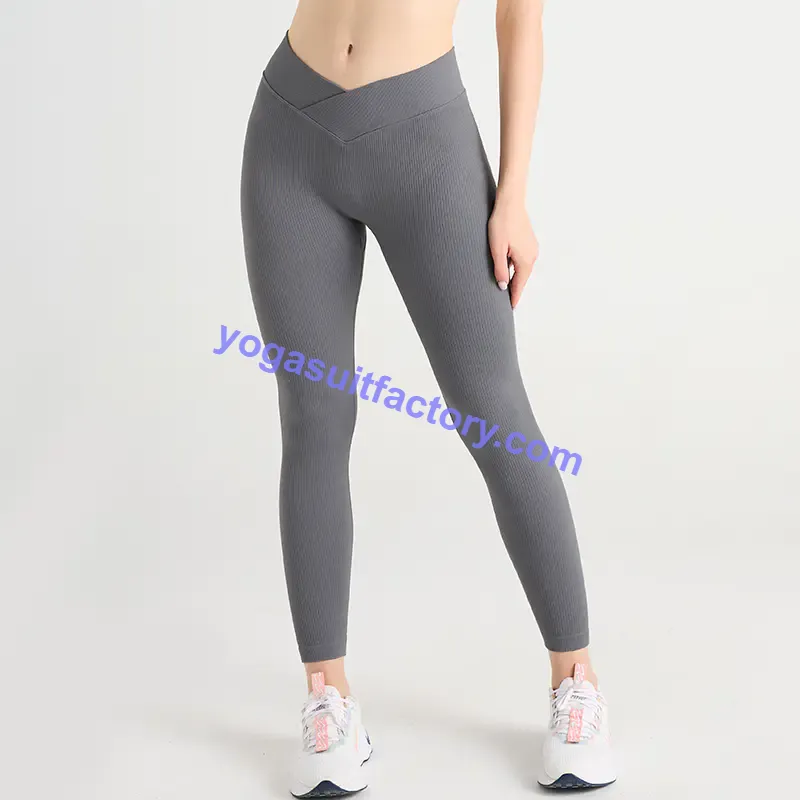
Laundry day rarely announces a problem in advance, and the first sign of trouble on a pair of training shorts often appears as a light fuzz along the thigh after several washes. Buyers who notice this assume the fabric was cheap, and manufacturers who understand the mechanism know the truth is less simple.Seamless Gym Shorts face surface wear from the first wear onward, and the bobbles that eventually form trace to a chain of small events rather than a single defect. YogasuitFactory produces seamless activewear and treats pilling as a design problem to be addressed at the knitting stage. Which stage of a garment's life actually plants the seed for the fuzz that shows up months later?
Short fibers sitting above the knit surface begin the chain. No yarn is perfectly smooth, and spinning leaves fiber ends protruding from the structure. These ends are harmless alone, but friction from movement and laundering lifts them free of the yarn body. Once detached, they wander across the surface and catch on other loose ends, and the tangle that forms anchors itself to the fabric. Each tangle attracts further fibers, and the bobble grows until it becomes visible to the wearer.
Staple length determines how much raw material is available to form these tangles. Long staple fibers wrap around each other inside the yarn and hold their position through friction, while short staples slip free with less provocation. Carded yarns carry more short fiber content than combed yarns, and that difference shows up in surface behavior over a garment's life. Mills selecting fiber for athletic wear weigh staple length against cost, and the choice shapes how a fabric ages.
Knit tightness governs how much movement the structure allows. A tight knit holds fibers in place with less room to migrate, while a loose structure lets yarn loops shift against each other and releases fibers in the process. Seamless machines control stitch density across a garment, so a producer can tighten the knit where shorts rub against the body or against each other. Zoned density lets a garment stay soft where comfort matters while resisting abrasion where friction concentrates.
Washing conditions decide how fast the process runs. Drum agitation presses garments together and against the machine, and warm water softens fibers and loosens the structure. Turning shorts inside out protects the outer face, and a laundry bag reduces direct contact with zippers or towels that abrade the surface. Detergent chemistry plays a part as well, since some formulations strip the finishes that help fibers lie flat.
Seamless Gym Shorts stay smooth when fiber length, knit density, and care routine all work in the same direction, and a shortfall in any one area shows up as fuzz. YogasuitFactory works with brands on fiber selection, stitch density, and reinforced zones that match the friction their customers put garments through, and can supply samples for wash testing before a production run begins. Brands sourcing Seamless Gym Shorts can review construction options at https://www.yogasuitfactory.com/ and discuss durability targets with the team. Whether shorts look fresh after a season of laundering or fuzzy after a month depends on decisions made long before the first cut.

 English
 Arabic
 French
 Spanish
 Portuguese
 Deutsch
 Turkish
 Dutch
 Italiano
 Romaian
 Portuguese (Brazil)
 Greek
