
Why Is Ottawa Radon Pro Testing Important for Your Home
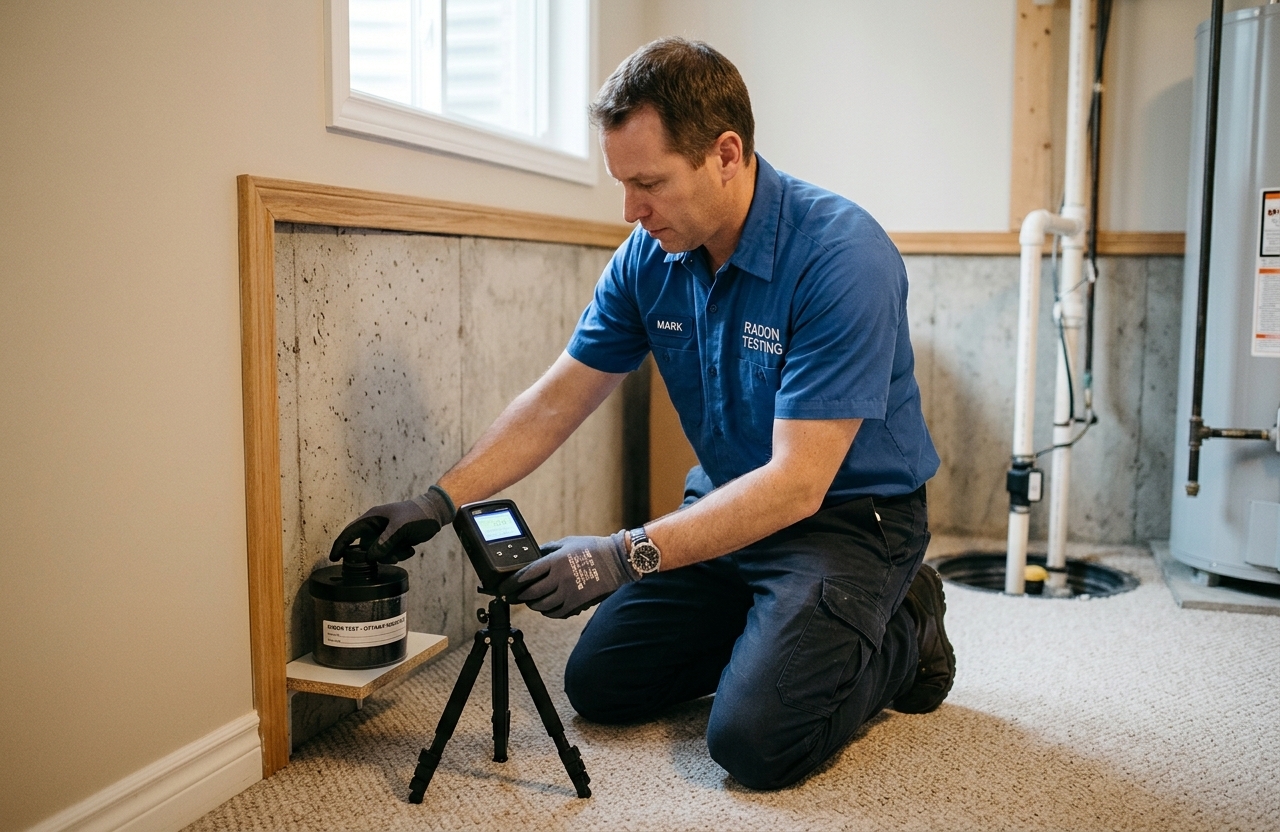
Have you ever wondered whether the air inside your home is as safe as it seems? Indoor air quality is an important part of maintaining a healthy living environment, but some potential hazards are difficult to detect without proper testing. Radon is one such concern. It is a naturally occurring radioactive gas that can enter buildings from the ground and accumulate indoors without any visible warning signs.
Ottawa radon pro testing helps homeowners understand their indoor radon levels and determine whether further action may be necessary. Because radon cannot be seen, smelled, or tasted, testing is the only reliable way to establish the concentration inside a property. Whether you own a new house, an older property, or a commercial building, understanding radon exposure is an important step toward making informed decisions about indoor air quality.
What Is Radon and Why Is Testing Important?
Radon forms naturally when uranium in soil and rock breaks down. The gas can move through the ground and enter buildings through foundation cracks, construction joints, floor drains, sump pits, and openings around pipes. Once inside, it may accumulate, particularly in basements and lower levels.
Long-term exposure to elevated radon concentrations increases the risk of lung cancer. The risk depends on factors such as the concentration of radon, the duration of exposure, and smoking history.
According to Ottawa Public Health, radon levels can vary significantly between properties, even within the same neighbourhood. This means that a nearby property's test result cannot reliably determine the radon level in your own home.
Professional testing provides useful information about the conditions inside a specific building and helps property owners decide whether mitigation should be considered.
Why Choose Ottawa Radon Pro Testing Services?
Understand Your Indoor Air Quality
One of the main benefits of Ottawa radon pro testing services is the opportunity to obtain property-specific information. Rather than assuming your home is safe because it is modern, well-maintained, or located in a low-risk area, testing helps establish the actual indoor radon concentration.
The findings can help you understand whether your property needs further assessment or a radon reduction system.
Receive Professional Guidance
Radon testing involves more than simply placing a detector in a room. Correct placement, testing duration, building conditions, and the interpretation of results all influence how useful the findings will be.
Working with a qualified professional can help you select an appropriate testing method and understand the meaning of the final report. When comparing providers, ask about their qualifications, testing procedures, and experience with residential or commercial buildings.
Make Informed Property Decisions
Radon testing can be particularly valuable when buying, selling, renovating, or improving a property. A home inspection does not automatically establish the property's radon concentration, so a separate radon test may be necessary.
Having reliable results can help buyers ask informed questions and help existing owners determine whether additional protective measures are appropriate.
How Does Professional Radon Testing Work?
Step One: Assess the Property
The testing process begins with understanding the building's layout, foundation, and occupied areas. A professional can help identify suitable testing locations and explain which parts of the property should be assessed.
In most homes, testing is conducted on the lowest level that people regularly occupy or could reasonably use as living space.
Step Two: Measure Radon Concentrations
Depending on the property's needs, testing may involve an appropriate passive detector or an electronic monitoring device. The selected method should be suitable for the purpose of the assessment and used according to its instructions.
Long-term testing is generally recommended for estimating average radon exposure. Health Canada advises testing for at least three months, preferably during the heating season, when indoor radon levels may be higher.
Short-term readings can provide useful preliminary information, but they may not accurately represent a home's long-term average.
Step Three: Review the Results
Once testing is complete, the measured concentration can be compared with Canada's indoor radon guideline. The results should be interpreted with consideration for the testing duration and method.
Health Canada recommends taking action to reduce radon when the average annual concentration exceeds 200 becquerels per cubic metre (Bq/m³).
A result below this guideline does not mean that the risk is completely eliminated. Instead, it helps homeowners understand their property's measured conditions and consider appropriate next steps.
Step Four: Consider Mitigation if Necessary
If testing identifies elevated radon levels, a qualified mitigation professional can assess possible solutions. Depending on the building's construction, these may include active sub-slab depressurization, active soil depressurization, or other suitable measures.
Many mitigation systems use a fan and pipework to draw radon-containing soil gas from beneath a building and discharge it outdoors. The appropriate system depends on the property's design and the source of radon entry.
After mitigation, follow-up testing is important to verify whether radon concentrations have been reduced effectively.
Which Properties Should Be Tested for Radon?
Radon testing can benefit many types of buildings throughout Ottawa and the surrounding region.
Detached homes: Basements and foundation openings can provide routes for radon to enter living spaces.
Townhouses and older properties: Differences in foundation design, renovations, and ventilation may affect indoor radon concentrations.
Newly built homes: Modern construction does not guarantee low radon levels. Testing remains important even when a property has recently been completed.
Commercial buildings: Offices and other occupied properties may also require testing to assess indoor environmental conditions.
Homeowners should not assume that radon is only a concern for properties with visible foundation damage. The gas can enter through small openings that are not easily noticed.
How Can Homeowners Support Better Radon Management?
Professional testing is the first step, but homeowners can also take practical measures to support long-term monitoring and prevention.
-
Arrange an appropriate radon test rather than relying on assumptions about your neighbourhood.
-
Follow all detector placement and testing-duration instructions.
-
Keep records of test dates, results, and any mitigation work.
-
Consult a qualified professional if results exceed the Canadian guideline.
-
Arrange follow-up testing after installing or modifying a mitigation system.
Sealing cracks and improving building maintenance may help as part of a broader strategy, but these measures alone should not be assumed to resolve an elevated radon problem.
Why Work With Ottawa Radon Pros?
Choosing a radon service provider means looking for clear communication, appropriate technical knowledge, and practical recommendations. Ottawa Radon Pros provides radon testing, mitigation, and system repair or upgrade services for properties in Ottawa and surrounding communities, including Kanata and Cornwall.
The company describes its approach as involving property assessment and diagnostic work to help determine suitable radon reduction solutions. Homeowners can discuss their concerns, ask about testing options, and learn what may be required if elevated concentrations are detected.
Before arranging a service, ask about the testing method, expected timeline, professional credentials, reporting process, and any recommended follow-up testing. These questions can help you understand the service and make a confident decision.
To learn more about available services, click here to visit Ottawa Radon Pros.
About Ottawa Radon Pros
Ottawa Radon Pros is a radon testing and mitigation service provider serving Ottawa, Vanier, Kanata, Cornwall, and surrounding areas. The company offers services that include radon assessment, radon reduction systems, and mitigation system repairs or upgrades. Through its website, homeowners and property managers can explore available services, request further information, and discuss options for addressing elevated indoor radon levels. Its services are intended to help property owners better understand radon concerns and identify appropriate solutions for their buildings.
Conclusion
Radon is an invisible indoor air concern that cannot be assessed reliably through appearance, smell, or the age of a building. Testing provides the information homeowners need to understand their property's radon concentration and decide whether further action is appropriate.
With Ottawa radon pro testing, property owners can take a practical step toward understanding indoor air quality, identifying elevated radon levels, and exploring suitable mitigation options when necessary. Whether you are purchasing a home, maintaining an existing property, or improving a commercial space, accurate testing and informed professional advice can help you make decisions that support a healthier indoor environment.

 English
 Arabic
 French
 Spanish
 Portuguese
 Deutsch
 Turkish
 Dutch
 Italiano
 Romaian
 Portuguese (Brazil)
 Greek
