
The Role of Linear Rails in Automated Production Lines
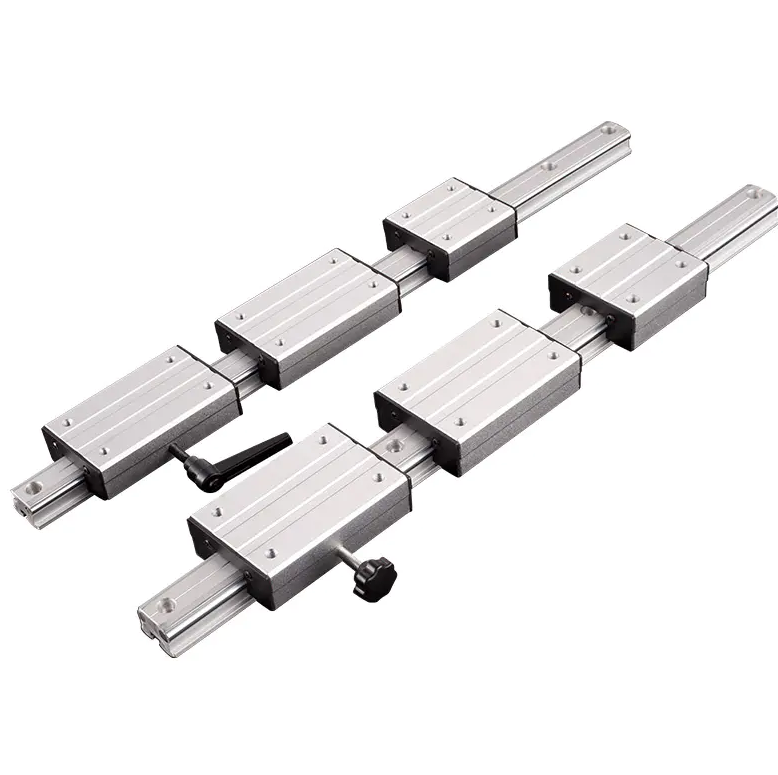
Industrial automation has changed the way factories organize production, material handling, and assembly operations. Automated machines need mechanical components that can move products and working assemblies along controlled paths. A Linear Guideway provides the movement support required by many automated systems, making it a common component in industrial equipment design.
Linear Movement in Automated Production
Automated production lines often involve repeated movements between different processing stations. For example, a robotic loading system may need to move a workpiece from a conveyor to a machining area before transferring it to another station.
Linear guide rails support these movements by providing a fixed path for sliding assemblies. When combined with motors, ball screws, or belt-driven mechanisms, they help create controlled linear motion.
Their application can be found in electronic assembly equipment, inspection machines, automatic packaging systems, and industrial handling devices.
Matching Guideway Specifications to Equipment Needs
Automation equipment varies significantly in size and operating requirements. A small inspection machine may require a compact linear bearing system, while a material transfer platform may need larger guide blocks to support heavier components.
Buyers should pay attention to rail dimensions, block design, load ratings, and travel distance. Operating speed and acceleration should also be considered because frequent start-and-stop movement can influence mechanical wear.
For equipment with limited installation space, compact guideway configurations may help simplify the machine layout.
Improving Repeated Movement Consistency
Many automated processes require the same movement to be repeated throughout a production shift. Inconsistent movement can affect product positioning, processing time, and coordination between working stations.
A suitable Linear Motion Guide helps maintain a defined travel path and reduces friction during operation. This supports controlled movement when the guideway is correctly selected, installed, and maintained.
The overall result also depends on the motor, transmission components, control system, and machine frame. Guideway selection should therefore be part of the complete mechanical design process.
Maintenance in Factory Environments
Dust, oil, metal particles, and other contaminants can affect the operation of linear guideways. Protective covers, seals, and suitable lubrication arrangements help reduce contamination risks.
Maintenance personnel should regularly inspect the rail surface, check lubrication conditions, and observe whether unusual noise or resistance occurs during movement.
Purchasing Linear Guideways for Automation Projects
For automation equipment manufacturers, distributors, and engineering contractors, purchasing decisions should consider both technical compatibility and long-term supply requirements.
Clear specifications, consistent product dimensions, and available technical support can simplify project planning. Selecting a suitable Linear Guideway helps create a stable mechanical foundation for automated production equipment.
 English
 Arabic
 French
 Spanish
 Portuguese
 Deutsch
 Turkish
 Dutch
 Italiano
 Russian
 Romaian
 Portuguese (Brazil)
 Greek
