
Broad Application Fields for Metal Wafer Check Valve
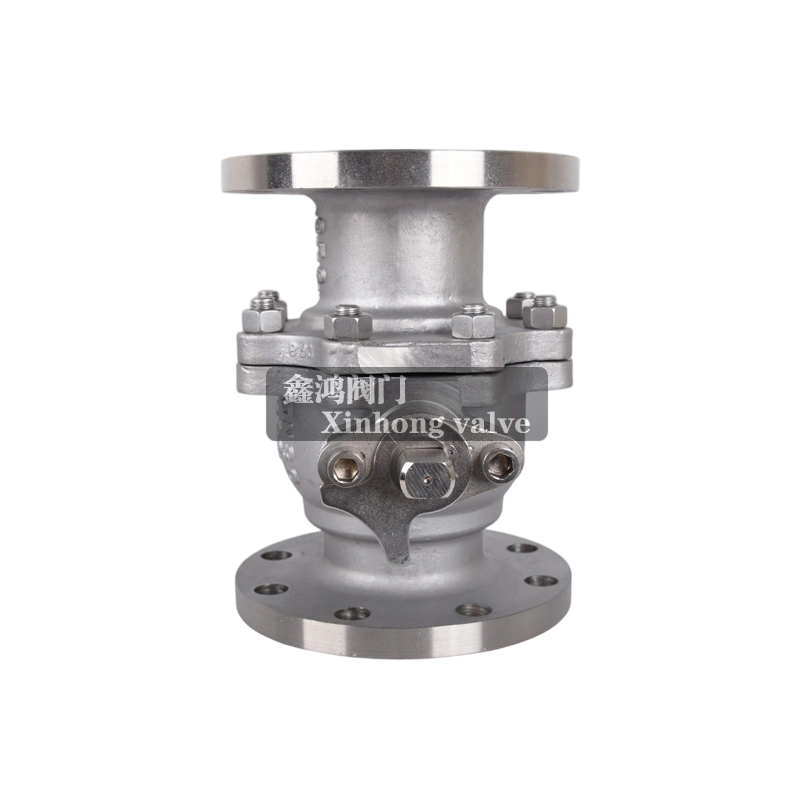
Metal Wafer Check Valve finds deployment across many industrial and commercial fluid systems. Water treatment plants install these units after centrifugal pumps to stop treated water from flowing backward into idle pump casings. HVAC and cooling networks rely on the valve to preserve circulation balance and prevent reverse flow when secondary pumps shut down. Petrochemical and process workshops select alloy variants for oil, solvent and low-corrosion chemical transfer. Fire protection piping uses wafer check valves to maintain directional flow and reduce risks from pressure fluctuation. Wastewater facilities adopt compatible grades to handle treated effluent, while food processing lines pick polished metal versions for hygienic circulation paths. Compact dimensions make the product especially useful inside skid-mounted equipment and modular process packages with limited layout room.
The installation style of Metal Wafer Check Valve delivers clear practical benefits. Workers clamp the thin body between matching pipe flanges and fasten flange bolts following a star tightening pattern to distribute clamping force evenly. No extra threaded or welded connection forms at the valve itself, shortening assembly time and lowering the count of potential leakage joints. Automatic operation removes demand for manual adjustment or external power supply. The disc opens once upstream pressure exceeds the cracking threshold and closes automatically as flow reverses. Compared with traditional swing check valves, the wafer structure reduces overall weight and creates less pressure loss during steady forward flow. Spring-assisted designs support installation in both horizontal and vertical upward piping, while gravity-dependent single-disc models require careful orientation planning to guarantee reliable reseating.
Correct site preparation supports consistent performance of Metal Wafer Check Valve. Flange faces must stay flat and free of weld spatter, rust ridges and debris before placement. Operators confirm the stamped flow arrow matches the intended flow path. Sufficient straight pipe sections on both sides reduce turbulent flow interference that can trigger disc chatter and accelerated seat wear. Gaskets with suitable temperature and chemical resistance sit between valve faces and flanges to seal the clamping joint. After bolt tightening, site crews run pressure tests to check for leakage at flange interfaces and across the valve seat. Operators also observe valve response during pump startup and shutdown, noting abnormal banging or continuous vibration that signals mismatched sizing, incorrect spring rating or trapped solid particles within the flow channel.
 Turkish
 English
 Arabic
 French
 Spanish
 Portuguese
 Deutsch
 Dutch
 Italiano
 Russian
 Romaian
 Portuguese (Brazil)
 Greek
