
Practical Functional Strengths of Compressor Impeller Castings
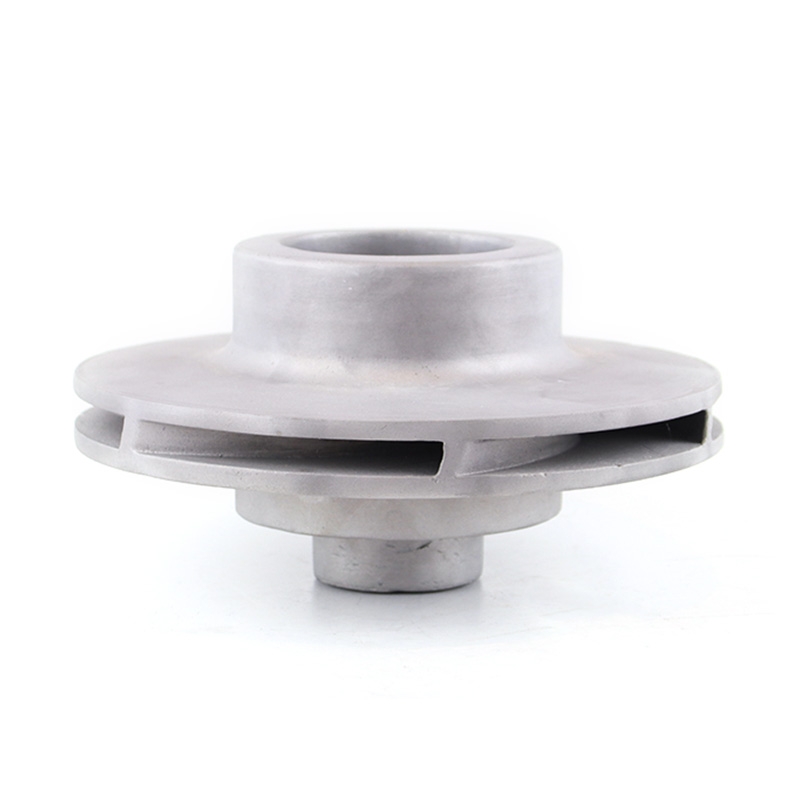
Compressor impeller castings serve many industrial gas-handling systems. Refrigeration and cold storage equipment uses these castings to circulate refrigerant gas under stable pressure. Air separation plants deploy matched impeller sets to feed oxygen and nitrogen production processes. Oil and gas facilities select corrosion-resistant grades to process natural gas and associated mixed media. Workshop compressed air systems and packaged blower units also rely on properly cast impellers to maintain consistent flow output. Both open and shrouded impeller variants can be produced to suit different compressor designs.
These cast components bring practical benefits for equipment designers. Integrated blade and hub structures remove welded joints that may fail under cyclic rotation. The casting process reproduces smooth aerodynamic profiles, helping lower flow turbulence and pressure loss. Buyers can specify bore size, blade count, material grade and balance tolerance. Custom marking and private label packaging can be arranged for bulk OEM and spare part orders. The range supports prototype development as well as repeated mass runs for standardized compressor platforms.
Stable operation starts with correct specification matching. Engineers should confirm material compatibility with process gas, operating temperature and rotation speed before installation. The impeller bore, shaft fit and locking assembly must align with the drive design. After assembly, startup should follow a gradual speed ramp to check vibration and temperature rise. Regular inspection monitors blade surface erosion, corrosion and balance drift. If visible cracks or sharp vibration spikes appear, the compressor impeller casting should be removed and replaced.

 English
 Arabic
 French
 Spanish
 Portuguese
 Deutsch
 Turkish
 Dutch
 Russian
 Romaian
 Portuguese (Brazil)
 Greek
