
How Robotic Process Automation Is Reshaping Business Operations Across the GCC
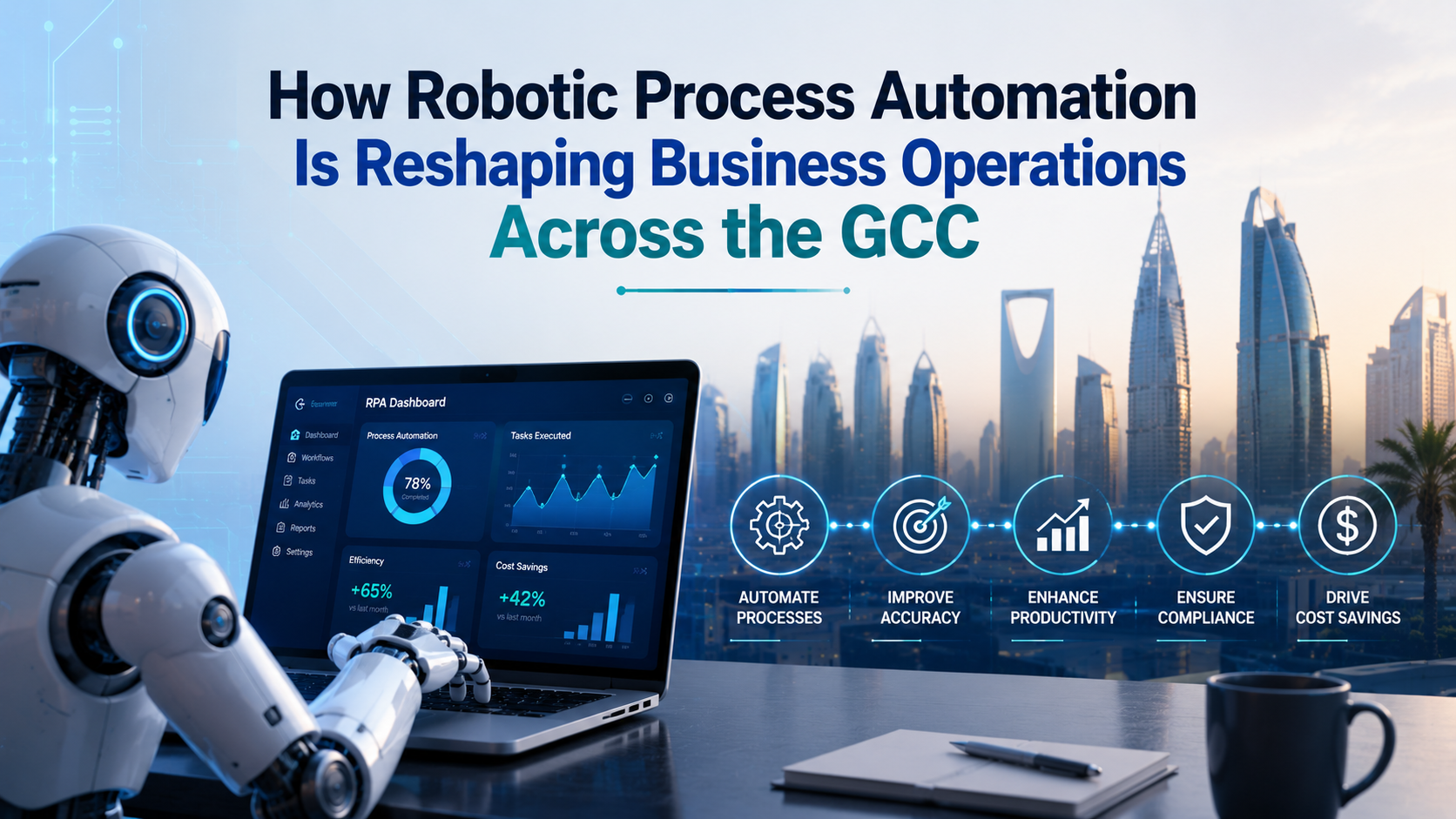
Organizations across the Gulf Cooperation Council (GCC) are increasingly adopting automation technologies to streamline repetitive workflows, improve operational efficiency, and support digital transformation initiatives. Robotic Process Automation (RPA), which uses software bots to automate rule-based tasks, is gaining traction in sectors such as banking, healthcare, retail, logistics, and government services.
The growing focus on economic diversification and smart governance across countries such as Saudi Arabia and the UAE is encouraging enterprises to modernize legacy systems and reduce operational inefficiencies. According to a recent GCC robotic process automation industry analysis, the sector was valued at around USD 124 billion in 2024 and is projected to reach nearly USD 381 billion by 2030, expanding at a CAGR of approximately 18.99% during 2025–30.
Growing Demand for Intelligent Workflow Automation
Businesses in the GCC are under pressure to improve customer experiences while simultaneously managing operational costs. As a result, enterprises are increasingly implementing RPA tools to automate back-office processes such as invoice management, payroll processing, claims handling, customer on boarding, and compliance reporting.
Financial institutions have emerged as one of the largest adopters of robotic automation technologies in the region. Banking organizations are leveraging automation to reduce manual errors, accelerate transaction processing, and improve regulatory compliance. The expansion of digital banking and fintech ecosystems is further accelerating automation investments across the financial sector.
The integration of artificial intelligence and machine learning into RPA platforms is also changing how organizations approach automation. Intelligent automation systems are now capable of handling semi-structured data, interpreting documents, and assisting in decision-making processes. According to the IBM explanation of robotic process automation, combining AI capabilities with RPA enables organizations to automate more complex business processes beyond simple repetitive tasks.
Government Digital Transformation Initiatives Supporting Adoption
Government-led digital transformation programs across the GCC are creating a favorable environment for automation technologies. National strategies such as Saudi Vision 2030 and the UAE Digital Government Strategy are encouraging both public and private organizations to invest in advanced digital infrastructure.
Public sector agencies are increasingly automating administrative functions to improve citizen services and reduce processing delays. Automation technologies are being applied in areas such as document verification, licensing, immigration services, and procurement management. These initiatives align with broader regional goals of improving efficiency, transparency, and digital accessibility.
The expansion of smart city initiatives is also contributing to automation demand. As governments invest in connected infrastructure and digital ecosystems, organizations require scalable technologies that can handle large volumes of operational data efficiently. The growing emphasis on digital transformation across the region continues to create opportunities for automation vendors and technology providers.
RPA Adoption Across Healthcare and Retail Industries
Healthcare providers in the GCC are increasingly exploring robotic process automation to manage administrative burdens and improve patient service delivery. Hospitals and healthcare networks are automating appointment scheduling, patient data management, insurance claims processing, and billing operations.
The retail and e-commerce industries are also adopting automation solutions to improve inventory management, customer support, and order fulfilment operations. With the rapid growth of online shopping and digital payment systems, businesses are under pressure to maintain efficient and scalable operations.
Automation technologies are becoming particularly important for logistics and warehousing functions, where organizations seek to optimize supply chain visibility and reduce delays. The increasing use of warehouse automation and digital logistics solutions reflects a broader trend toward operational modernization in the GCC region.
Artificial Intelligence Enhancing Automation Capabilities
The convergence of artificial intelligence with robotic process automation is enabling businesses to move beyond task automation toward more intelligent operational systems. AI-powered RPA platforms can analyze data patterns, process unstructured information, and support predictive decision-making.
This evolution is particularly relevant for industries dealing with large volumes of customer interactions and complex datasets. Enterprises are increasingly implementing automation systems capable of handling chat support, fraud detection, analytics, and workflow optimization.
The wider adoption of generative AI technologies is also influencing the future of automation platforms. AI-driven systems can assist organizations in improving document processing, automating communication workflows, and generating actionable insights from enterprise data. As noted in the global generative AI industry report, advancements in machine learning and data processing capabilities are accelerating the development of more sophisticated automation solutions.
Challenges Limiting Wider RPA Deployment
Despite strong growth prospects, several challenges continue to affect automation adoption across the GCC. Data sovereignty regulations and cybersecurity concerns remain significant considerations for organizations handling sensitive financial and customer information.
Many enterprises also face difficulties integrating automation tools with legacy infrastructure. Older enterprise systems may require extensive customization before automation technologies can be effectively deployed. Additionally, organizations often require skilled professionals capable of managing automation workflows and maintaining digital systems.
Workforce adaptation is another important factor. Businesses implementing automation initiatives must balance operational efficiency goals with employee reskilling and workforce transformation strategies. As automation becomes more widespread, organizations are increasingly investing in digital training programs to support long-term adoption.
The Future of Automation in the GCC
The GCC region is expected to remain an important growth hub for robotic process automation as enterprises continue investing in digital transformation initiatives. Industries such as BFSI, healthcare, telecom, retail, and logistics are likely to remain key adopters due to their operational complexity and high-volume transaction environments.
Technology providers are also expected to focus on developing region-specific automation solutions that address regulatory requirements, multilingual workflows, and cloud integration needs. As automation platforms become more intelligent and scalable, organizations across the GCC are likely to expand automation from isolated tasks to enterprise-wide digital operations.
The ongoing shift toward data-driven business models, smart infrastructure, and AI-enabled services suggests that robotic process automation will continue to play a central role in shaping the region’s evolving digital economy.

 English
 Arabic
 French
 Spanish
 Deutsch
 Turkish
 Dutch
Dutch
 Italiano
 Russian
 Romaian
 Portuguese (Brazil)
 Greek
Greek
