
What to Send Someone Recovering From Surgery in NYC
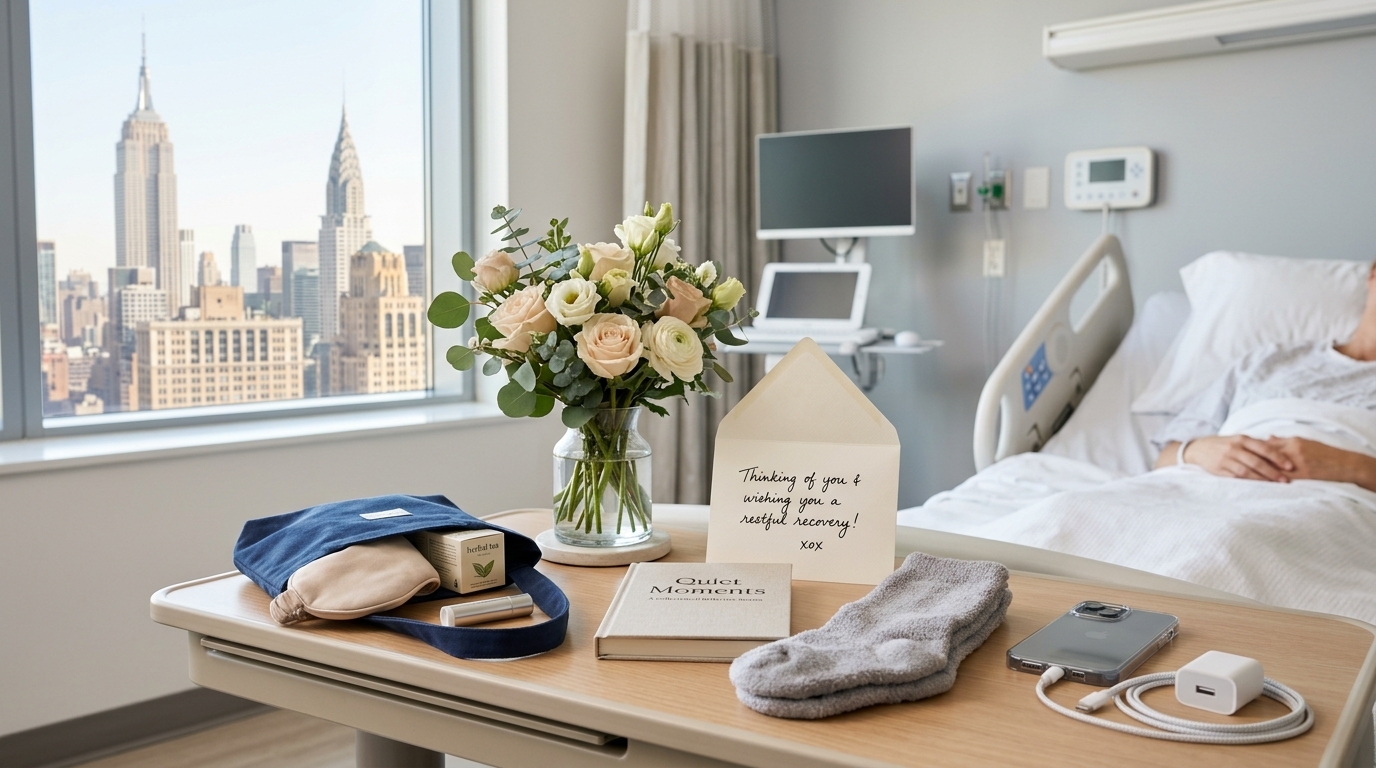
Recovering from surgery can mean long hours of rest, limited mobility, and a temporary break from normal routines. A thoughtful gift can make that period feel a little easier, especially when it reflects what the person can actually use during recovery.
For someone recovering in a New York City hospital, the best gift is usually compact, practical, and easy to enjoy without requiring much effort. Before sending flowers, food, or other items, check the hospital's rules and the patient's current care area.
Flowers for a Thoughtful Recovery Gift
Flowers are a traditional way to let someone know you are thinking about them. A colorful bouquet can bring warmth to an otherwise clinical environment and give the patient something pleasant to look at during recovery.
However, flowers are not appropriate for every patient or hospital unit. Some recovery areas prohibit flowers, particularly immediately after surgery.
If flowers are permitted, choose a manageable arrangement rather than an oversized bouquet. Consider the patient's favorite colors and flowers, and avoid an arrangement that requires significant maintenance.
HSS Flower Delivery
If someone is recovering at Hospital for Special Surgery, HSS flower delivery can be a thoughtful option when the patient's location permits flowers.
HSS provides specific guidance for patients undergoing surgery. Its Manhattan Ambulatory Surgery Center states that food, drinks, flowers, and gifts are not permitted in the recovery area. This means flowers should not simply be sent without first confirming where the patient is in the recovery process.
Once the patient has moved to an appropriate inpatient location, check with the hospital or care team before arranging a delivery.
A Handwritten Get-Well Card
A card is one of the easiest gifts to send after surgery.
Recovery can be tiring, so your message does not need to be lengthy. A few encouraging words can let the person know they are being remembered without creating any expectation that they need to respond.
You might write:
- "Wishing you a comfortable recovery."
- "Thinking of you and sending lots of good wishes."
- "Take all the time you need to rest."
A personal memory or gentle joke can also make the card feel more meaningful if it suits your relationship.
A Book or Magazine
Reading material can help pass the time during recovery, but choose something that matches the person's current energy level.
A light magazine, short stories, or an audiobook may be easier to enjoy than a long or complicated novel. If the patient normally enjoys reading, sending something from a favorite author can add a personal touch.
For someone recovering from surgery, an audiobook can be particularly useful if sitting up or holding a book is uncomfortable.
A Puzzle or Simple Activity
Simple activities can provide a distraction during periods of rest.
Consider:
- Crossword puzzles
- Sudoku
- Word searches
- Adult coloring books
- A small journal
- A simple card game
Choose something that can be used from a hospital bed or recovery chair without requiring much space.
Comfortable Personal Items
Practical gifts can be especially useful after surgery.
Depending on the patient's needs and hospital policies, consider:
- Soft socks
- A lightweight robe
- Lip balm
- A sleep mask
- A small notebook
- A phone charger
- Comfortable personal clothing for after discharge
Avoid bringing anything that could interfere with medical equipment or that the patient's healthcare team has advised against.
HSS recommends that patients bring only necessary belongings and advises leaving valuables at home. Its preparation guidance also lists practical items such as comfortable clothing, toiletries, glasses, and electronic devices among things patients may need during their hospital stay.
A Phone Charger or Long Charging Cable
A phone is often an important connection between a recovering patient and family members.
A charging cable with sufficient length can be more convenient than a short cable when the power outlet is not directly beside the bed. A portable power bank may also be useful when permitted.
Before bringing electronic accessories, consider whether the patient already has what they need.
A Favorite Snack, If Approved
Food can be comforting, but it should not be your first choice unless you know the patient can eat it.
After surgery, dietary instructions may change. The patient could have restrictions related to the procedure, medication, allergies, or upcoming treatment.
Ask the patient, family member, or healthcare team before bringing food. When there is any uncertainty, choose a non-food gift.
A Small Care Package
A compact care package can combine several useful items without overwhelming the patient.
For example, you might include:
- A get-well card
- Soft socks
- A magazine
- Lip balm
- A small puzzle book
- A favorite non-perishable item, if approved
Keep the package small enough to fit comfortably in a hospital room.
Something for the Recovery at Home
If the patient is preparing to leave the hospital, a practical recovery gift may be more useful than something intended only for the hospital room.
Depending on the person's situation, you might help with:
- Grocery shopping
- Meal preparation
- Transportation
- Household errands
- Pet care
- Picking up prescriptions
- Setting up their home for easier movement
Before offering help, consider what the person will actually need. A specific offer such as "I can pick up your groceries on Thursday" is often more useful than simply saying "Let me know if you need anything."
Avoid Gifts That Create Extra Work
Recovery is a time when the patient should be able to focus on rest.
Avoid gifts that require frequent care, take up a lot of space, or create unnecessary responsibilities.
For example, an elaborate plant may look attractive but require maintenance. A large gift basket may be difficult to store. Strongly scented products may also be uncomfortable for someone recovering from anesthesia or treatment.
A small, useful gift is often the better choice.
Check the Hospital's Rules Before Visiting
Hospital policies can differ between facilities and departments.
HSS provides separate guidance for inpatient visitors and ambulatory surgery patients. Its surgery center specifically restricts flowers and gifts in the recovery area, so knowing where the patient is before arriving or arranging a delivery is important.
If the patient has just undergone surgery, they may also need more rest than expected. A short visit or a delivered card may be more appropriate than an extended visit.
What If Flowers Are Not Allowed?
You can still make the patient feel supported.
Consider sending:
- A handwritten card
- An audiobook
- A magazine
- A puzzle book
- A small approved personal item
- A digital gift
- A supportive text or voice message
The gesture matters more than the specific item.
Consider the Patient's Personality
The best recovery gift depends on the individual.
For someone who loves flowers, an appropriate bouquet can brighten their room. A reader may appreciate a new book. Someone who prefers practical gifts may value comfortable socks or toiletries. A person who enjoys entertainment might prefer an audiobook or puzzle.
Think about what they normally enjoy and how their current recovery may affect their ability to use it.
Sending a Flower Delivery After Surgery
If the patient can receive flowers, provide the florist with accurate information.
You may need:
- Patient's full name
- Hospital name
- Current location
- Room number
- Unit or department
- Your contact information
Confirm that the patient is still at the hospital before ordering. Patients can be transferred between recovery areas and inpatient rooms, and flower policies may differ between those locations.
A Thoughtful Recovery Gift Does Not Need to Be Complicated
The most useful gift after surgery is one that respects the patient's current condition.
A small bouquet, personal card, audiobook, practical item, or specific offer of help can all make recovery a little more comfortable. Before arranging HSS flower delivery, confirm that flowers are permitted in the patient's current location and follow any instructions provided by the care team.
A little preparation ensures that your gift feels supportive when the patient needs it most.

 English
 Arabic
 French
 Spanish
 Deutsch
 Turkish
 Dutch
Dutch
 Italiano
 Russian
 Romaian
 Portuguese (Brazil)
 Greek
Greek
