
How Contractors Can Improve Visibility Into Their Construction Assets
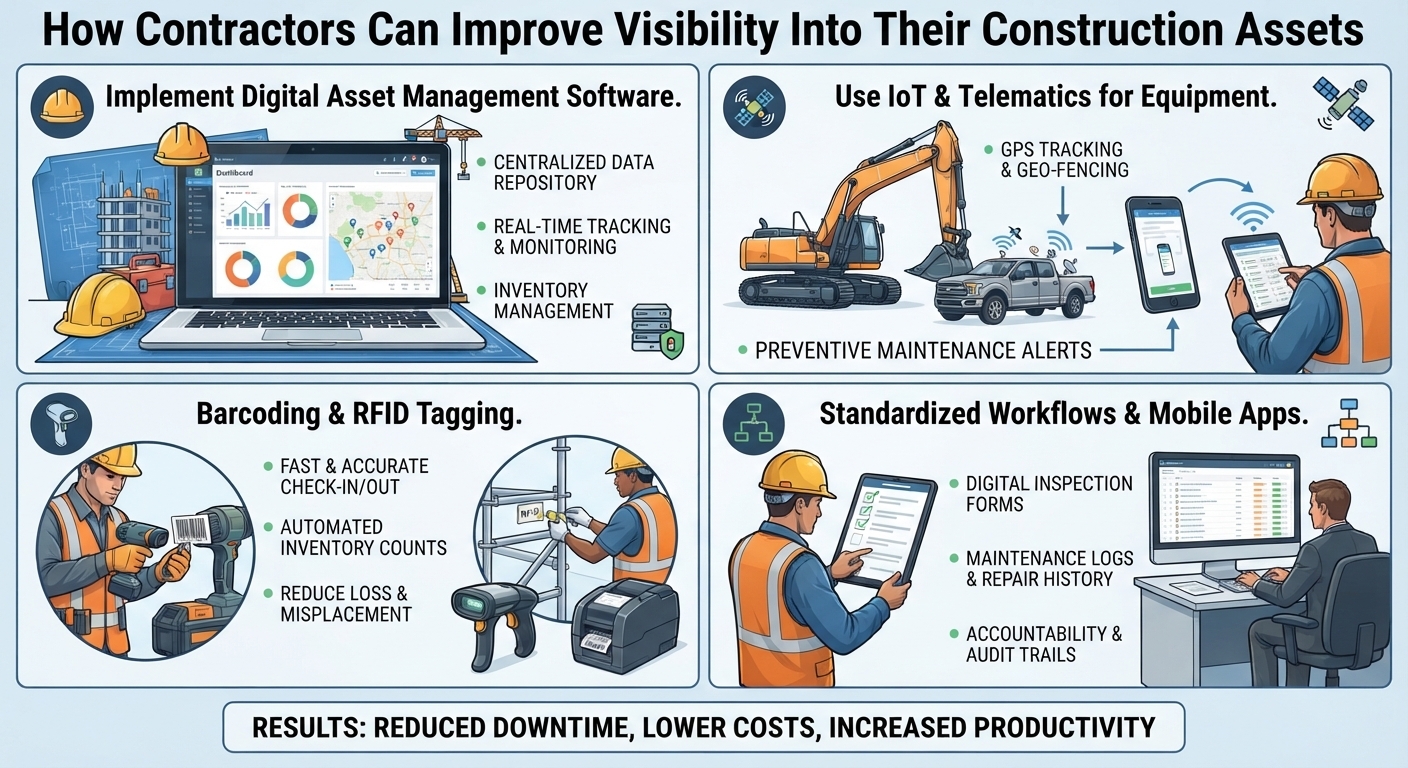
Construction companies manage many valuable assets throughout the lifecycle of their projects. Heavy equipment may receive the most attention, but tools, trailers, generators, pumps, compressors, vehicles, attachments, surveying equipment, and specialized resources are also essential to daily operations.
As businesses grow, keeping track of these resources becomes more difficult. Assets move between jobsites, storage yards, maintenance facilities, and company offices.
If records are outdated, managers may struggle to determine where assets are located, which project is using them, who is responsible for them, or whether they are available.
Construction asset tracking software provides a centralized approach to organizing asset information, location, assignment, movement, status, and condition.
Why Asset Visibility Matters
Asset visibility affects both daily productivity and long-term financial planning. Without accurate information, contractors may experience:
-
Lost or misplaced equipment
-
Duplicate purchases
-
Unnecessary rentals
-
Poor utilization
-
Delayed project work
-
Weak accountability
-
Difficulty planning replacements
Better information gives management more control over valuable resources.
Create Complete Asset Records
A centralized asset profile may include:
-
Asset identification number
-
Equipment category
-
Make and model
-
Current location
-
Project assignment
-
Availability
-
Condition
-
Maintenance status
-
Transfer history
-
Responsible team
These records create a consistent source of information for managers and project teams.
Improve Asset Accountability
Construction assets are often shared. A generator may be used by multiple crews. A trailer may move between projects. Tools may be checked out to different workers.
Clear records help identify who is responsible for each asset and where it was last assigned.
This is useful when an asset is:
-
Missing
-
Damaged
-
Misplaced
-
Transferred
-
Returned
-
Temporarily unavailable
Better accountability can encourage more responsible asset handling.
Reduce Loss and Misplacement
Portable equipment can be particularly difficult to manage. Tools and smaller assets may move frequently between crews and locations. Without documented assignments, finding them after a project can be difficult.
Tracking movement and ownership information creates a clearer history of where assets have been used. This can improve recovery efforts and reduce unnecessary replacement costs.
Improve Asset Utilization
Asset ownership does not guarantee effective use. Some equipment may be heavily used while other resources remain idle.
Visibility into asset usage can help identify:
-
High-demand assets
-
Underutilized machinery
-
Idle equipment
-
Assets regularly shared between projects
-
Resources that may no longer match current needs
This can help contractors improve allocation before spending money on additional equipment.
Reduce Duplicate Purchases
Poor asset visibility can cause unnecessary purchasing.
A project manager may purchase an item because its availability cannot be confirmed, even though a similar asset is located at another company site.
Reviewing current assets before purchasing can help determine whether an existing resource can be:
-
Reassigned
-
Transferred
-
Shared
-
Returned from storage
This supports better capital control.
Improve Asset Transfers
Transfers should be recorded consistently. A transfer record can include:
-
Previous location
-
Destination
-
Transfer date
-
New project assignment
-
Condition
-
Responsible personnel
This helps ensure that asset records match physical locations.
Connect Assets With Maintenance
A machine can be physically available but operationally unavailable. For example, it may require service, repairs, or inspection before it can return to work.
Connecting asset records with maintenance information helps managers distinguish between equipment that is:
-
Ready
-
Reserved
-
Under repair
-
Awaiting inspection
-
Stored
-
Out of service
This creates a more accurate view of actual equipment availability.
Improve Project Planning
Project managers need reliable asset information when planning upcoming work.
If a project requires a specific asset, managers can check whether it is:
-
Available
-
Assigned elsewhere
-
Under maintenance
-
Due to return from another project
This helps teams identify potential resource gaps early.
Early planning gives management more time to transfer equipment or arrange alternatives.
Improve Communication Between Teams
Asset information may be used by:
-
Project managers
-
Field supervisors
-
Warehouse teams
-
Equipment coordinators
-
Maintenance staff
-
Operations managers
A centralized system allows authorized users to access the same information, reducing conflicting records and repeated requests.
This can improve coordination across departments.
Manage the Asset Lifecycle
Assets move through several stages:
-
Acquisition
-
Assignment
-
Active use
-
Transfer
-
Maintenance
-
Storage
-
Reassignment
-
Replacement
Maintaining records throughout this lifecycle gives contractors a clearer picture of asset history and condition. This information can support better replacement and investment decisions.
Support Better Purchasing Decisions
Asset visibility can help contractors decide whether they actually need additional equipment.
Management can review:
-
Existing inventory
-
Utilization
-
Project demand
-
Equipment age
-
Maintenance costs
-
Idle resources
This can help determine whether a new purchase is justified or whether existing assets can be allocated more efficiently.
Improve Inventory Control
Large organizations may have equipment spread across several locations. Accurate records make it easier to conduct internal asset reviews and identify discrepancies.
Periodic audits can help uncover:
-
Missing assets
-
Incorrect locations
-
Duplicate records
-
Outdated assignments
-
Equipment that should be retired
Regular review supports better record accuracy.
Scale Asset Management
Manual asset tracking may work for small businesses but can become difficult as the number of assets increases.
Construction asset tracking software offers a scalable framework that helps contractors organize information across multiple projects and locations.
This can become increasingly valuable as companies expand geographically and operationally.
Best Practices for Asset Visibility
Contractors can improve their asset processes by:
Assigning Unique Identifiers
Use consistent IDs to distinguish similar assets.
Recording Every Transfer
Update location information when assets move.
Tracking Responsibility
Document which team or project has the asset.
Including Equipment Status
Availability should reflect maintenance and operational condition.
Reviewing Records Regularly
Periodic audits help maintain accurate information.
Benefits of Improved Asset Tracking
Contractors may achieve:
-
Better asset visibility
-
Stronger accountability
-
Reduced asset loss
-
Better utilization
-
Fewer unnecessary purchases
-
Improved maintenance coordination
-
Faster resource allocation
-
Better project planning
-
More accurate inventory records
Conclusion
Construction companies rely on valuable assets throughout every phase of a project, and managing those resources becomes increasingly challenging as operations expand.
Construction asset tracking software provides a centralized approach to organizing asset locations, assignments, availability, movement, and status.
By improving visibility, contractors can strengthen accountability, reduce loss, increase utilization, avoid unnecessary purchases, and make more informed decisions about their equipment and resources.
Better asset visibility ultimately supports stronger control over the resources that keep construction projects productive.

 English
 Arabic
 French
 Spanish
 Portuguese
 Deutsch
 Turkish
 Dutch
Dutch
 Russian
 Romaian
 Portuguese (Brazil)
 Greek
Greek
