
What role do HVAC systems play in IVF Labs Design?
INTRODUCTION
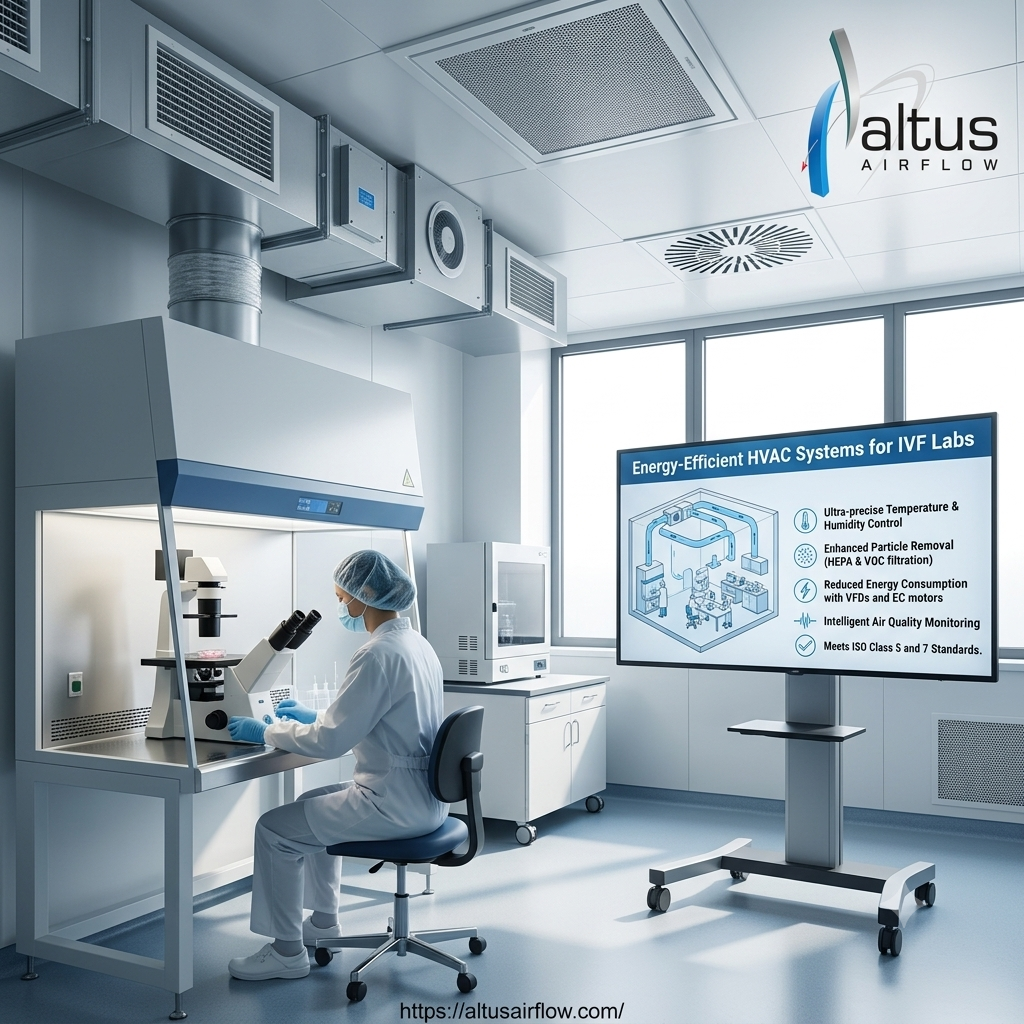
IVF Labs Design depends heavily on properly planned HVAC systems because air quality, temperature, humidity, ventilation, and environmental stability can influence the overall laboratory environment. An IVF laboratory is a specialized healthcare space where sensitive procedures involving gametes and embryos are performed. For this reason, the laboratory environment must be carefully designed to support cleanliness, controlled conditions, appropriate airflow, and reliable day-to-day operation.
Unlike ordinary commercial air-conditioning systems, HVAC systems for IVF laboratories must be planned as part of the complete laboratory infrastructure. The design process may consider room zoning, heat loads from equipment, occupancy levels, outdoor conditions, filtration requirements, air distribution, pressure relationships, and maintenance access. A properly coordinated HVAC strategy supports a stable and well-managed environment while helping laboratory teams maintain efficient workflows.
Understanding the Importance of HVAC in IVF Laboratories
HVAC stands for Heating, Ventilation, and Air Conditioning. In an IVF laboratory, the system is responsible for managing several important environmental parameters.
These may include:
- Temperature
- Humidity
- Air cleanliness
- Airflow
- Fresh-air supply
- Pressure relationships
- Ventilation
- Filtration
Each of these elements should be considered during the planning stage rather than being added after the laboratory layout is completed.
A well-integrated HVAC system helps create consistent environmental conditions across different laboratory areas.
Maintaining Stable Temperature Conditions
Temperature control is one of the primary functions of an HVAC system.
IVF laboratories contain sensitive equipment that may generate heat during operation. These can include:
- Incubators
- Microscopes
- Refrigeration systems
- Cryogenic equipment
- Workstations
- Laboratory instruments
- Computers and monitoring systems
The HVAC system must account for internal heat loads when determining the cooling requirements of the laboratory.
Temperature sensors and control systems can help maintain consistent conditions within the design parameters established by the facility.
Humidity Management in IVF Labs
Humidity is another important environmental factor.
Excessive humidity may affect:
- Equipment performance
- Surface conditions
- Condensation risk
- General laboratory comfort
Very low humidity can also create operational concerns in some environments.
The HVAC system can be designed with humidity-management capabilities based on the laboratory's specific requirements and local climate conditions.
Proper humidity control is especially important in regions where outdoor weather conditions vary significantly throughout the year.
Air Quality Management
Air quality is a central consideration in IVF Labs Design.
The laboratory may need protection from contaminants originating from:
- Outdoor air
- Building materials
- Adjacent spaces
- Equipment
- Cleaning activities
- Human occupancy
An HVAC system can support air-quality management through controlled ventilation and appropriate filtration strategies.
The level of filtration and environmental control should be determined according to the laboratory's operational requirements and applicable standards.
Filtration Systems
Air filtration helps reduce the concentration of airborne particles entering or circulating within a laboratory.
A typical filtration strategy may include multiple stages, such as:
- Pre-filtration
- Fine filtration
- High-efficiency filtration where required
Filter selection depends on factors such as:
- Required air quality
- HVAC system design
- Equipment requirements
- Environmental risks
- Project specifications
Filters should also be installed in a manner that allows appropriate inspection and maintenance.
HEPA Filtration in IVF Laboratories
HEPA filtration may be incorporated into laboratory environmental systems when required by the facility's design criteria.
A HEPA filtration arrangement may involve:
- Terminal filter modules
- Filter housings
- Sealed frames
- Supply-air integration
- Pressure monitoring
- Maintenance access
The exact application depends on the laboratory's environmental requirements and engineering design.
Where HEPA filters are installed, appropriate testing and maintenance procedures can help verify system performance.
Volatile Organic Compound Management
One important aspect of IVF laboratory environmental planning is the management of volatile organic compounds, commonly known as VOCs.
Potential VOC sources can include:
- Paints
- Adhesives
- Cleaning products
- Furniture
- Construction materials
- Outdoor pollution
- Building emissions
HVAC planning may include appropriate strategies to help manage airborne chemical contaminants.
Possible approaches may involve:
- Careful material selection
- Controlled fresh-air intake
- Activated carbon or other suitable filtration media
- Appropriate ventilation
- Monitoring strategies where required
VOC management should be considered early in the laboratory planning process.
Fresh-Air Management
Fresh air plays an important role in maintaining an acceptable indoor environment.
However, introducing outdoor air also requires careful planning because outdoor air may contain:
- Dust
- Particles
- Pollutants
- Moisture
- Chemical contaminants
The HVAC design must balance ventilation requirements with the need for appropriate treatment and filtration of incoming air.
Fresh-air systems should therefore be integrated with the overall air-quality strategy.
Controlled Airflow Patterns
Airflow patterns influence how air moves through the laboratory.
Poorly planned airflow can result in:
- Uneven temperature distribution
- Drafts near workstations
- Inconsistent environmental conditions
- Inefficient ventilation
During IVF Labs Design, air supply and return locations should be coordinated with the laboratory layout and equipment arrangement.
Airflow planning should consider:
- Workstations
- Equipment locations
- Doors
- Personnel movement
- Supply-air outlets
- Return-air pathways
Proper coordination helps create a more balanced indoor environment.
Pressure Differential Management
Different laboratory spaces may have different environmental requirements.
Pressure relationships can help manage the movement of air between adjacent areas.
The HVAC design may consider:
- Supply-air volume
- Return-air volume
- Exhaust requirements
- Door operation
- Adjacent room conditions
- Pressure monitoring
The appropriate pressure strategy depends on the laboratory zoning plan and facility requirements.
HVAC Zoning in IVF Laboratories
A single IVF facility may contain several functional areas.
These can include:
- Reception areas
- Consultation spaces
- Andrology laboratories
- Embryology laboratories
- Procedure rooms
- Cryopreservation areas
- Equipment rooms
- Storage spaces
These areas may have different occupancy levels, heat loads, and environmental requirements.
HVAC zoning allows the system to respond more effectively to the needs of different spaces.
A properly zoned system can provide greater control and operational flexibility.
Equipment Heat Load Management
Laboratory equipment can contribute significantly to internal heat generation.
If these loads are not considered during HVAC design, the cooling system may struggle to maintain stable conditions.
The engineering team may calculate:
- Equipment power consumption
- Heat generated during operation
- Number of instruments
- Operating hours
- Occupancy levels
These calculations help determine appropriate HVAC capacity.
Future equipment additions should also be considered where possible.
HVAC and Laboratory Workflow
HVAC engineering should not be separated from laboratory workflow planning.
For example, the location of supply and return air points should be coordinated with:
- Laboratory benches
- Microscopes
- Incubators
- Workstations
- Doors
- Staff circulation paths
An integrated approach helps reduce the need for major modifications after installation.
Supporting Contamination Control
Contamination control involves more than filtration.
The HVAC system can support the overall environmental strategy through:
- Controlled airflow
- Appropriate ventilation
- Filtration
- Pressure management
- Environmental monitoring
These systems work alongside other design elements such as:
- Hygienic surfaces
- Proper zoning
- Controlled access
- Cleaning procedures
- Material selection
A complete contamination-control strategy requires coordination between engineering systems and laboratory operations.
HVAC and Cleanroom Engineering Principles
Some IVF laboratory projects incorporate cleanroom engineering principles based on their functional requirements.
Relevant design considerations may include:
- Controlled air supply
- Filtration
- Air distribution
- Pressure relationships
- Hygienic construction
- Environmental monitoring
The exact level of control should be determined according to the facility's needs and applicable requirements.
Energy Efficiency in HVAC Design
Environmental control can require significant energy.
Modern HVAC engineering can incorporate strategies to improve efficiency, such as:
- Variable-speed fans
- Energy-efficient motors
- Intelligent controls
- Proper system sizing
- Efficient duct design
- Demand-based operation where appropriate
Energy efficiency should be balanced with the need to maintain the required laboratory environment.
Smart HVAC Control Systems
Digital technology is increasingly used to improve environmental management.
Modern systems may include:
- Programmable controllers
- Digital temperature sensors
- Humidity sensors
- Pressure sensors
- Remote monitoring
- Automated alarms
- Building Management System integration
These technologies can provide facility teams with improved visibility of system performance.
Continuous Environmental Monitoring
Monitoring helps laboratory teams observe whether important environmental conditions remain within the facility's defined operating parameters.
A monitoring system may track:
- Temperature
- Humidity
- Air pressure
- Filter status
- HVAC equipment performance
Data logging can support maintenance planning and quality-management processes.
The monitoring requirements should be based on the laboratory's operational procedures.
HVAC Redundancy and Reliability
IVF laboratories often require reliable environmental infrastructure.
Depending on the facility's risk assessment and project requirements, redundancy may be considered for selected components.
Possible considerations include:
- Backup equipment
- Redundant control systems
- Emergency power integration
- Alarm systems
- Preventive maintenance
The appropriate level of redundancy should be determined according to the facility's operational needs.
Importance of Proper Ductwork Design
Ductwork is an essential part of the HVAC system.
Poorly designed ductwork can contribute to:
- Excessive pressure loss
- Uneven airflow
- Increased energy use
- Noise
- Maintenance difficulties
A professional design considers:
- Duct sizing
- Routing
- Air velocity
- Insulation
- Leakage control
- Access for maintenance
Proper ductwork coordination is especially important in facilities with limited ceiling space.
Noise and Vibration Control
IVF laboratories require a controlled working environment.
HVAC equipment can generate noise and vibration if it is not properly designed and installed.
Noise-control strategies may include:
- Appropriate equipment selection
- Vibration isolation
- Acoustic duct treatment where required
- Proper fan sizing
- Flexible connections
Reducing unnecessary noise can improve the working environment for laboratory personnel.
HVAC Coordination With Building Infrastructure
The HVAC system must work with other building systems.
Coordination may be required with:
- Electrical infrastructure
- Plumbing
- Fire systems
- Laboratory equipment
- Ceiling systems
- Monitoring systems
Early engineering coordination can reduce installation conflicts.
Maintenance Access and Serviceability
An HVAC system should be designed for long-term maintenance.
Important considerations include access to:
- Filters
- Fans
- Coils
- Dampers
- Sensors
- Control panels
Difficult maintenance access can increase service time and operational disruption.
Planning service access during the design stage can improve long-term system management.
Preventive Maintenance
Regular maintenance supports reliable HVAC operation.
A preventive maintenance plan may include:
- Filter inspections
- Filter replacement
- Coil cleaning
- Fan inspection
- Belt checks where applicable
- Sensor calibration
- Airflow verification
- Control-system inspection
The maintenance schedule should follow equipment requirements and facility procedures.
HVAC Testing and Commissioning
Testing and commissioning are important steps before the laboratory becomes operational.
The commissioning process may include:
- Airflow measurement
- Air balancing
- Temperature verification
- Humidity checks
- Pressure testing
- Control-system testing
- Equipment functional checks
These activities help confirm whether the installed systems perform according to the defined project specifications.
Importance of Air Balancing
Air balancing helps adjust supply and return air quantities across the system.
Without proper balancing, different rooms may experience:
- Uneven temperatures
- Poor airflow
- Unstable pressure relationships
- Increased energy consumption
Air balancing is therefore an important part of final HVAC commissioning.
Future Expansion Planning
IVF facilities may add new equipment or expand their services over time.
HVAC planning can consider:
- Additional cooling capacity
- Future duct connections
- Spare electrical capacity
- Space for equipment upgrades
- Expandable monitoring systems
Planning for future changes can reduce the complexity of later modifications.
Choosing the Right HVAC Approach for IVF Labs
Healthcare facilities should avoid selecting an HVAC system based only on initial cost.
Important factors include:
- Laboratory size
- Equipment heat loads
- Local climate
- Air-quality requirements
- Filtration needs
- Energy efficiency
- Maintenance requirements
- Future expansion
The HVAC design should be developed specifically for the laboratory rather than copied directly from a general commercial building.
Common HVAC Design Mistakes to Avoid
Some common mistakes include:
- Treating the IVF lab like a standard office
- Ignoring equipment heat loads
- Inadequate filtration planning
- Poor fresh-air management
- Insufficient HVAC zoning
- Limited maintenance access
- Failure to coordinate HVAC with laboratory equipment
- Skipping proper testing and commissioning
- Ignoring future expansion
Early planning and professional engineering can help reduce these issues.
Future Trends in HVAC for IVF Laboratories
Future HVAC systems are expected to incorporate more advanced technologies, including:
- Smart environmental controls
- Real-time monitoring
- Predictive maintenance
- Advanced filtration technologies
- Energy-efficient air-handling systems
- IoT-enabled sensors
- Integrated building management platforms
These technologies can support improved system visibility and operational management.
Conclusion
HVAC systems play a vital role in IVF Labs Design by supporting temperature stability, humidity management, air quality, filtration, ventilation, controlled airflow, pressure relationships, and reliable laboratory operation. Effective HVAC engineering requires careful coordination with laboratory layouts, equipment heat loads, workflow, cleanroom principles, monitoring systems, and maintenance requirements. By integrating environmental engineering from the beginning of the project, fertility facilities can develop more stable, efficient, and future-ready laboratory environments. For specialized IVF laboratory environmental planning, HVAC integration, airflow management, and turnkey engineering solutions, Altus Airflow provides solutions designed to support modern healthcare and fertility laboratory infrastructure.
Frequently Asked Questions
1. What role does HVAC play in IVF Labs Design?
HVAC plays a major role in IVF Labs Design by helping manage temperature, humidity, ventilation, air quality, filtration, airflow, and pressure relationships within the laboratory environment.
2. Why is temperature control important in IVF Labs Design?
In IVF Labs Design, temperature control helps maintain stable environmental conditions and supports the reliable operation of sensitive laboratory equipment.
3. Does IVF Labs Design require specialized air filtration?
Depending on project requirements, IVF Labs Design may include multi-stage filtration, fine filtration, HEPA filtration, or other appropriate air-treatment strategies.
4. How does HVAC help manage humidity in IVF laboratories?
HVAC systems used in IVF Labs Design can include humidity-control strategies to manage moisture levels according to the laboratory's environmental requirements and local climate conditions.
5. What is HVAC zoning in IVF Labs Design?
HVAC zoning in IVF Labs Design divides the facility into areas with different environmental-control requirements, allowing more targeted management of temperature, airflow, and occupancy-related loads.
Read Our Previous Blog------>Can a Modular Ophthalmic OT Engineering Company provide customized operation theatre solutions?

 English
 Arabic
 French
 Spanish
 Portuguese
 Deutsch
 Turkish
 Dutch
Dutch
 Italiano
 Romaian
 Portuguese (Brazil)
 Greek
Greek
