
Why Rick Owens Jackets Cost So Much Money
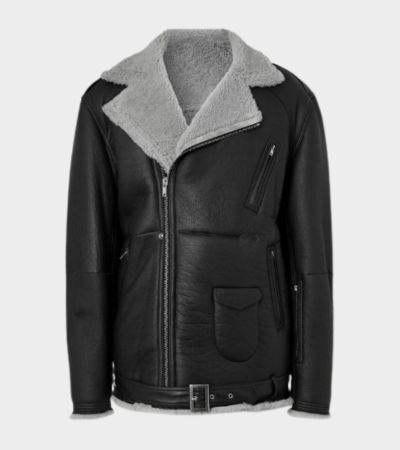
Ask anyone who's tried on a Rick Owens leather jacket and they'll tell you the same thing: it doesn't feel like anything else in your closet. Which is sort of the point, and also sort of the problem, because that jacket might've cost you $3,000. Sometimes more. A basic bomber starts around $1,500; the heavier leather bikers with the signature draped panels can climb past $6,000 without much effort. People assume that's just designer markup, a name tax. It's not, or at least not entirely there's real cost sitting underneath that price tag, and I want to walk through where it actually comes from.
So What's Actually Driving the Price
Three things, mostly: where it's made, what it's made from, and how few of them get made at all. Italian leatherworkers aren't cheap labor never have been and Rick Owens leans on ateliers in Italy that specialize in the kind of technical cutting his silhouettes demand. You can't hand a drop-shoulder asymmetric pattern to a rick owens that's used to churning out standard moto jackets and expect it to come out right. It won't. The pattern pieces alone can number in the dozens for a single jacket, and every one of them has to be cut, fitted, and assembled by someone who actually knows what they're doing.I'll be honest, this is the part people underestimate. They see "Italian-made" on a label and roll their eyes a little. But labor costs in Italian leather manufacturing really do run three to five times higher than production out of Vietnam or Bangladesh. That gap doesn't disappear — it gets folded straight into retail.
Not All Leather Is Created Equal
Here's a question worth asking: why not just use regular cowhide like everyone else? Because Rick Owens doesn't, mostly. The brand reaches for horsehide, lambskin, and occasionally blistered or textured hides that cost more per square foot and are genuinely harder to source in consistent quality. Horsehide especially is a pain to work with — stiffer, less forgiving, and you waste more of the hide getting a clean cut than you would with cow leather.That waste matters more than people think. A factory tanning and cutting horsehide is throwing away material other brands wouldn't have to sacrifice, and that inefficiency shows up in cost.For comparison, here's roughly how a Rick Owens jacket stacks up against something off a department store rack:
Mass-market leather jacket |
Rick Owens jacket |
|
|
Where it's made |
Usually Asia, high-volume |
Mostly Italy, small workshops |
|
Pattern |
Standard block |
Custom, often asymmetric |
|
Leather |
Mixed-grade cowhide |
Horsehide, lamb, specialty hides |
|
Run size |
Thousands per style |
Often under 500 |
|
Price |
$200–$600 |
$1,800–$6,500+ |
Why Scarcity Alone Pushes the Number Up
Small production runs are expensive by nature — that's just how manufacturing math works. When Rick Owens makes 300 units of a jacket instead of 30,000, the fixed costs (pattern development, sampling, setup) get spread across way fewer pieces. Each one absorbs more of that overhead.Think about a neighborhood bakery versus a bread factory. The bakery pays more per loaf for flour and oven time because it's not buying or baking at industrial scale. Rick Owens runs closer to that bakery model, just applied to outerwear instead of bread. And honestly, that scarcity isn't an accident — it's a business decision. Owens has spent years positioning the brand around exclusivity rather than volume, and that positioning only works if the price stays high.
The Part That's Harder to Put a Number On
I want to push back a little on the idea that this is purely a "materials and labor" story, because it isn't. A real slice of what you're paying for is thirty-plus years of Owens building a visual language nobody else owns. The elongated proportions, the deconstructed shoulders, the washed-out palette — none of that happened by accident, and none of it is easy to imitate convincingly.That history actually pays off financially, too. Walk through Grailed on any given week and you'll find vintage Rick Owens leather pieces from the 2000s selling for $2,000 to $4,000, sometimes above what they cost new. Not many designers can say their old stock appreciates like that.
Is It Actually Worth the Money
Depends entirely on who's asking. If you care about the silhouette and plan to wear the jacket for a decade, the price generally holds up — the leather ages instead of falling apart, which is more than you can say for a $300 jacket that cracks after two winters. If you're buying it purely for the name without caring about the design language behind it, the math gets a lot shakier.Cost-per-wear is the honest way to look at it. Spread $3,000 across ten years of regular wear and it stops looking absurd. Spread it across one season and it does.
Roughly Where the Money Goes
-
Materials — about 25–35%: specialty hides, hardware, technical fabric blends
-
Labor — about 30–40%: skilled Italian cutting and hand assembly
-
Design and brand overhead — about 15–20%: sampling, R&D, creative direction
-
Retail markup — about 20–30%: fairly standard across luxury fashion generally
Rick Owens doesn't publish an actual cost breakdown, so take these as industry-typical estimates for luxury leather goods rather than confirmed numbers. Still, they line up with how similar houses price things.One practical note: buy from the official Rick Owens site, known stockists, or resale platforms that actually authenticate pieces. The silhouette is recognizable enough now that counterfeits are everywhere on secondary markets.At the end of the day, a Rick Owens jacket isn't cheap because nothing about making one is cheap. Whether that's worth it to you is a separate question entirely — and only you can answer that one.
 Turkish
 English
 Arabic
 French
 Spanish
 Portuguese
 Deutsch
 Dutch
Dutch
 Italiano
 Russian
 Romaian
 Portuguese (Brazil)
 Greek
Greek
