
Skinbooster vs. Filler: 5 Things Women Over 35 Should Know Before Choosing an Injectable Treatment
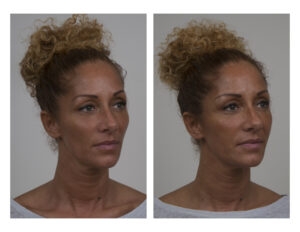
According to a real experience published by the Dutch Inspectorate for Health and Youth Care, or IGJ, she went to a salon for what she had been told would be collagen injections. She was also told that a doctor would perform the treatment.
The result looked much stronger than she expected. She later asked another doctor for a second opinion. That doctor told her that fillers had actually been injected and that too much product had been placed in the wrong areas. When Danique checked the Dutch BIG register, she discovered that her original practitioner was not BIG registered in the Netherlands. The IGJ states that its published experience stories are based on reports about cosmetic treatments.
Her experience highlights something that matters at any age, but it becomes especially relevant when women in their late 30s, 40s and 50s begin considering injectable treatments.
You may notice that your skin is drier. Fine lines may stay visible for longer. Your cheeks may look slightly flatter. The jawline may feel less defined.
Those changes do not all have the same cause.
A skinbooster is generally chosen to improve skin quality, hydration and texture. Dermal filler is mainly used to add or restore volume and support.
Understanding that difference is the starting point. There are also important differences in expected results, treatment planning, downtime and risk.
After hours of research across Dutch government guidance, IGJ data and peer reviewed clinical research, these are the five points worth understanding before deciding.
Skinbooster vs. Filler: The Main Differences
|
Question |
Skinbooster |
Hyaluronic acid filler |
|
Main goal |
Improve hydration and skin quality |
Restore or add volume and contour |
|
Common concerns |
Dryness, dull skin, fine lines and reduced elasticity |
Volume loss, deeper folds and loss of facial support |
|
Does it add noticeable volume? |
Usually not the main aim |
Yes, depending on product and amount |
|
Typical result |
Fresher and better hydrated skin |
More volume or definition in a specific area |
|
Placement |
Usually small injections in or near the skin |
Depth varies by treatment area and product |
|
Treatment pattern |
Often given as a course |
Often treated by area with later review |
|
Downtime |
Redness, small bumps, swelling or bruising can occur |
Swelling, tenderness or bruising can occur |
|
Can hyaluronic acid be dissolved? |
Depends on the exact product |
Many HA fillers can be broken down with hyaluronidase when medically appropriate |
|
Best suited to |
Skin quality concerns |
Structural or volume concerns |
There is no winner in this comparison. The better choice is the treatment that matches what has actually changed.
1. After 35, Skin Ageing and Facial Volume Loss Are Different Problems
Turning 35 does not suddenly change your face overnight. There is also no medical rule saying that women need injectables after a certain birthday.
What changes is that several parts of facial ageing can gradually become more noticeable during adulthood.
Skin may become thinner and less elastic. Changes can also take place in facial fat, muscle and bone.
The Facial Aging Process From the “Inside Out” review explains that facial ageing involves changes in several anatomical layers. These include remodelling of the facial skeleton, changes in facial fat, alterations in muscles and weakening or thinning of the skin.
Research into facial anatomy also shows that facial fat is divided into separate compartments rather than one continuous layer. These compartments can change differently with age.
Why does this matter when comparing injectables?
Because dry skin and lost cheek volume are not the same problem.
Consider a 39 year old woman whose face still has good natural volume. Her main complaints are dry cheeks, fine surface lines and a dull appearance.
Adding volume may not address what she notices most.
Now picture a 46 year old woman with reasonably healthy skin but clear flattening through the mid face. Her concern is not mainly hydration. She feels that her cheeks have lost some of their previous support.
Improving skin hydration would not fully address that structural change.
A skinbooster is generally more relevant to the first type of concern. Filler may be more relevant to the second.
If your main concern is texture, hydration or skin elasticity rather than adding facial volume, understanding what a skinbooster is designed to do can make the comparison easier.
Age gives context. Your actual anatomy should decide the treatment.
2. Skinboosters and Fillers Can Both Use Hyaluronic Acid, but They Are Not the Same Product
This is one of the most common sources of confusion.
Hyaluronic acid is found naturally in the body and has a strong ability to attract and hold water.
It is widely used in injectable aesthetic products, but the words “hyaluronic acid” do not tell you exactly how a product will behave.
Many traditional dermal fillers contain cross linked hyaluronic acid. Cross linking changes the properties of the gel and can help it remain in the tissue while providing shape or support.
Even fillers are not all alike.
A softer formulation chosen for one facial area may behave differently from a firmer product designed to provide structural support elsewhere.
Skinboosters are generally formulated with a different purpose. Their main aim is usually hydration and improvement of skin quality instead of building noticeable facial volume.
Some contain non cross linked hyaluronic acid. Other products use stabilised or modified forms.
This means that skinbooster is a broad treatment category, not one standard injectable formula.
That distinction matters because results from research on one formulation cannot automatically be promised for every product sold under the skinbooster label.
Before agreeing to either treatment, ask what will actually be injected.
You should know the product name. You should also understand why it was selected for your concern and where it will be placed.
The Dutch Government specifically advises people to ask which product will be used before treatment. It also states that permanent wrinkle fillers cannot be used for cosmetic purposes in the Netherlands. Permanent fillers can be difficult to correct if problems develop and may cause hard to treat inflammatory reactions.
That makes the product itself part of an informed decision, not a technical detail that only the practitioner needs to know.
3. The Results Are Different, and Clinical Research Helps Set Realistic Expectations
The biggest practical question is usually simple.
What will I actually see?
For a skinbooster, think more about skin condition than facial reshaping.
A large 2026 prospective, multicentre, randomised clinical study of injectable non cross linked hyaluronic acid included 448 adults, with 224 participants in each group.
People receiving treatment had full face intradermal injections at baseline and again on days 28 and 56.
Researchers found higher skin hydration in the treatment group at every measured point after treatment. Improvements were also found in elasticity, roughness and fine line scores. No serious adverse events occurred during the study.
Those results support the use of injectable hyaluronic acid for skin quality.
They should not be turned into a guarantee.
The research tested a specific non cross linked formulation under controlled conditions. Individual products, skin types and injection techniques differ.
More importantly, hydration is not the same as replacing volume.
If your cheeks have lost structural fullness, better hydrated skin can still leave your face looking flatter than you would like.
That is where dermal filler has a different role.
Fillers can physically add volume. Depending on the treatment plan, they may be used to restore support in the mid face or alter the contour of areas such as the chin or jaw.
The expected visual change can therefore be more noticeable.
This does not mean filler gives a better result.
It gives a different result.
A subtle skin treatment can be disappointing if you expected facial lifting. A well placed filler can also be disappointing if your real concern was dry and crepey skin.
For women over 35 who want a natural appearance, matching the treatment to the problem is more useful than simply asking for the smallest amount of product.
4. Treatment Course, Downtime and Reversibility Can Affect Your Choice
Results matter, but so does the practical side of treatment.
Skinboosters are often planned as a course
Many skin quality injectable protocols involve several treatment sessions rather than one visit.
The exact number and spacing depend on the product.
This is important when comparing cost and convenience. One session may not represent the complete treatment plan.
Ask how many initial sessions are recommended. Then ask whether maintenance treatments are expected later.
Filler is usually planned by area and need
Filler is often approached differently.
The doctor may assess a particular area, inject an appropriate amount and review the result after swelling has settled.
That does not mean filler always requires only one appointment. Additional treatment may sometimes be considered later.
What matters is that the amount should follow the treatment goal.
More products are not automatically better.
Both treatments can cause temporary downtime
Injectable treatment can cause temporary redness, swelling, tenderness and bruising.
Skinbooster injections may also leave small raised points at injection sites for a period after treatment.
Filler swelling can be more visible in certain areas. Lips are a familiar example.
Your own response may be different from someone else’s.
For that reason, avoid assuming you will look completely unchanged immediately after treatment. If you have a wedding, important work event or holiday coming up, discuss timing with the practitioner first.
Many HA fillers can be dissolved, but “reversible” is too simple a word
Hyaluronidase can break down hyaluronic acid and is used in aesthetic medicine when clinically appropriate.
This is particularly important when urgent treatment is required after certain HA filler complications.
However, having access to hyaluronidase does not make filler risk free or casually reversible.
Dissolving filler is another medical intervention.
A better question is whether the practitioner knows exactly which product has been injected and has the knowledge and resources to manage a complication.
5. In the Netherlands, Who Injects You Is a Major Part of the Decision
The Dutch injectable market has grown rapidly.
According to figures reported by the IGJ from research by Erasmus MC, estimated filler treatments in the Netherlands rose from around 162,000 in 2019 to 294,000 in 2022.
That is an increase of 81%.
The number of safety reports has also risen sharply.
The IGJ received 175 reports about botox and filler treatments in 2025. Up to and including 2024, the average had been around 35 reports per year.
In 117 of those 175 reports, equal to 67%, the person reporting the case said the procedure had been performed by someone without the required authority, or IGJ investigation found that this was the case.
These figures must be interpreted carefully.
They are reports received by the regulator. They do not mean that 67% of all injectable treatments in the Netherlands are performed by unauthorised practitioners.
They still show why checking your practitioner matters.
The Dutch Government says botox and fillers may only be injected by a competent doctor. Patients can check whether a doctor is legally registered through the BIG register.
The government makes another useful point. BIG registration confirms that a person is authorised to use the professional title, but it does not prove that the doctor has enough experience with every cosmetic procedure. Skills, training and practical experience also matter.
So do not stop at “Are you a doctor?”
Ask how often they perform the treatment you want.
Ask who is medically responsible.
Ask what happens if you develop unexpected pain, swelling or skin changes.
Ask how you can reach the clinic after normal opening hours.
The Dutch IGJ Fillercheck recommends knowing the exact treatment and product, understanding the risks, checking medical involvement and making sure aftercare is available before agreeing to injectables.
Serious complications are uncommon, but they are real
Vascular obstruction is one of the serious risks associated with dermal fillers. It occurs when blood flow is blocked after injection.
A 2025 Japanese retrospective study of hyaluronic acid fillers examined 209,083 patients and 290,307 injection sites.
Researchers identified 12 serious complications. These included 10 vascular obstructions and 2 infections.
The recorded serious complication rate was 0.0041% in that specific dataset.
This was Japanese research, not Dutch population data. Its rate should therefore not be treated as your personal risk in the Netherlands.
It does show that a complication can be rare and still deserve careful preparation.
Dutch reports provide the local picture.
The IGJ says complications were mentioned in 14% of the reports it received in 2025. Reported problems included severe pain, major swelling, inflammation and drooping of an eye or eyelid.
Some people needed antibiotics or filler removal. One person required corrective surgery by a specialist.
The complication consultation service at Erasmus MC estimated that 350 to 400 new patients attended during 2025. Most had complaints after botox or filler treatment.
Again, these numbers do not tell us the complication rate for every injectable treatment.
They tell us something more practical.
Cosmetic injections are medical procedures. Treating them like ordinary beauty appointments removes an important layer of caution.
Questions Worth Asking Before You Choose
A useful consultation starts with what bothers you, not with a product you saw online.
You could say, “My cheeks seem flatter than they used to,” instead of walking in and asking for filler.
If your concern is skin quality, explain what you actually see. Perhaps your skin feels dry or looks less smooth even though your facial shape still feels right.
Then ask:
-
What is causing the change I am seeing? The answer should distinguish between skin quality, volume and facial structure.
-
Why are you recommending a skinbooster or filler? The explanation should relate directly to your concern.
-
What product will you inject? Ask for the exact name and formulation.
-
What can this treatment realistically improve? You should also be told what it cannot fix.
-
How many sessions might I need? This gives you a more realistic picture of the total treatment plan.
-
What are the common and serious risks? Both deserve a clear explanation.
-
Who is responsible if something goes wrong? You should know how to obtain medical help and aftercare.
The IGJ Fillercheck also warns against unusually low prices and discounts that create time pressure. It states that people should always have time to think about their decision, even when they are already sitting in the treatment chair.
A cosmetic injectable should never feel like an offer you have to grab before it disappears.
Choosing Between a Skinbooster and Filler After 35
The simplest way to choose is to stop thinking about age as the diagnosis.
Being 38, 45 or 52 does not tell a doctor which injectable you need.
Your concern does.
If the main issue is dry or dull skin, reduced elasticity, fine surface lines or texture, a skinbooster may be worth discussing.
If the main problem is lost facial volume or support, filler may make more sense.
Some women have both types of changes. That still does not mean everything should be treated at once.
Research on facial ageing shows why. The face changes across several layers and each person ages differently. Skin, fat and underlying structures do not all change at the same speed.
So focus on the change that bothers you most.
Find out what is causing it.
Check the practitioner’s qualifications and experience.
Know exactly what will be injected and what result it is designed to produce.
Most importantly, choose a treatment because it fits your face rather than because it happens to be popular.
A skinbooster should be judged by how well it addresses skin quality.
A filler should be judged by whether volume or structural support was genuinely needed.
When those goals are clear before the first injection, the choice between them becomes much easier.
 English
 Arabic
 French
 Spanish
 Portuguese
 Deutsch
 Turkish
 Dutch
Dutch
 Italiano
 Russian
 Romaian
 Portuguese (Brazil)
 Greek
Greek
