
Thermal Paper Rolls: POS Receipts, Sizes and Print Quality
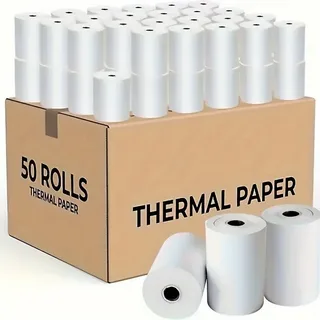
Thermal Paper Rolls for POS Systems and Everyday Business Use
Thermal paper rolls for POS printers are widely used by shops, cafés, restaurants, supermarkets and other businesses that need quick printed receipts. Unlike conventional paper used with inkjet or laser printers, thermal rolls have a heat-sensitive surface that reacts when it passes across a thermal printhead. This allows receipts, transaction slips and other short documents to be produced without ink cartridges or toner. The correct roll, however, needs to match the printer's dimensions and intended application.
What Are Thermal Paper Rolls?
Thermal paper rolls are continuous rolls of specially coated paper designed for compatible thermal printing equipment. The coating reacts to heat, allowing the printer to create text, numbers, symbols and simple graphics directly on the paper. This technology is particularly useful in environments where printing happens throughout the day. A cashier can produce a receipt within seconds, while staff can replace an empty roll without dealing with ink or toner.
How Thermal Printing Works
Inside a thermal printer is a printhead containing many tiny heating elements. As the paper moves across it, selected points receive heat. The coating responds and creates the visible image. The process is relatively straightforward, which is one reason thermal printers are common in point-of-sale environments.
Common Applications of Thermal Rolls
Thermal printing isn't limited to retail receipts. Different businesses use compatible rolls for several types of short-format documents.
Retail and Point of Sale
Retailers rely on receipt printers to provide customers with transaction details. These can include product names, quantities, prices, discounts, taxes and payment information.
For a busy checkout, smooth paper feeding is important. A roll that fits correctly can help reduce interruptions during transactions.
Restaurants and Cafés
Restaurants can use thermal printing for customer bills, kitchen orders and takeaway receipts. Compact printers can fit into busy counters and service areas where space is limited.
Payment Terminals and Tickets
Card payment terminals commonly use smaller rolls. Ticket machines and other specialised equipment can also rely on thermal printing. The paper dimensions differ between devices, which makes compatibility an important consideration.
Thermal Roll Sizes and Printer Compatibility
There isn't one universal thermal roll size. Width, diameter, core dimensions and overall length can vary considerably.
|
Specification |
Why it matters |
|
Paper width |
Must fit the printer's paper path |
|
Roll diameter |
Determines whether the roll fits inside the machine |
|
Core size |
Needs to work with the printer holder |
|
Roll length |
Affects how frequently replacement is required |
|
Paper grade |
Can influence print quality and handling |
Why Width Isn't the Only Measurement
An 80mm roll, for example, may be suitable for one POS printer but unsuitable for another because the printer may have a different maximum roll diameter or core requirement.
Checking the printer model before ordering is therefore more reliable than choosing paper based on width alone.
Print Quality and Thermal Coating
The coating on thermal paper plays a major role in how clearly information appears. A consistent surface can produce sharp text and even print density.
Poor-quality or unsuitable paper may result in:
-
Faint characters
-
Uneven printing
-
Feeding difficulties
-
Excess paper dust
-
Reduced readability
Printer condition also matters. Dust or residue around the printhead can interfere with the printing process, so thermal paper quality should be considered alongside regular equipment maintenance.
Different Thermal Paper Requirements
The best roll depends on the purpose of the printer. A receipt machine used in a small shop may have different requirements from a high-volume supermarket system or portable payment terminal.
High-Volume Receipt Printing
Businesses that print large numbers of receipts may prefer longer rolls if their printers support them. Fewer roll changes can help staff maintain a smoother checkout process.
Compact Devices
Portable payment machines generally have limited internal space. Their rolls are often smaller, so checking the supported dimensions is particularly important.
Storage of Thermal Paper Rolls
Thermal paper is sensitive to environmental conditions because its coating reacts to heat. Proper storage can help preserve unused stock.
Rolls should generally be kept:
-
Away from direct sunlight
-
Away from excessive heat
-
In a dry environment
-
Protected from unnecessary friction
-
Away from substances that could affect the coating
A storage area that is cool and dry is preferable to a location exposed to strong heat or sunlight.
Looking After Printed Receipts
Printed thermal receipts can also be affected by environmental conditions. Heat, light and friction may reduce readability over time. Businesses that need to retain transaction information for longer periods may benefit from maintaining appropriate digital records alongside printed documents.
Direct Thermal Paper and Thermal Transfer Printing
Direct thermal printing and thermal transfer printing are different processes. Direct thermal printing creates the image directly on heat-sensitive paper. This is the method commonly associated with POS receipts and many compact receipt printers. Thermal transfer printing uses a ribbon. Heat transfers material from the ribbon onto another surface. It is often selected for applications where the printed label needs different durability characteristics.
Understanding the distinction helps businesses select the appropriate consumable for their equipment.
Why Businesses Use Thermal Paper Rolls
The popularity of thermal printing comes from its straightforward operation. There is no conventional ink cartridge to replace, and the printer can produce receipts quickly.
Key advantages include:
-
Fast receipt production
-
Simple roll replacement
-
Quiet operation
-
Compact printer designs
-
No traditional ink requirement
For businesses processing many transactions, these features can make thermal printing a practical part of daily operations.
Choosing the Right Thermal Paper
Selecting suitable paper starts with the printer. The manufacturer's specifications can identify the supported width, maximum diameter, core size and paper type.
The intended application should also be considered. A retail receipt, payment slip and label may require different paper characteristics.
What Businesses Should Check
Before purchasing, look at:
-
Printer model
-
Roll width
-
Roll diameter
-
Core dimensions
-
Paper length
-
Required paper grade
-
Expected printing volume
This information reduces the chance of ordering rolls that don't fit or perform as expected.
If you want to read more content then click here
Thermal Paper Rolls for Irish Businesses
Businesses in Ireland use thermal printing across retail, hospitality, services and payment environments. When ordering thermal paper rolls Ireland products, customers should compare the exact dimensions required by their printer rather than choosing solely on price.
For online purchases, clear product specifications are especially useful. A listing that identifies roll dimensions and compatibility information gives buyers a better basis for comparing products.
Frequently Asked Questions
What are thermal paper rolls used for?
They are commonly used for POS receipts, payment slips, restaurant bills, tickets, labels and other short printed documents.
Do thermal paper rolls require ink?
Direct thermal rolls don't require conventional ink or toner. The printer creates the image by applying heat to the coated surface.
Are all thermal rolls the same size?
No. Width, diameter, core size and length can vary. The printer's specifications should be checked before purchasing.
Why does thermal paper sometimes print faintly?
Faint printing can result from unsuitable paper, an ageing or dirty printhead, incorrect printer settings or other equipment-related issues.
How should unused thermal rolls be stored?
Keep them away from excessive heat, direct sunlight and unsuitable environmental conditions. A cool, dry storage area is generally preferable.
Can thermal paper be used in a normal printer?
No. Direct thermal paper is designed for compatible thermal printing equipment and isn't a substitute for ordinary printer paper.
Does roll length matter?
Yes. Longer rolls can reduce how frequently staff need to replace paper, provided the roll diameter remains within the printer's supported limits.

 English
 Arabic
 French
 Spanish
 Portuguese
 Deutsch
 Turkish
 Dutch
Dutch
 Italiano
 Russian
 Portuguese (Brazil)
 Greek
Greek
