
What role does zoning play in IVF Labs Design?
INTRODUCTION
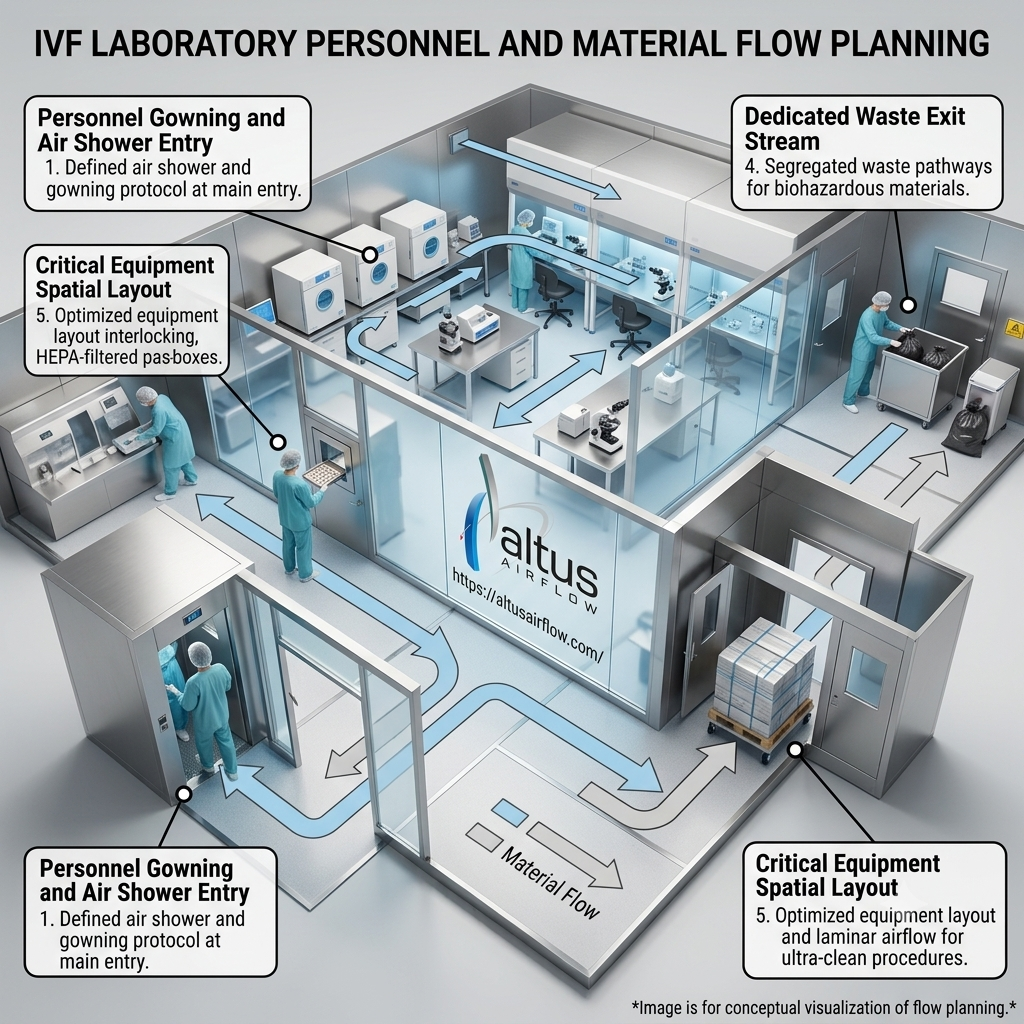
Zoning is one of the most important elements of IVF Labs Design because it determines how laboratory spaces, personnel, equipment, materials, reproductive cells, and supporting functions are organized within a controlled environment. A properly planned zoning strategy helps reduce unnecessary movement, supports contamination-control practices, improves workflow, and allows critical laboratory activities to be performed under appropriate environmental conditions. IVF facilities may include embryology, andrology, cryostorage, preparation, washing, storage, staff, and technical areas, each with different functional requirements. Therefore, zoning should be developed around the complete laboratory workflow rather than simply dividing available floor space into separate rooms.
Why Zoning Is Important in IVF Laboratories
An IVF laboratory handles highly sensitive biological material and requires carefully coordinated processes. Activities such as oocyte handling, sperm preparation, fertilization, embryo culture, embryo assessment, and cryopreservation need controlled workflows.
Poor zoning can result in:
- Unnecessary staff movement
- Increased traffic through critical areas
- Inefficient material movement
- Workflow interruptions
- Difficult equipment access
- Increased contamination risks
- Poor utilization of available space
Effective zoning establishes logical relationships between different areas while helping staff perform procedures efficiently.
Understanding Functional Zones
An IVF laboratory is not a single-purpose room. It is usually composed of several functional areas that support different stages of assisted reproductive technology.
Depending on the facility, zones may include:
- Embryology laboratory
- Andrology laboratory
- Oocyte handling area
- Sperm preparation area
- Embryo culture area
- Cryopreservation area
- Media and reagent storage
- Equipment areas
- Sample preparation spaces
- Gowning or controlled-access areas
- Staff support areas
- Technical and service areas
Each zone should be positioned according to its relationship with other activities.
Zoning Around IVF Workflow
Workflow should be the foundation of laboratory zoning.
A typical workflow may begin with the receipt or collection of biological material, followed by preparation, processing, fertilization or culture, assessment, and cryopreservation or transfer.
The design team should map:
- Entry of patients or samples
- Movement of biological material
- Preparation activities
- Laboratory processing
- Embryology procedures
- Storage and cryopreservation
- Waste movement
- Staff movement
- Equipment servicing
Mapping these activities before finalizing the layout helps identify unnecessary crossing points and allows important work areas to remain protected from avoidable traffic.
Separation of Clean and Support Activities
A good zoning strategy separates critical laboratory activities from functions that do not require the same environmental controls.
For example, technical rooms, storage, maintenance areas, and staff-support functions should not unnecessarily interfere with critical embryology operations.
This separation can help:
- Reduce traffic
- Protect controlled areas
- Simplify cleaning
- Improve maintenance access
- Support environmental control
- Improve staff efficiency
Current IVF laboratory recommendations emphasize controlled access and separation of technical facilities and support spaces from critical laboratory operations.
Embryology Laboratory Zoning
The embryology laboratory is one of the most critical areas of an IVF facility.
It may accommodate activities such as:
- Oocyte identification
- Fertilization procedures
- Embryo culture
- Embryo assessment
- Micromanipulation
- Embryo preparation
- Embryo transfer preparation
Equipment positioning and workflow should allow embryologists to move efficiently between workstations while minimizing unnecessary handling and movement.
Critical workstations should have adequate clearance, suitable environmental conditions, and convenient access to supporting equipment.
Andrology Laboratory Zoning
Andrology activities can involve semen analysis, sperm preparation, processing, and related procedures.
An appropriately planned andrology zone can provide space for:
- Sample receiving
- Semen analysis
- Sperm preparation
- Centrifugation
- Microscopy
- Refrigeration
- Sample identification
- Waste handling
The relationship between andrology and embryology areas should be considered carefully. The layout should facilitate necessary sample movement without creating unnecessary traffic through critical embryology spaces.
Cryostorage Zoning
Cryostorage is another important component of IVF laboratory planning.
Cryogenic storage areas require dedicated safety and environmental considerations. The location should provide appropriate access for trained personnel while limiting unnecessary traffic.
A cryostorage zone may require:
- Cryogenic storage tanks
- Monitoring systems
- Alarm systems
- Ventilation provisions
- Backup arrangements
- Appropriate staff access
- Safety equipment
The area should be planned so that cryogenic equipment can be maintained and monitored without disrupting critical laboratory operations.
Controlled Access and Personnel Movement
Personnel movement has a direct effect on laboratory workflow.
Not every person entering an IVF facility needs access to every area. Zoning can establish different levels of access for:
- Embryologists
- Andrologists
- Physicians
- Nurses
- Maintenance personnel
- Administrative staff
- Visitors
Restricted access to critical laboratory areas can reduce unnecessary movement and help maintain controlled operating conditions.
Access routes should be designed so that staff can reach their workstations without repeatedly crossing unrelated functional areas.
Material Flow and Sample Movement
Material flow should be considered alongside personnel flow.
IVF laboratories may handle:
- Biological samples
- Culture media
- Reagents
- Disposable supplies
- Instruments
- Cryogenic materials
- Cleaning materials
- Laboratory waste
A well-zoned facility establishes logical movement paths for these materials.
Critical supplies should be conveniently accessible, while waste and maintenance routes should avoid unnecessary interaction with sensitive laboratory operations.
HVAC Zoning
Zoning also influences HVAC engineering.
Different rooms may have different environmental requirements, so the HVAC system should be designed according to the function of each zone.
Planning may involve:
- Temperature control
- Relative humidity
- Air changes
- Pressure relationships
- HEPA filtration
- Fresh-air management
- Return-air pathways
- Environmental monitoring
Current IVF laboratory recommendations emphasize appropriate air quality, HEPA filtration, volatile organic compound control, fresh-air provision, and positive-pressure strategies where appropriate.
The exact HVAC configuration should be determined through application-specific engineering and risk assessment.
Pressure Relationships Between Zones
Pressure relationships can help control the movement of air between adjacent spaces.
Depending on the facility's design, cleaner or more controlled areas may be maintained at a pressure relationship that supports the intended airflow direction.
Pressure planning should consider:
- Room function
- Adjacent spaces
- Door locations
- Air supply
- Return-air locations
- Occupancy
- Contamination risks
The objective is to create predictable airflow patterns that support the environmental strategy of the laboratory.
Zoning and Contamination Control
Zoning contributes to contamination-control planning by reducing unnecessary movement and separating activities with different environmental requirements.
A good layout can help limit:
- Uncontrolled personnel traffic
- Unnecessary door opening
- Cross-movement between functional areas
- Introduction of unsuitable materials
- Disruption of critical work zones
However, zoning alone does not guarantee contamination control. Effective laboratory performance also depends on HVAC systems, cleaning procedures, personnel practices, material selection, equipment maintenance, monitoring, and validated processes.
Material Selection and Zoning
Construction materials should be compatible with the environmental requirements of each zone.
Critical laboratory areas may require surfaces that are:
- Smooth
- Non-porous
- Easy to clean
- Resistant to appropriate cleaning agents
- Properly sealed
- Low in undesirable emissions
Material selection is particularly important in IVF laboratories because volatile compounds can be relevant to reproductive-cell and embryo culture environments.
Zoning therefore needs to be coordinated with construction materials and environmental engineering.
Equipment Zoning
Modern IVF laboratories may use sophisticated equipment, including:
- Microscopes
- ICSI workstations
- Incubators
- Time-lapse embryo monitoring systems
- Laminar-flow workstations
- Centrifuges
- Cryopreservation systems
- Refrigerators and freezers
- Environmental monitoring systems
Equipment should be grouped according to workflow and utility requirements.
Adequate clearance should also be provided for:
- Maintenance
- Calibration
- Cleaning
- Replacement
- Electrical connections
- Data connections
- Ventilation
Equipment zoning can therefore improve both daily workflow and long-term facility management.
Zoning for Staff Efficiency
Laboratory staff should not have to travel unnecessarily between distant workstations.
An efficient layout places frequently connected activities near one another.
For example, related embryology processes can be arranged to reduce unnecessary walking and handling. Similarly, storage areas for frequently used materials can be positioned close to the workstations where those materials are required.
This can improve:
- Productivity
- Ergonomics
- Workflow consistency
- Communication
- Response time
- Staff comfort
Zoning and Space Utilization
Effective zoning does not necessarily mean creating more rooms. Instead, it means assigning available space according to functional priorities.
Space planning should evaluate:
- Required room sizes
- Equipment footprints
- Working clearances
- Storage
- Staff circulation
- Patient circulation
- Technical services
- Maintenance access
- Future expansion
A well-designed laboratory avoids both overcrowding and excessive unused space.
Relationship Between IVF Laboratory and Procedure Areas
The relationship between the IVF laboratory and procedure rooms is particularly important.
Where clinically appropriate, close proximity can reduce the time reproductive material spends outside controlled laboratory conditions. Current good-practice recommendations emphasize minimizing such exposure and planning laboratory locations and workflows accordingly.
The layout should therefore consider:
- Oocyte retrieval workflow
- Embryo transfer workflow
- Sample transportation
- Staff access
- Patient movement
- Communication between clinical and laboratory teams
These relationships should be established during the early planning stage.
Safety and Emergency Zoning
Laboratory zoning should also consider safety.
Depending on the facility, planning may include dedicated arrangements for:
- Cryogenic safety
- Fire safety
- Emergency access
- Electrical safety
- Gas systems
- Chemical storage
- Waste handling
- Maintenance
Safety systems should remain accessible without disrupting critical laboratory functions.
Future Expansion Through Flexible Zoning
IVF technology changes over time, and laboratories may need additional equipment or modified workflows.
Flexible zoning can allow for:
- Additional incubators
- New monitoring systems
- Automation
- Expanded cryostorage
- Additional workstations
- Utility upgrades
- New laboratory technologies
Planning future expansion during the initial design can reduce costly structural modifications later.
Validation of Zoning and Environmental Systems
After construction and installation, environmental systems should be tested according to the project requirements.
Depending on the scope, testing may include:
- Airflow measurements
- Pressure differential testing
- HEPA filter integrity testing
- Particle monitoring
- Temperature testing
- Humidity testing
- HVAC performance verification
- Environmental monitoring
Validation confirms that the designed zones and environmental systems perform according to their specified requirements.
Benefits of Effective IVF Laboratory Zoning
A well-developed zoning strategy can provide:
- Better workflow
- Improved contamination-control planning
- Efficient space utilization
- Reduced unnecessary movement
- Better equipment accessibility
- Controlled personnel access
- Improved sample handling
- Easier maintenance
- Better environmental management
- Future expansion flexibility
Zoning therefore serves as a bridge between clinical workflow, laboratory engineering, and facility management.
Conclusion
Zoning plays a central role in IVF Labs Design because it organizes laboratory functions according to workflow, environmental requirements, personnel movement, equipment needs, material handling, safety, and future expansion. Proper zoning can separate critical embryology activities from support functions, improve access control, coordinate HVAC requirements, reduce unnecessary movement, and make better use of available space. It should be developed as part of an integrated planning process that considers the relationship between procedure rooms, embryology, andrology, cryostorage, technical areas, and support spaces. For fertility clinics seeking professionally planned laboratory infrastructure, Altus Airflow provides specialized solutions for controlled healthcare environments with attention to workflow, engineering coordination, environmental performance, and operational requirements.
Frequently Asked Questions
1. What is the role of zoning in IVF Labs Design?
Zoning in IVF Labs Design organizes embryology, andrology, cryostorage, preparation, storage, technical, staff, and support areas according to workflow and environmental requirements, helping improve efficiency and contamination-control planning.
2. How does zoning improve workflow in IVF Labs Design?
Zoning improves IVF Labs Design workflow by creating logical relationships between connected activities, reducing unnecessary movement, organizing personnel access, and supporting efficient movement of samples, equipment, and materials.
3. Does zoning help with contamination control in IVF Labs Design?
Yes. Zoning within IVF Labs Design can reduce unnecessary personnel traffic, separate support functions from critical laboratory areas, control access, and support appropriate airflow and environmental-control strategies.
4. How does zoning affect HVAC planning in IVF Labs Design?
Zoning influences IVF Labs Design HVAC planning because different areas may require specific temperature, humidity, airflow, filtration, pressure, and environmental-monitoring arrangements based on their intended functions.
5. Can zoning improve space utilization in IVF Labs Design?
Yes. Effective zoning helps IVF Labs Design allocate space according to equipment footprints, workflow, circulation, storage, technical services, maintenance requirements, and future expansion needs.
Read Our Previous Blog------>Can Modular Ophthalmic OT Engineering Company be customized according to fertility clinic requirements?
 Spanish
 English
 Arabic
 French
 Portuguese
 Deutsch
 Turkish
 Dutch
Dutch
 Italiano
 Russian
 Romaian
 Portuguese (Brazil)
 Greek
Greek
